Saudi Aramco reported higher profits that topped analyst estimates, driven by an oil price increase tied to the ongoing war involving Iran, according to reporting by Bloomberg. The results came even as the conflict disrupted regional energy exports and pushed up costs across multiple economies.
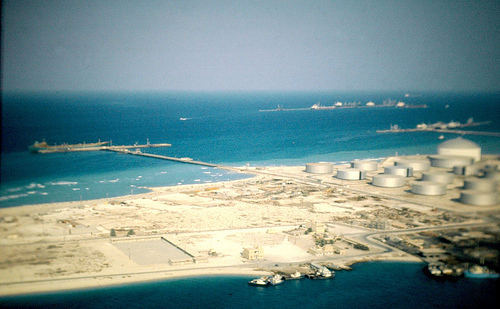
An employee was photographed at crude oil storage tanks at the Juaymah tank farm at Saudi Aramco's Ras Tanura oil refinery and oil terminal in Ras Tanura, Saudi Arabia, a facility that sits at the center of the kingdom's export infrastructure. Aramco has long aimed to become a global refiner and chemical maker, seeking to profit from parts of the oil industry where demand is growing fastest while also supporting Saudi Arabia's broader economic diversification goals.
The profit results arrive at a complicated moment for regional energy. While higher oil prices boosted Aramco's bottom line, the war has created significant disruption at the Strait of Hormuz, one of the world's most critical chokepoints for energy shipments. Qatar had not sent any liquefied natural gas through the strait since the conflict began, but that changed this week. The Al Kharaitiyat LNG tanker transited the Strait of Hormuz and entered the Gulf of Oman, according to ship-tracking data cited by Bloomberg. The shipment marked the first time Qatar moved LNG through the waterway since the war started.
The effects of the conflict have not been limited to major energy producers. In Bangladesh, the war has sparked higher costs and lost income, according to a report by WSLS. The disruptions rippling out from the Iran conflict have created economic pressure well beyond the immediate region, hitting import-dependent economies that rely on stable energy corridors to function.
The combination of Aramco's strong earnings, Qatar's resumed LNG shipments, and the economic pain in countries like Bangladesh illustrates how a single regional conflict can produce sharply different outcomes depending on where a country sits in the global energy supply chain. For producers, elevated prices have translated into stronger financial results. For importers and manufacturers in developing economies, those same price moves have meant higher input costs and reduced earnings.
Aramco's profit performance beating estimates is significant given that the war had also disrupted some of the company's own export operations. Bloomberg noted that the war-driven oil price rise offset what would otherwise have been a hit to the company's export volumes, producing a net positive result for the quarter.
Qatar's decision to resume LNG shipments through Hormuz, even on a limited basis, will be watched closely by energy markets. The strait handles a substantial share of the world's seaborne LNG trade, and any sustained closure or disruption would have broad consequences for buyers in Europe and Asia who depend on Qatari supplies.