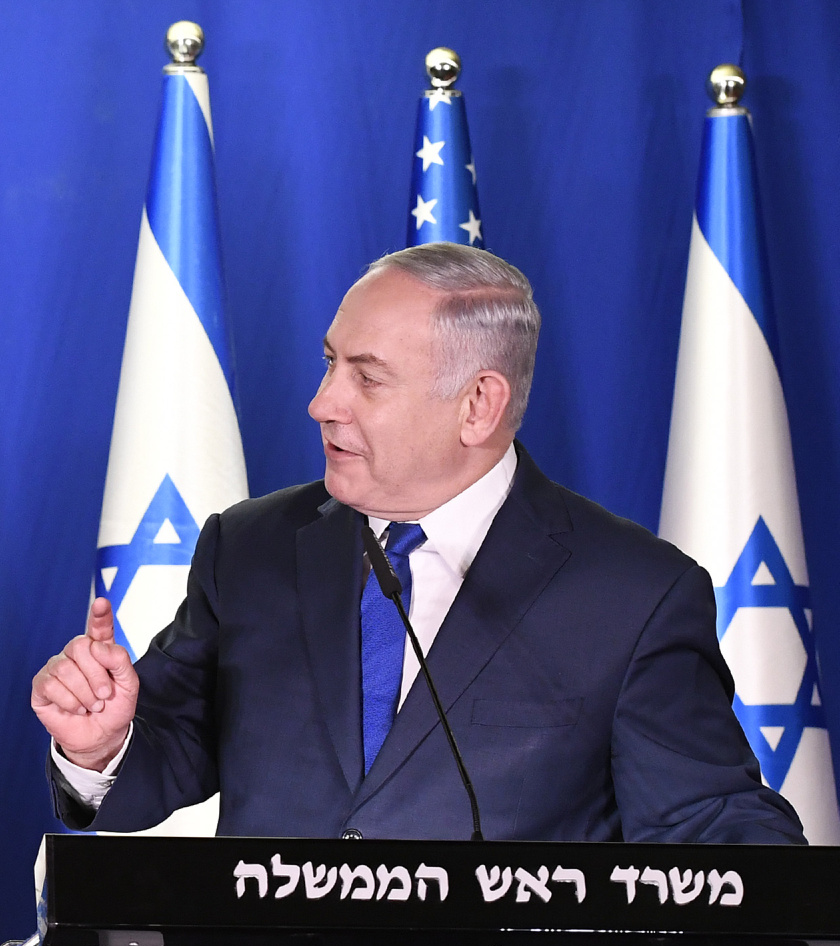
Oil prices surged more than 4% on Monday after Israeli Prime Minister Benjamin Netanyahu declared that the conflict with Iran was not finished and U.S. President Donald Trump rejected a peace overture from Tehran, reigniting fears of a prolonged disruption to global energy supplies.
U.S. West Texas Intermediate futures for June delivery advanced 4.8% to $100.04 per barrel as of 2:26 a.m. ET, while international benchmark Brent crude futures for July delivery rose 4.2% to $105.49, according to CNBC. Both benchmarks are now up roughly 40% since the U.S. and Israeli-led military campaign against Iran began on February 28.
Netanyahu, speaking in an interview recorded for CBS's "60 Minutes," laid out a list of conditions that Iran has yet to meet. "There's still nuclear material, enriched uranium that has to be taken out of Iran," he said. "There is still enrichment sites that have to be dismantled, there's still proxies that Iran supports, there are ballistic missiles that they still want to produce ... there's work to be done." Asked how the U.S. and Israel would remove the nuclear material, Netanyahu replied: "You go in, and you take it out."
Trump was equally blunt about the state of negotiations. After reviewing Iran's latest response to ceasefire proposals, Trump wrote: "I have just read the response from Iran's so-called 'Representatives.' I don't like it — TOTALLY UNACCEPTABLE!"
The Strait of Hormuz, a critical chokepoint for global oil exports, remains closed or severely restricted, and analysts at Citi wrote in their latest oil report that prices could rise further if Iran and the U.S. do not reach a deal. Citi noted that crude markets have been partially cushioned by high inventories, strategic petroleum reserve releases, weaker demand in developing economies, and occasional signs of possible de-escalation. Still, Citi maintained that risks remain tilted to the upside, as Iran retains significant control over the timing and terms of any potential agreement to reopen the strait.
"We assume that the regime will make a deal that reopens the Strait around end-May … but we continue to see the risks skewed towards this timeline being pushed out and/or a partial reopening, which means disruptions for longer," Citi analysts wrote.
The economic consequences are already being felt beyond the energy sector. The Guardian reported that the United Kingdom is projected to lose 163,000 jobs in 2026 as fallout from the Iran conflict ripples through the broader economy.
Felipe Elink Schuurman, CEO and co-founder of Sparta Commodities, drew a direct parallel to the early days of the COVID-19 pandemic to explain where the market may be headed. "In 2020, on average, we lost 9 million barrels per day of demand versus 2019, which is pretty much the equivalent of what we are losing now in terms of supply. So, the market will have to adjust, and we will have to get to that level of demand destruction," Schuurman told CNBC's "Squawk Box Europe" on Monday.
Schuurman was direct about who would bear the heaviest burden. "Now the question is 'where is that demand destruction going to come?' And unfortunately, it's going to be a situation where the richer countries are going to pay up. Maybe you don't see $200 on crude, but you will see that on a regular basis on products, which is what people consume," he said. He added: "You are going to end up in a scenario where poorer countries are going to have a humanitarian crisis, Europe is going to have an economic crisis and the U.S., a political one."
China's private oil refiners are already responding to the pressure. According to Bloomberg, private refiners in China have sought approval from Beijing to cut their run rates, a sign that the supply shock is forcing operational changes at some of the world's largest processing facilities.
The next key marker for markets is the end of May, which Citi identified as the approximate window within which a deal to reopen the Strait of Hormuz could plausibly materialize. Whether that timeline holds will likely determine whether oil prices stabilize or push further into record territory.