A new study out of Flinders University in Australia found that augmented reality smart glasses, when combined with tablets and group activities, produced strong levels of student engagement and improved academic outcomes in young children learning science, according to a report by Phys.org.
The study tested an artificial intelligence-driven AR system called the Immersive Visual Learning Environment, or AR-IVLE, with 84 Year 1 and 2 students and five teachers at a primary school in Victoria. Researchers from Flinders University, the Australian Catholic University and Zhejiang Normal University in China collaborated on the project.
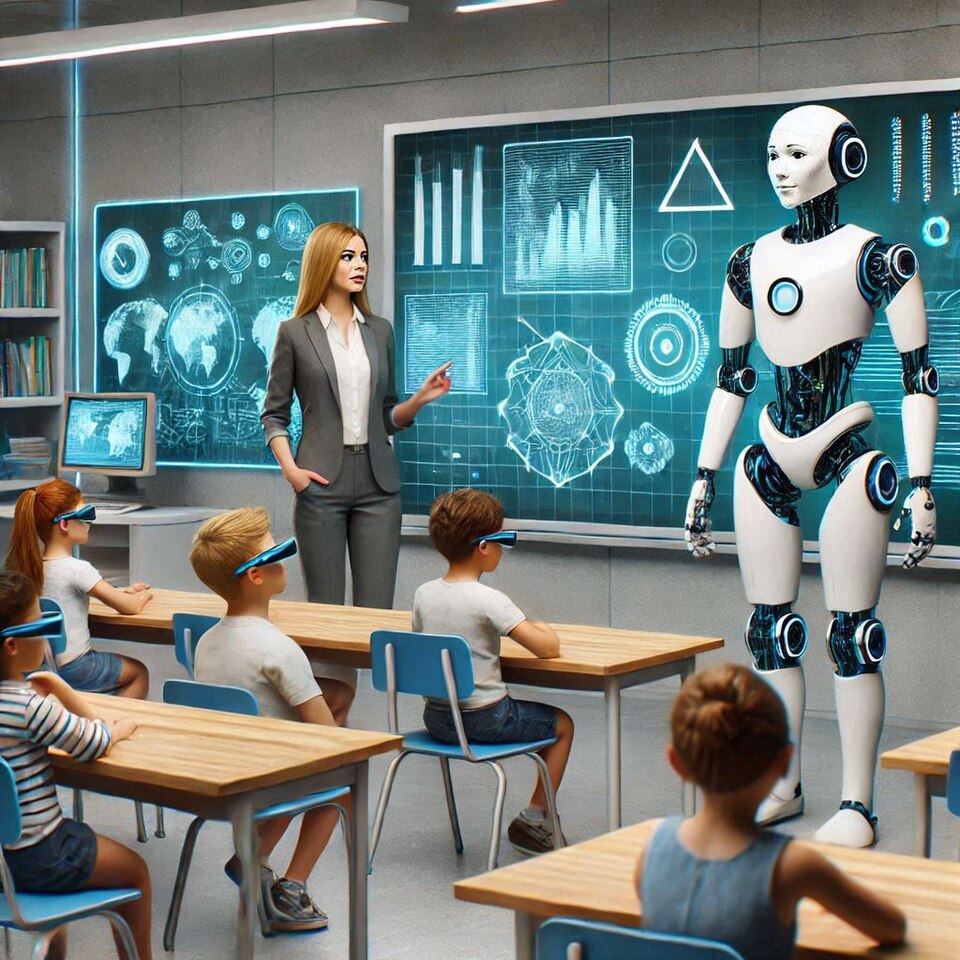
The lesson content centered on ants and their nest-building communities, a topic researchers noted can be complex and difficult for young children to grasp through traditional classroom instruction. With the AR glasses, students could walk around the room and observe virtual ants and ant nests from different angles, zooming in and out and interacting with the virtual objects through hand gestures.
The classroom setup was structured so that each student wore the AR glasses for approximately five to seven minutes while the rest of the group observed the same experience on an iPad connected to an Apple TV. That approach kept students who were not wearing the glasses actively engaged, as they could follow the experience in real time on the shared display. Students observing from their seats communicated with each other verbally, for example, giving directions about locating the queen ant or worker ants.
Professor Gretchen Geng, lead author of the study and a researcher at Flinders University, described how the technology differs from devices students and teachers already use. "Unlike traditional touchscreen devices or even bulky 3D glasses, these AR glasses deliver real-time, adaptive feedback aligned with individual learning preferences," she said.
The study found that the multi-modal approach, which combined the AR glasses with iPads, Apple TVs and group work, produced rich sensory input and kinesthetic experiences during play-based learning. Researchers observed enhanced engagement, increased interaction with virtual objects and improved academic outcomes across the group.
The results were published in the Journal of Science Education and Technology.
Geng said the research team plans to continue investigating how the technology performs at a larger scale. "With wider application of the AR-IVLE, future research will be conducted to investigate and identify challenges and opportunities to assist children's science learning in this highly engaging and seamless learning environment," she said.
The study adds to a growing body of research exploring how immersive technologies can be used in early childhood education, particularly for science topics that are difficult to observe directly in a traditional classroom setting.