

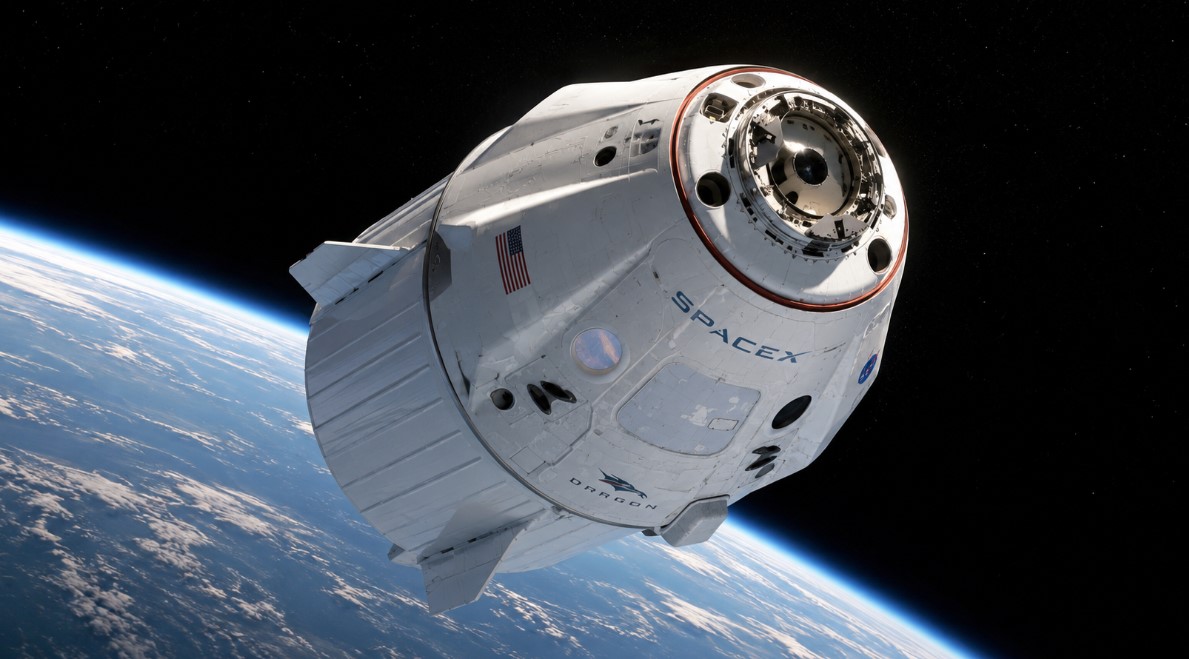
Pieces of spacecraft that were supposed to burn up during reentry are increasingly surviving the trip through the atmosphere and hitting the ground, and researchers at the University of Wisconsin-Stout say the materials used to build modern spacecraft are a big part of the reason why.
Reentry debris has landed on both private and public property around the world multiple times since 2021, according to a report by Phys.org. Some of the most widely noted cases involve pieces from SpaceX Dragon's carbon fiber trunk, a storage compartment larger than a 15-passenger van that stays attached to the crewed capsule until just hours before reentry.
Trunk debris from the Crew 7 mission to the International Space Station landed in North Carolina. Fragments from the Crew 1 mission came down in New South Wales, Australia. Debris from the Axiom 3 mission landed in Saskatchewan, Canada. Separately, carbon fiber components that hold pressurized gases used to adjust a spacecraft's orientation have been recovered in Australia, Argentina, and Poland.
The surge in launches, driven largely by private companies such as SpaceX, is turning what was once considered a remote risk into a more frequent one. Starting in the 1960s, roughly 100 objects were launched into space each year. That number has grown sharply in recent years as commercial spaceflight has expanded.
When a spacecraft or rocket booster is no longer needed, it is typically left to reenter the atmosphere, where the extreme heat is supposed to destroy it. Satellites in low Earth orbit, which sits between roughly 190 and 1,240 miles above Earth's surface, travel at about 17,000 miles per hour. As an object drifts lower into the upper atmosphere, it collides with air molecules, slowing down and generating heat that can reach over 3,000 degrees Fahrenheit, hot enough to melt most metals.
Most debris does burn up. But carbon fiber and similar high-performance materials used increasingly in modern spacecraft are specifically designed to resist heat, which is also what makes them useful during a mission. That same quality allows pieces of them to survive reentry intact.
The University of Wisconsin-Stout research group is studying the materials that allow reentry debris to survive and is looking for ways to safely modify their heat-resistant qualities to make them less likely to reach the ground. The group's work is part of a broader effort to understand why the burn-up predictions for these components have been falling short.
The problem is partly a numbers game. More launches mean more objects eventually coming back down, and even a small percentage of debris surviving reentry adds up when the total volume of launches keeps climbing. Private players have dramatically increased the pace of launches in recent years, which researchers say is a key driver of the trend.
No deaths from reentry debris have been reported in the incidents documented since 2021, but the locations where pieces have landed, including populated regions and farmland, have raised concerns among researchers about what happens as launch rates continue to rise.