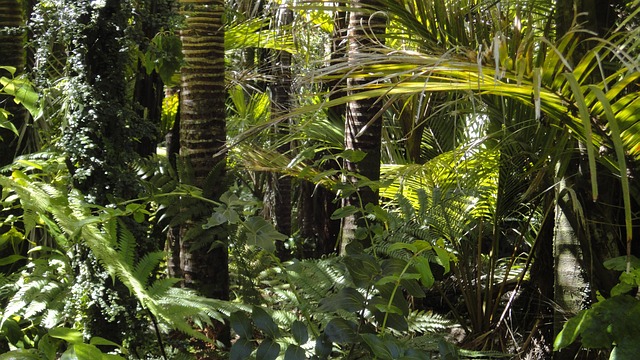
Nearly 40 years of satellite observations show that tropical forests across South America, Africa and Southeast Asia are struggling to recover from droughts that are growing more frequent and widespread, according to research published in Geophysical Research Letters. Scientists say the trend raises the possibility that some forests could eventually stop absorbing carbon dioxide and begin releasing it back into the atmosphere.
The study was led by Dr. Shuai Cheng of China's Eastern Institute of Technology and colleagues, who analyzed satellite measurements of plant activity alongside climate records from 1982 to 2019. Rather than relying solely on rainfall data, the team developed a method to track how vegetation itself responds to drought, capturing periods when tropical plants showed physiological stress from both low soil moisture and dry air. That distinction matters because a region can receive close to average rainfall and still experience serious drought stress if temperatures are high enough to dry out soils and pull moisture from leaves.
That second process, known as atmospheric evaporative demand, places additional strain on plants beyond what rainfall figures alone would suggest. The researchers found that more than half of the increase in vegetation droughts was linked to declining soil moisture driven largely by warming temperatures and increased atmospheric drying.
Tropical forests play a significant role in keeping the planet's climate in check. Trees absorb carbon dioxide through photosynthesis and store large amounts of carbon in trunks, branches, roots and soils. Together, tropical ecosystems remove billions of tons of carbon dioxide from the atmosphere each year, helping slow the pace of global warming. That buffering function depends on forests remaining healthy enough to keep growing.
Africa showed the strongest expansion in drought-affected vegetation over the study period, though significant increases were also recorded in the Amazon and Southeast Asia. The researchers say these combined findings suggest tropical ecosystems are being exposed to longer and more widespread periods of water stress than in any previous decade covered by the data.
The study, reported by Phys.org, spans the humid tropics broadly and draws on nearly four decades of continuous satellite monitoring, making it one of the longer observational records applied to this question. The researchers say the trends they identified are not tied to a single extreme event but reflect a steady buildup of stress across the tropical zone since the early 1980s.
Scientists have long understood that tropical forests are not passive bystanders to climate change but active participants in regulating it. The new findings suggest that as droughts intensify, the forests' ability to play that role may be weakening. Whether that leads to a permanent shift in how these ecosystems function remains an open question, but the direction of the trend over nearly 40 years points consistently in one direction.