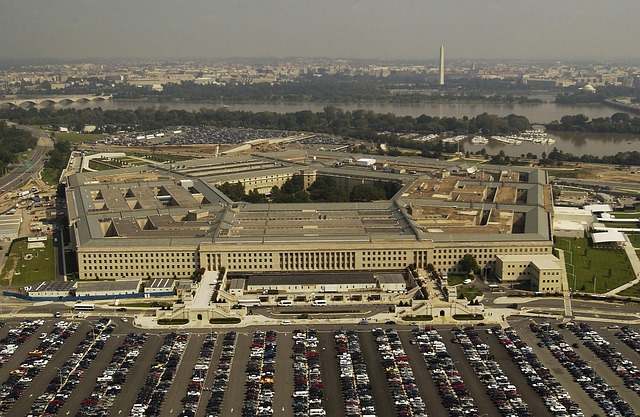
The New York Times filed a second federal lawsuit against the Defense Department on Monday, this time targeting a policy that requires journalists inside the Pentagon to be accompanied by government escorts at all times, according to the Wrap.
The complaint was filed in U.S. District Court in Washington and argues that the escort requirement violates the First Amendment by placing excessive barriers on newsgathering and limiting reporters' ability to work independently inside the military headquarters.
According to the complaint, journalists operating under the policy must call or email for an appointment, wait for a response, get an escort, ask their question, and then leave. The Times described that process as one that transforms Pentagon press credentials into what the complaint called "essentially worthless" access passes.
The lawsuit asks a court to block the policy from being enforced. The Pentagon adopted the escort requirement earlier this year after a federal judge struck down key portions of an earlier set of media restrictions put in place under Defense Secretary Pete Hegseth.
Defense Department spokesman Sean Parnell defended the rules in a statement, saying they are "completely lawful and narrowly designed to protect national security information from unlawful criminal disclosure." He accused the Times of using the lawsuit as an attempt to access classified material.
The legal fight has been building for some time. The Times previously challenged an earlier round of Pentagon media restrictions in court, arguing those rules violated both First and Fifth Amendment protections. In March, U.S. District Judge Paul Friedman ruled against major portions of those restrictions. The Pentagon then issued what it described as an interim policy, which kept the escort mandate in place and shut down longtime workspaces used by reporters inside the building.
Friedman later invalidated central portions of that revised policy as well. However, a divided panel of the U.S. Court of Appeals for the District of Columbia Circuit temporarily allowed the escort requirement to stay in effect while the Pentagon appeals the lower court rulings.
In the new complaint, the Times describes the revised access policy as "patently retaliatory" and says the escort mandate interferes with reporters' ability to cultivate sources, move freely within approved areas, and gather news in a timely manner. The case is the latest chapter in a sustained legal confrontation between the newspaper and the Defense Department over who gets to determine how journalists cover one of the most powerful institutions in the federal government.