President Trump announced Monday he called off a planned military attack on Iran set for Tuesday after the leaders of Qatar, Saudi Arabia, and the United Arab Emirates asked him to stand down, saying serious negotiations are now underway.
In a post on Truth Social, Trump said he had been told a deal would be made that is "very acceptable" to the United States. He added that he had been informed there would be "NO NUCLEAR WEAPONS FOR IRAN!" But he also warned the U.S. would be ready to "go forward with a full, large scale assault of Iran, on a moment's notice" if an acceptable deal was not reached.
A senior Iranian military commander responded by telling the U.S. not to make "strategic mistakes and miscalculations again," according to the BBC.
Speaking to reporters later Monday, Trump described the development cautiously. "We've had periods of time where we had, we thought, pretty much getting close to making a deal, and it didn't work out. But this is a little bit different," he said. He added there seemed to be "a very good chance" of an agreement, saying: "If we can do that without bombing the hell out of them, I would be very happy."
The announcement came the same day a New York Times/Siena poll showed 64% of voters believe it was the wrong decision to go to war with Iran. The same survey found just 37% of voters approve of Trump's job performance as president.
Israeli and U.S. forces began massive air strikes on Iran on February 28. Tehran retaliated by firing drones and missiles at Israel and U.S. targets across the Gulf region. A ceasefire agreed in April has largely held, though occasional exchanges of fire have continued.
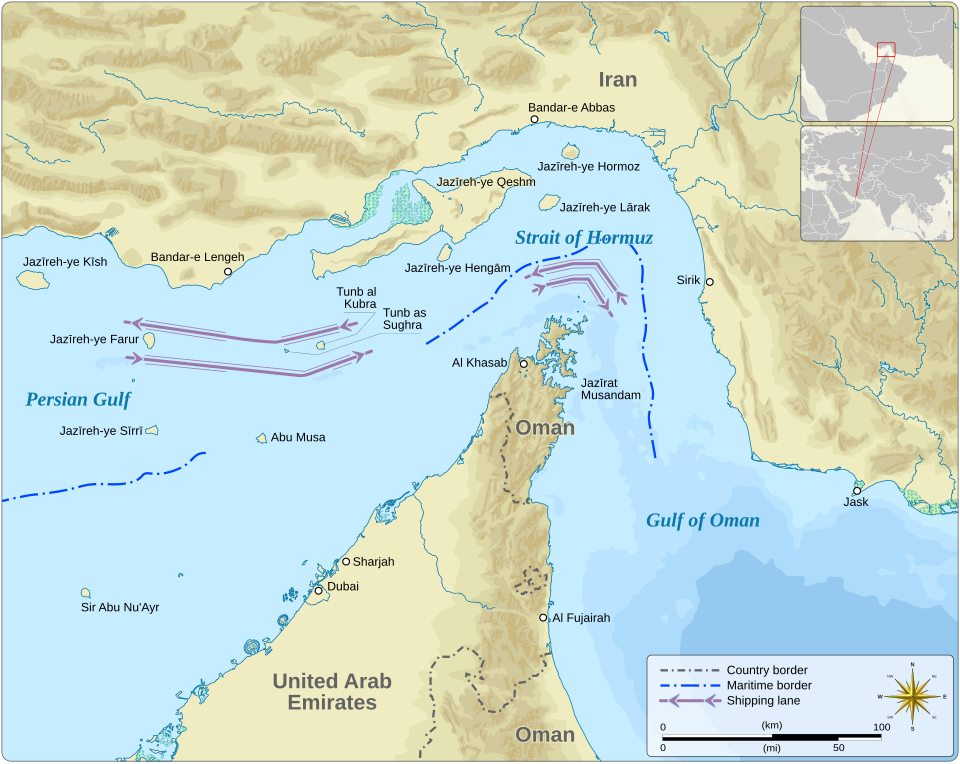
Iran has also kept control of the Strait of Hormuz, closing the waterway through which roughly 20% of the world's oil and liquefied natural gas travels. The move has driven oil prices higher globally. The U.S. has maintained a blockade of Iranian ports to pressure Tehran toward a deal.
Gulf Arab states have expressed concern about how Iran could retaliate if U.S. attacks resume. Iran retains a significant number of drones and missiles and could resume full-scale attacks on neighboring countries, including their airports, petrochemical facilities, and desalination plants that supply drinking water as summer temperatures in the region rise.