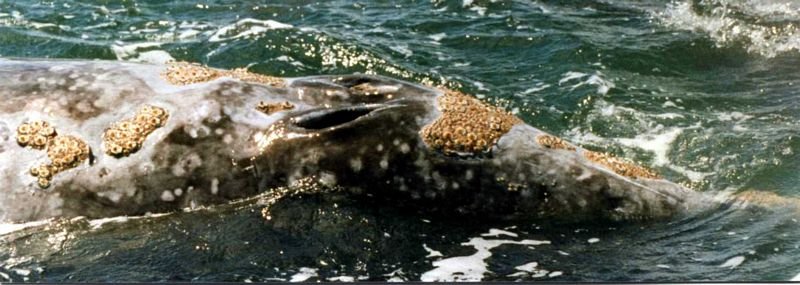
Seven gray whales have been found dead so far this season in and around San Francisco Bay, several of them killed by ships. Researchers have now switched on a new AI-powered detection system they hope will stop more from dying.
The system, described by Phys.org, was built by researchers at UC Santa Barbara's Benioff Ocean Science Laboratory, known as BOSL, in partnership with the U.S. Coast Guard's Vessel Traffic Service and The Marine Mammal Center. It uses Flir thermal cameras paired with AI detection technology from a company called WhaleSpotter to identify whales around the clock. The cameras can pick up the heat signature of a whale's blow, the warm exhaled breath that rises above the surface, at a range of up to four nautical miles, or about seven kilometers.
Every detection is reviewed by a credentialed marine mammal specialist at WhaleSpotter before any alert goes out. Once confirmed, UC Santa Barbara scientists post the location on the Whale Safe website, an online tracker they developed, which shares real-time whale positions with mariners and the Coast Guard. The Coast Guard's Vessel Traffic Service can then radio nearby ships to reroute or slow down.
BOSL scientist Rachel Rhodes is leading the project. "We're relieved to have these cameras going live during this critical moment in the gray whale season," she said.
The timing is urgent. Gray whale season typically peaks in May, and the whales now entering the bay are not following their normal migration route. Gray whales usually make a 12,000-mile annual round trip between feeding grounds in Alaska and birthing lagoons in Mexico without entering San Francisco Bay at all. Researchers believe hunger is driving them off course. Food has grown scarce in the Arctic, likely due to climate change, and the whales are searching for alternatives in waters thick with commercial and recreational vessel traffic.
The situation has pushed a once-celebrated conservation story into a troubling new chapter. Half of all Eastern North Pacific gray whales have died in the past 10 years, according to BOSL researchers.
BOSL director and professor Douglas McCauley described the scene in the bay. "It is heartbreaking to see these starving whales stumbling around in the middle of the hustle and bustle of San Francisco Bay," he said. "Every day is a nailbiter. But what gives me hope is seeing how all the right partners in the Bay Area community have come together to do something. This new system will save whales' lives. We are all proud of this."
The system represents a collaboration between academic researchers, a federal agency, a nonprofit marine mammal organization, and a private technology company. That combination was considered essential given the scale of the problem. The bay handles significant commercial shipping traffic, and individual vessel operators have little ability to spot a whale on their own before it is too late.
The Whale Safe website makes detections visible not just to the Coast Guard but to any mariner who checks it. That public-facing component is a key part of how researchers hope to extend the system's reach beyond official radio alerts, getting information to smaller boats and private operators who may not be in regular contact with Vessel Traffic Service.
With gray whale season still ongoing and the peak period underway, researchers will be monitoring the system closely to see whether the alerts translate into fewer strikes before the season ends.