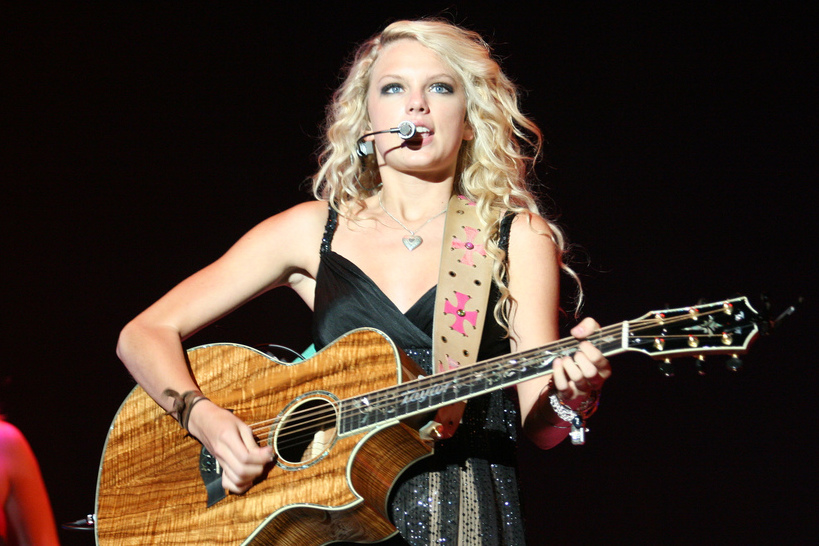
Taylor Swift is pursuing an unusual legal strategy to protect her voice and likeness in the age of artificial intelligence, filing applications with the U.S. Patent and Trademark Office to trademark the phrases "Hey, it's Taylor" and "Hey, it's Taylor Swift." She filed a third application covering an image of herself performing on stage.
According to Billboard, which covers the filings in its Legal Beat newsletter, Swift is following a path first attempted by Matthew McConaughey, who filed similar trademark applications last year in an effort to, as Billboard put it, "trademark himself." Whether the strategy will hold up legally is uncertain. Trademark law does not typically operate this way, but Swift has repeatedly been targeted by AI-generated deepfakes, and lawmakers have been slow to respond. The applications are relatively low-cost and may give her a legal foothold to fight back.
Swift already holds dozens of trademarks, covering terms including "Swiftie," "Taylor's Version," and the names of her cats. She has enforced them aggressively and been sued over them in turn, including a recent action tied to The Life of a Showgirl.
On the creative side, Swift has been speaking more openly about the tension between her songwriting and her fanbase's obsession with decoding who her songs are about. Speaking with The New York Times after being included on their list of the 30 greatest living songwriters, she said the focus on subjects rather than authorship bothers her.
"When it gets a little bit weird for me is when people act like it's sort of like a paternity test," Swift said. "'This song's about this person.' Because I'm like, 'That dude didn't write the song. I did.'"
She was clear that some fan behavior is simply beyond her control. "There's corners of my fanbase that are going to take things to an extreme place, there's nothing that I can do about that," she said.
Swift also made the case that criticism, even ugly criticism, has directly shaped her biggest songs. "Blank Space would not exist if I hadn't had people being like, 'Here's a slideshow of all her boyfriends,'" she said. "'Anti-Hero' is a song that I'm so proud of still, like that song doesn't exist if I don't get criticized for every aspect of my personality."
Her advice to aspiring songwriters facing online hostility was direct: don't respond to trolls in comment sections. Write about it instead. "If it's an interesting point for you to respond to, then that's a gift for you to be able to write something," she said. "Don't go to the Notes app and post it. Like, write about it. Make art about this."