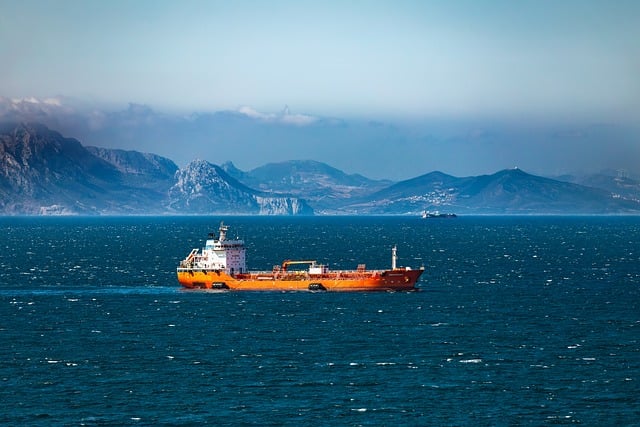
Oil prices hit a four-year high Thursday as the US-Iran conflict continued to strangle global shipping through the Strait of Hormuz. Brent crude briefly topped $126 a barrel, and American drivers felt the effect quickly: the average US gas price reached $4.39 a gallon on Friday, up nine cents from Thursday and 34 cents from just a week earlier, according to AAA.
The Strait of Hormuz remains nearly shut. US forces continue to blockade Iranian ports, sharply curtailing crude oil shipments. Stalled negotiations over a permanent end to the conflict, and uncertainty over whether the waterway will reopen, have pushed energy markets higher.
The war's price tag is also climbing. US officials familiar with internal government assessments told CBS News the true cost of the conflict is closer to $50 billion, roughly double the public figure the Pentagon cited in congressional testimony this week. Much of the gap reflects munitions that have been used and need to be replaced.
Defense Secretary Pete Hegseth faced senators for a second consecutive day Thursday. He argued that a 60-day congressional authorization deadline was paused during the current ceasefire. Democratic senators Tim Kaine and Elizabeth Warren disputed that, insisting the deadline still falls on Friday. Iran's supreme leader, meanwhile, vowed Thursday to protect the country's nuclear and missile capabilities, the two issues the Trump administration has sought to curtail through airstrikes.
Inside Iran, the economic toll is deepening. The country's 90 million people have been cut off from the internet for most of 2026, one of the world's longest sustained national shutdowns. The blackout was imposed as a wartime measure and has yet to be lifted, even as an uneasy truce holds. A member of Iran's Chamber of Commerce told a local newspaper the internet cutoff is costing the economy an estimated $30 to $40 million daily, with indirect losses likely double that. The country's communications minister has said approximately 10 million jobs depend on internet connectivity.
The conflict's reach extends well beyond energy markets. Svein Tore Holsether, chief executive of Yara, one of the world's largest fertiliser producers, told the BBC that blocked shipping through the Strait of Hormuz is already disrupting global food production. Around a third of the world's fertilisers normally pass through the strait, according to the United Nations. Since the war began, fertiliser prices have risen 80%.
"We're up to half a million tons of nitrogen fertiliser not being produced in the world right now because of the situation we are in," Holsether said. He estimates that could eliminate up to 10 billion meals per week globally. Not applying nitrogen fertiliser can cut crop yields for some crops by as much as 50% in a single season, he added.
The effects will be uneven. The UK is unlikely to face food shortages, though higher costs are expected to appear on grocery bills within months. In Asia, where planting seasons are just beginning, the consequences may not show up until harvests come in smaller than expected later in the year. Professor Paul Teng, a senior fellow in food security based in Singapore, said some countries may have enough fertiliser for the immediate season, "but if the crisis drags on any longer, we will be seeing impact on crops such as rice in the coming months."
Holsether warned that if the conflict continues, a global bidding war for food could emerge between wealthier and poorer nations, with the most vulnerable countries most exposed to shortfalls.
Off the coast of Somalia, the disruption to normal naval operations in the region appears to be fueling a parallel crisis. At least three to four merchant ships have been hijacked near the Somali coast since April 20, raising fears of a return to the large-scale piracy that plagued the Horn of Africa in the early 2000s. The United Kingdom Maritime Trade Operations authority raised its threat level for the Somalia coast to "substantial" this week, warning vessels to transit with caution. At the peak of that earlier crisis, the annual global economic cost of Somali piracy reached as high as $18 billion, according to the World Bank.