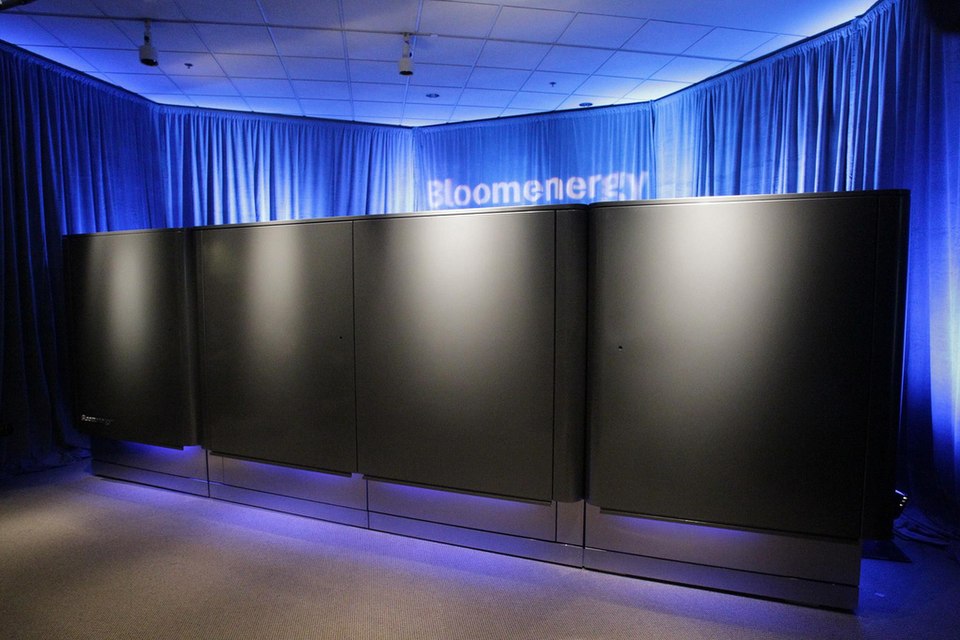
One year ago, Bloom Energy was a relatively obscure clean energy company selling fuel cell systems to corporate campuses. Today, it is one of the most spectacular stock performers on the market, with shares up more than 1,460 percent over the past twelve months.
The numbers are striking. A $10,000 investment in Bloom Energy stock at the start of May last year would have grown to approximately $156,670 by early May 2026. The company, which trades on the NYSE under the ticker BE, has ridden a wave of demand driven largely by the artificial intelligence boom and the enormous appetite for reliable, on-site power generation that data centers and cloud computing facilities require.
Bloom's fuel cell systems have now been deployed at more than 1,200 facilities, including major names such as Equinix, Walmart, and Comcast. The company reported first-quarter revenue of roughly $751 million, a jump of about 130 percent compared to the same period a year earlier. Free cash flow swung from negative $125 million to positive $47 million, a shift that signals the business is no longer simply burning through cash to fund growth.
The AI connection is central to the story. Data centers need enormous and uninterrupted amounts of electricity, and grid power in many markets is either unreliable or insufficient to meet surging demand. Bloom's systems generate electricity on-site using natural gas or hydrogen through an electrochemical process, offering a cleaner and more stable alternative to grid dependence. For hyperscale computing operators racing to expand capacity, that proposition has become increasingly attractive.
But the stock's extraordinary run has created a valuation problem that even admirers of the company acknowledge. Bloom now trades at roughly 139 times forward earnings and about 30 times sales. By comparison, the clean energy sector average sits at around 14.5 times earnings and 3.75 times sales. That is a substantial premium, and it means the market has already priced in a great deal of future success.
Wall Street analysts, on average, are targeting a share price of around $220, according to Yahoo Finance, which implies roughly 23 percent downside from the stock's current level near $286. That consensus does not reflect a view that the business is broken. It reflects a view that the stock has simply run far ahead of what near-term fundamentals can justify, and that any stumble in execution could send shares sharply lower.
For investors who missed the run, the question now is whether Bloom's long-term growth story remains intact at this price. The company operates in a sector with genuine tailwinds. AI infrastructure spending is not slowing, and the demand for distributed, on-site power generation is likely to grow. But at 139 times forward earnings, there is almost no margin for error. A revenue miss, a contract delay, or a shift in the energy policy environment could expose just how much optimism has been baked into the current share price.
The stock offers a case study in the tension between a compelling business narrative and an uncomfortable valuation. Bloom is doing something real, generating power for some of the biggest companies in the world and growing revenue at triple-digit rates. Whether the stock at $286 reflects that reality or has sprinted well past it is the question every prospective buyer now has to answer.