Russia's Defense Ministry declared a unilateral ceasefire in Ukraine for Friday and Saturday to mark the 81st anniversary of the Soviet Union's victory over Nazi Germany, but paired the announcement with a threat to launch a "massive missile strike on the center of Kyiv" if Ukraine tries to disrupt Victory Day celebrations.
Ukrainian President Volodymyr Zelenskyy responded Monday by saying his country would observe a truce beginning at midnight Wednesday and would respond in kind to Russia's actions from that moment forward. He did not set an end date on the truce.
The declaration fits a familiar pattern. Previous attempts to establish ceasefires, including one around Orthodox Easter, have had little practical effect on the fighting.
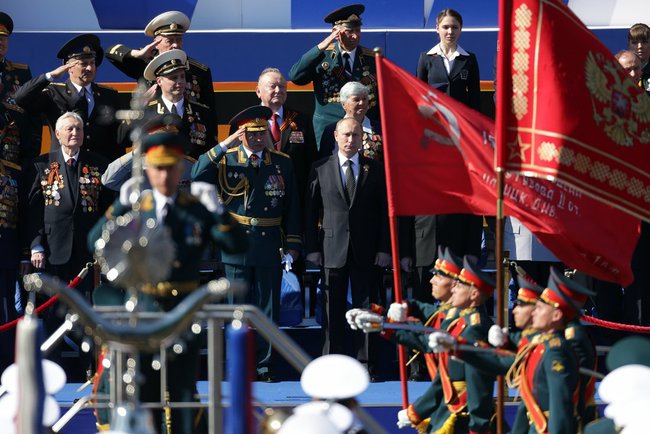
Russia's Victory Day parade on May 9 will proceed under unusual circumstances. For the first time in nearly two decades, tanks, missiles, and other heavy military equipment will not roll through Red Square. Some regional parades across Russia have been scaled back or canceled entirely. Officials attributed the changes to concerns about possible Ukrainian drone attacks. Ukraine has been conducting drone strikes deep inside Russian territory in response to more than four years of invasion.
Zelenskyy, speaking at a summit with European leaders in Armenia on Monday, was blunt about what he said the pared-down parade reveals. Russia's authorities "fear drones may buzz over Red Square," he said. "This is telling. It shows they are not strong now, so we must keep up the pressure through sanctions on them."
The Defense Ministry's threat to strike Kyiv included a warning to the city's civilian population and employees of foreign diplomatic missions to "leave the city promptly." Zelenskyy noted that Kyiv had not received any official request for a truce through formal channels but said a ceasefire was achievable by midnight Wednesday if Russia took real steps.
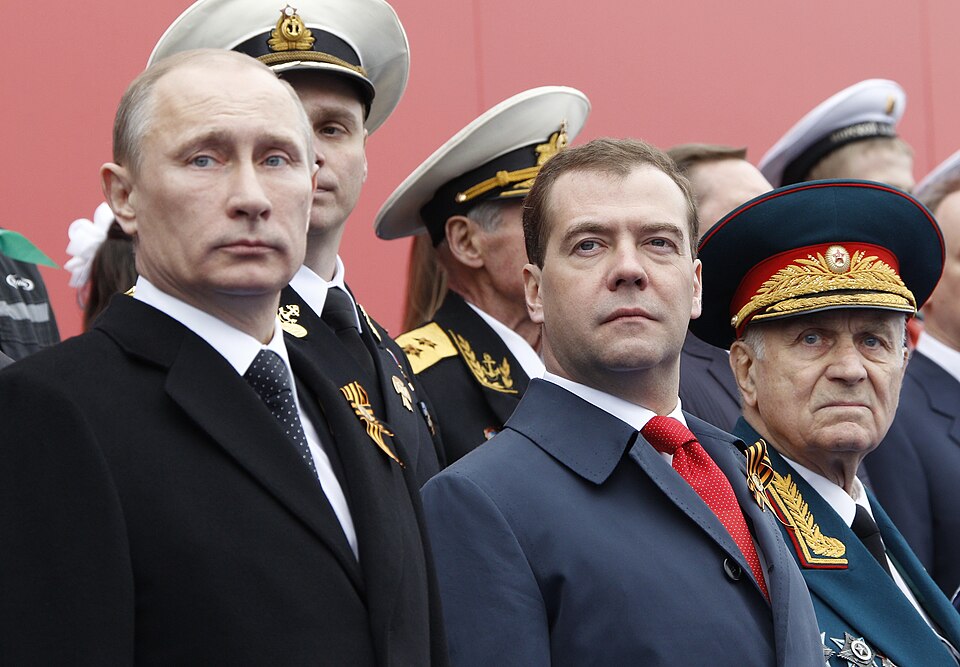
Victory Day is Russia's most important secular holiday, rooted in the Soviet Union's loss of 27 million people in what Moscow calls the Great Patriotic War. President Vladimir Putin has used the occasion for years to project military power and reinforce nationalist sentiment, and has drawn on it to frame and justify the war in Ukraine. Last year's 80th anniversary parade attracted the largest gathering of foreign leaders to Moscow in a decade.