

SpaceX is pursuing a valuation of up to $2 trillion in what would be the largest public offering in history, and a major labor union is now telling both its members and federal regulators that the numbers don't add up.
The Communications Workers of America has formally warned that the proposed SpaceX IPO "defies" financial logic, according to MarketWatch. The union's objection places it among the early organized voices pushing back on what Elon Musk's space company is asking investors to accept as its worth.
A $2 trillion valuation would put SpaceX in the same rarified company as Apple, Microsoft, Nvidia, and Amazon — public companies that took decades of revenue growth and market dominance to reach that level. SpaceX remains a private company with no public financial disclosures of the kind that allow investors to independently assess its revenue, profit margins, or debt load.
The CWA's warning to regulators suggests the union wants oversight agencies to scrutinize the offering before it moves forward. The union did not specify which regulators it contacted, but the Securities and Exchange Commission would be the primary body reviewing any IPO filing.
SpaceX has grown rapidly as both a launch provider and satellite internet operator through its Starlink division. The company has won billions in government contracts from NASA and the Department of Defense. Its Starlink service has expanded to millions of subscribers globally. Those revenue streams underpin the bull case for a sky-high valuation.
But critics, including the CWA, argue that the gap between SpaceX's known financials and a $2 trillion ask is simply too large to justify. For context, Boeing — which manufactures commercial aircraft, military equipment, and spacecraft — carries a market capitalization of roughly $100 billion. General Dynamics, Lockheed Martin, and Raytheon combined fall well short of the figure SpaceX is targeting.
The IPO, if it proceeds at the reported valuation, would eclipse the previous record set by Saudi Aramco's 2019 public offering, which raised approximately $25.6 billion and briefly gave the oil giant a valuation above $2 trillion before it retreated. Aramco, however, is one of the world's most profitable companies, generating tens of billions in net income annually.
Musk has historically been reluctant to take SpaceX public, arguing that the company's long-term mission — including eventual Mars colonization — is incompatible with the short-term demands of public shareholders. The current push toward an IPO, or at minimum a valuation peg through secondary market transactions, represents a shift in posture.
The CWA's intervention adds a layer of institutional opposition that goes beyond typical IPO skepticism from individual analysts. Unions have standing to raise concerns with regulators, and their warnings can influence the pace and terms of a review. Whether that intervention slows or shapes the offering remains to be seen, but the union has made clear it intends to press the case.
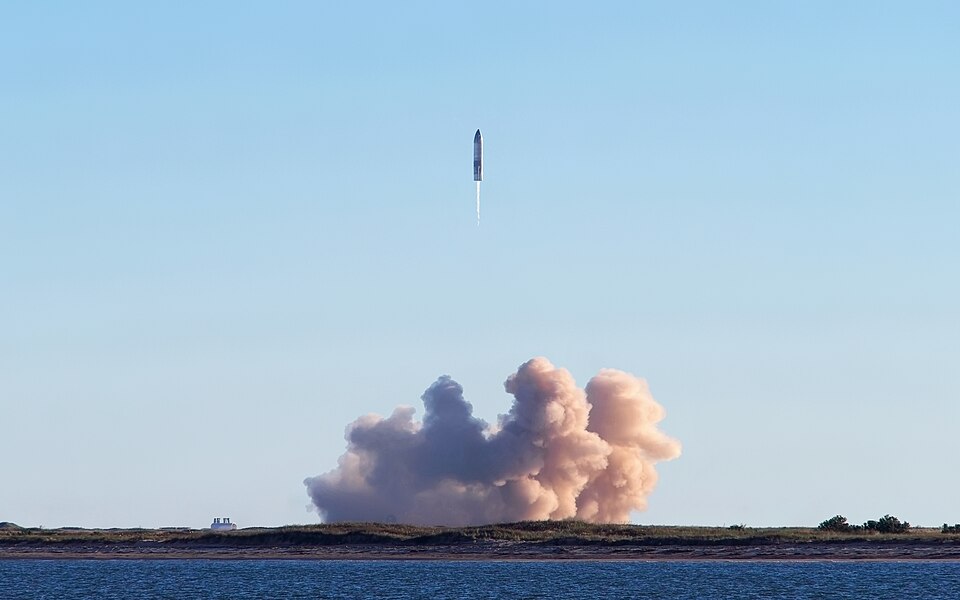
![[RAW] SpaceX Starship IFT-1 NASA WB-57 Cam 0
TLP Network via a NASA FOIA has acquired 2 of 5 videos recorded by NASA WB-57 during the Starship IFT-1 flight. The other 3 cameras from NASA WB-57 have been classified.
Thank you to NASA HQ for their support in releasing this footage to TLP Network.](https://freenewspress.com/media/2026/05/06/spacex-starship-ca6e87.jpg)