A federal judge unsealed a one-page note purportedly written by Jeffrey Epstein in prison on Wednesday, nearly seven years after Epstein's former cellmate said he discovered it tucked inside a book.
District Judge Kenneth Karas unsealed the document in response to a legal petition from the New York Times, which had reported on its existence the previous week. NPR has not independently verified the authenticity of the note. Written on lined paper, the five sentences read in part: "It is a treat to be able to choose one's time to say goodbye. Watcha want me to do — Bust out cryin!! NO FUN — NOT WORTH IT!!"
The note's origins trace to the Metropolitan Correctional Center, now closed, where Epstein and Nicholas Tartaglione shared a cell for about two weeks in July 2019. Both men had been arrested on separate charges and were awaiting sentencing. Tartaglione, a former officer in the Briarcliff Manor Police Department in Westchester County, N.Y., was later convicted of quadruple homicide.
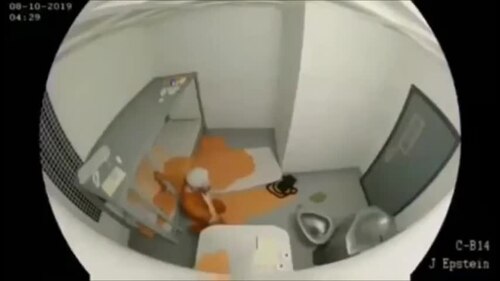
Their time together ended after Epstein was found unconscious in his cell with marks on his neck, in what a 2023 Department of Justice Office of Inspector General report described as a suspected suicide attempt. Epstein initially claimed Tartaglione had assaulted him. Tartaglione denied that. Epstein later told prison staff he had no memory of the incident while on suicide watch.
In a July 2025 podcast interview, Tartaglione told writer Jessica Reed Kraus that he was present when Epstein allegedly tried to hang himself and "woke up and saved him by performing CPR." He said he found the note afterward. "When I got back into the cell, I opened up my book to read and there it was," Tartaglione said.
The note then passed to Tartaglione's legal team and remained in his files. Bruce Barket, one of Tartaglione's lawyers at the time, confirmed to NPR that the note existed and that his client's account of finding it and handing it over to counsel is accurate, though he said attorney-client privilege prevented him from elaborating further.
Barket said the note mattered to Tartaglione's defense because federal prosecutors had initially sought the death penalty against him, and behavior inside prison carries weight with a jury. A verified note showing Epstein had been contemplating suicide would support Tartaglione's claim that he not only did not harm his cellmate but tried to save him.
"Ultimately, my goal here was to do whatever I could, obviously within the confines of the law and ethics, to protect my client and to advance his interests," Barket said. "And that's what we did."
Epstein died by suicide in a different cell less than a month after the first incident. Judge Karas has signaled that additional documents related to the case could follow the unsealing of the note.