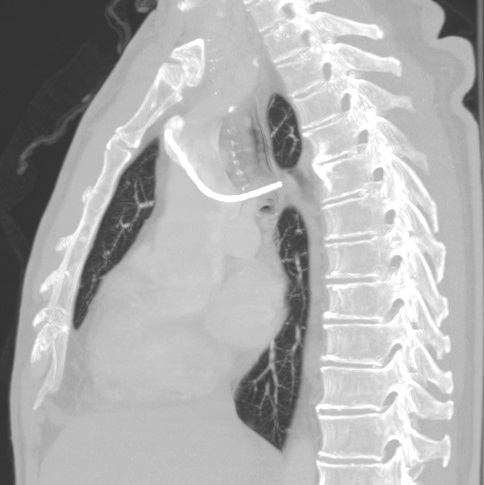
Pancreatic cancer kills most of the people it reaches, not because it cannot be treated, but because it is almost never caught in time. A new artificial intelligence model may change that. In a study published April 28 in the journal Gut, researchers described a tool that identified signs of pancreatic cancer in CT scans up to three years before physicians would have spotted anything wrong.
The program, called REDMOD, short for Radiomics-based Early Detection Model, was tested on nearly 2,000 CT scans that had already been reviewed by radiologists and cleared as normal, showing no signs of disease. REDMOD found subtle structural irregularities in the pancreas that, over time, developed into tumors. The scans had been clean by every standard clinical measure. The cancer was there anyway.
The five-year survival rate for pancreatic cancer in the United States sits between 12% and 13%, a number that has barely moved while survival rates for many other cancers have improved. The disease rarely causes symptoms in its early stages, so by the time a patient is diagnosed, the cancer has usually spread beyond the point where treatment can work.
"The basic science research tells us that the process of cancer development is not something that starts six months earlier," said Dr. Ajit Goenka, a radiologist and nuclear medicine specialist at the Mayo Clinic in Rochester, Minnesota, and a co-author of the study. "It starts 10 to 15 years earlier, which means that there was a signal in the pancreas and that signal was outside the purview of human detectability."
REDMOD works by converting a CT scan into a mathematical problem. The tool first segments the pancreas from the surrounding tissue, building a three-dimensional model of the organ from the two-dimensional images a CT machine captures. Then it evaluates the resulting structure pixel by pixel, looking for anything that deviates from what a healthy organ looks like.
"It's taking each and every pixel in that image and it is quantifying the degree to which it differs from the rest of the organ, and then it's comparing that against the controls where you don't expect that change to be present," Goenka told Live Science. "At the end of the day, it's mathematics. It converts that image into a mathematical r[epresentation]."
The ability to detect cancer years before a visible tumor forms would give physicians a narrow but meaningful window to intervene while treatment still has a reasonable chance of working. Pancreatic cancer is considered one of the hardest cancers to treat precisely because surgery, chemotherapy, and radiation are most effective when the disease is confined and small. By the time most patients receive a diagnosis, those options are largely off the table.
The study is an early test, and the authors stop short of claiming REDMOD is ready for routine clinical use. But the results suggest that CT scans already being taken for other reasons may contain information about pancreatic cancer that no human radiologist can currently extract. The next step for the research team will be validating the model against larger and more diverse patient populations.