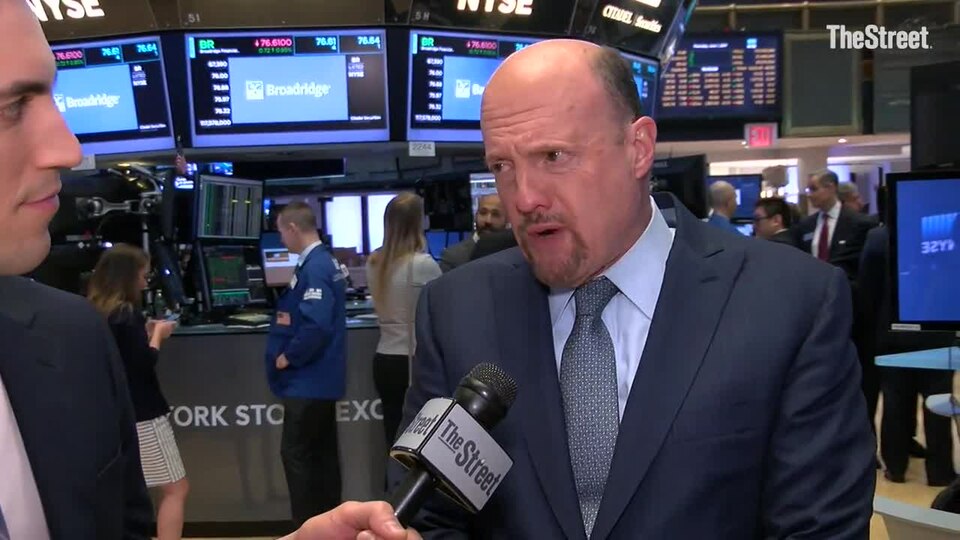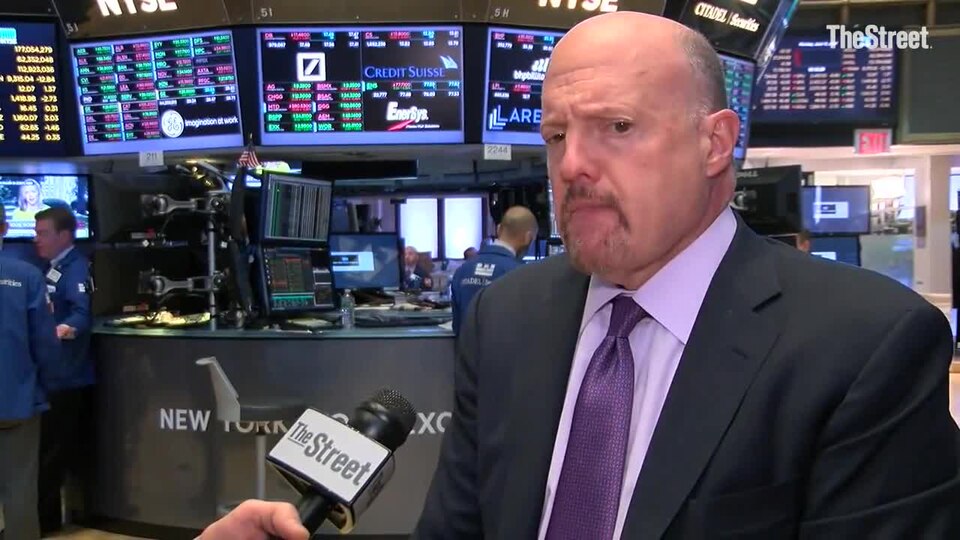
Jim Cramer told viewers this week that two battered technology stocks, Arista Networks and Shopify, represent buying opportunities after both sold off sharply following their latest earnings reports. His argument in both cases was the same: the underlying businesses remain strong, and the market is punishing them for reasons that do not reflect long-term damage.
Arista Networks dropped 13.6 percent after reporting quarterly results that beat analyst estimates but did not include a raised forecast. In a market conditioned to reward guidance raises as a signal of momentum, the absence of one was treated as a warning sign. Cramer pushed back on that reading directly.
"When you dig into why the stock plunged 13.6% today, you find that Arista beat the estimates but failed to raise its forecast, which is, of course, the kiss of death in a tech-driven market," Cramer said. "But wait a second. Why didn't Arista raise the forecast?"
His answer was supply constraints, not weakening demand. Arista said the supply problem could persist for one or two years, which Cramer acknowledged is a difficult situation for investors to sit with. But he argued that having more demand than a company can fill for multiple years is a high-quality problem, and that Arista chief executive Jayshree Ullal has the track record to solve it. "I think Arista stock now reflects the fears, fears that I bet will prove to be wrong," he said. "Time to buy."
Shopify presented a similar situation, though the details differed. The company reported 34 percent revenue growth in its most recent quarter, a number most businesses would consider exceptional. But Shopify guided for future growth to slow to the high 20s, and that deceleration spooked the market. The stock had already fallen from $182 in October to $127 earlier in the week before dropping further to $105 after the earnings reaction.
Cramer described Shopify as a platform that small and medium-sized businesses rely on to compete with larger rivals online, and said an economy full of startups and side businesses effectively runs on Shopify's infrastructure. He framed the selloff not as a signal of trouble but as a predictable reaction to any growth deceleration, regardless of the company's underlying position.
"You don't want to buy this thing when it's running, when its sales are strong, everybody thinks the stock is headed to the moon," Cramer said. "You want to buy it when the stock's ice cold, yet the business remains very good. It's now de-risked, and it's still the envy of many businesses, including several that have tried to acquire them."
The broader context for both calls is what Cramer described as a difficult moment for Big Tech and AI-adjacent stocks, where even strong results are punished if they do not include signals of accelerating growth. In that environment, Cramer's argument is essentially contrarian: the companies that fall hardest on good-but-not-great earnings are often the ones worth watching most closely.
Arista Networks sells cloud-based networking equipment and software for data centers, AI infrastructure, and enterprise operations, putting it directly in the path of capital spending by the largest technology companies. Shopify operates a commerce platform that handles products, payments, orders, and customer data for businesses ranging from solo entrepreneurs to established brands.
Neither stock had recovered to its pre-earnings level as of this week. Arista remained under pressure from supply constraint questions that the company itself said could take one to two years to resolve. Shopify's next quarterly report will show whether the high-20s growth guidance holds or whether the company outperforms its own cautious forecast, a pattern that has played out before in tech.