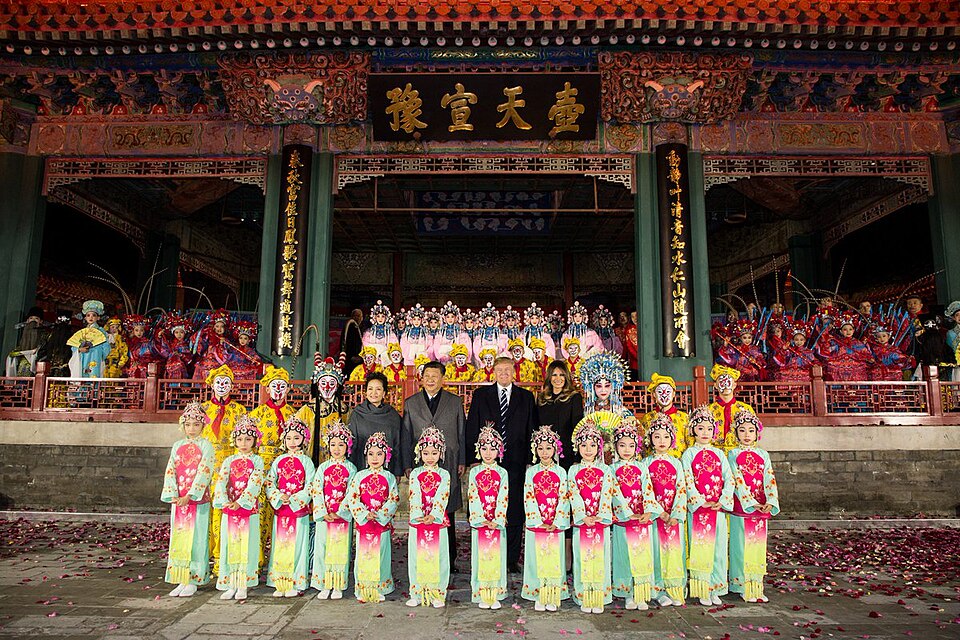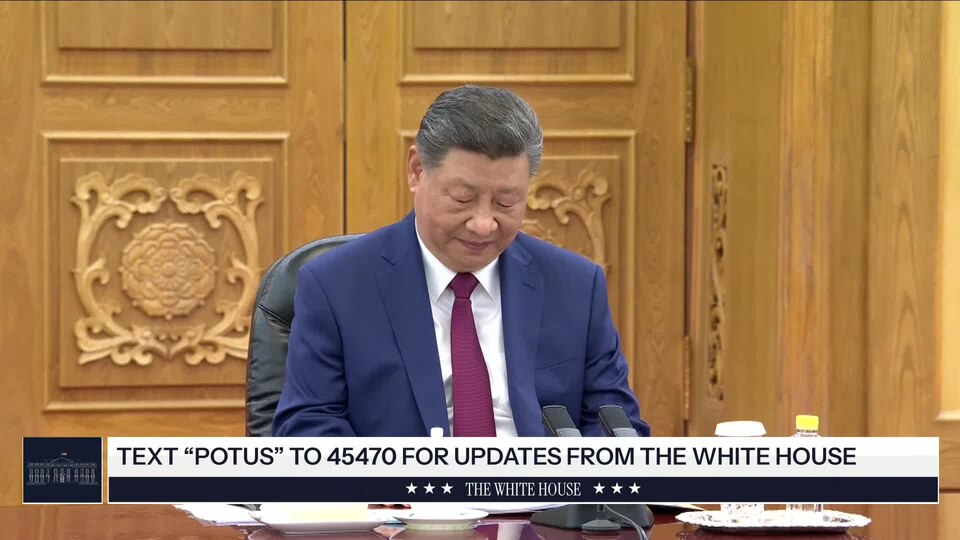
President Donald Trump said Friday that he and Chinese President Xi Jinping are aligned on Iran, telling reporters the two leaders want the war to end, the Strait of Hormuz reopened, and Iran blocked from obtaining a nuclear weapon. The comments came during the second day of a high-stakes summit in Beijing.
"We did discuss Iran. We feel very similar in Iran. We want that to end. We don't want them to have a nuclear weapon. We want the [Strait of Hormuz] opened. We're closing it now. They closed it, and we closed it on top of them, but we want the straits open, and we want them to get it ended, because it's a crazy thing," Trump said at a photo opportunity before the two leaders had tea and a working lunch, according to ABC News.
Trump also claimed control of the strait was already in American hands. Speaking to reporters on Air Force One after his summit with Xi, Trump said, "We control the Strait [of Hormuz], and they've done no business… so we have been doing very well on all fronts." He added, "We don't need favors. We wiped out their armed forces, essentially."
Representatives from China did not offer further comment on the specifics of what was discussed. The Chinese Foreign Ministry reiterated its position that the ceasefire and negotiations should continue and the Strait of Hormuz should be reopened. "There is no need to continue this war that should not have happened," a Foreign Ministry spokesperson said. "Finding a solution earlier is beneficial to the United States and Iran, as well as to the countries in the region and even the whole world."
Iranian Foreign Minister Abbas Araghchi struck a far more cautious tone Friday. Speaking in New Delhi, where he attended a meeting of the BRICS bloc, Araghchi said his country "cannot trust the Americans at all" and that Iran is "trying to maintain" the "shaky" ceasefire "to give diplomacy a chance," according to CBS News. He also claimed victory in the conflict, saying Iran must be "viewed differently – as a power capable of confronting the world's greatest powers."
Araghchi said Iran welcomes outside help in resolving the conflict, including from China. "We appreciate any country who has the ability to help, particularly China," he told reporters. "We have very good relations with China, we are strategic partners to each other, and we know that (the) Chinese have a good intention, so anything that can be done by them to help diplomacy would be welcomed by the Islamic Republic."
German Chancellor Friedrich Merz added his voice to international calls for a resolution Friday, posting on X after a phone call with Trump that the two agreed Iran must come to the negotiating table. "Tehran must not be allowed to have nuclear weapons," Merz wrote.
The BRICS foreign ministers meeting in New Delhi, which ran Thursday and Friday, ended without a common position on the conflict for the second consecutive time, according to Al Jazeera. The bloc's outcome document acknowledged only that "differing views" remained among members. The meeting, held at Bharat Mandapam under the chairship of Indian External Affairs Minister Subrahmanyam Jaishankar, was attended by Russia's Sergey Lavrov, Brazil's Mauro Vieira, and Iran's Araghchi, among others.
The conflict is now in its 77th day. It began on February 28 with U.S. and Israeli strikes on Iranian military sites, nuclear facilities, and infrastructure. Iran subsequently closed the Strait of Hormuz to commercial shipping, global energy prices surged, and Pakistan-mediated talks in Islamabad last month stalled. The U.S. imposed a naval blockade on Iranian ports on April 13.
A BRICS leaders' summit is scheduled for September in India.