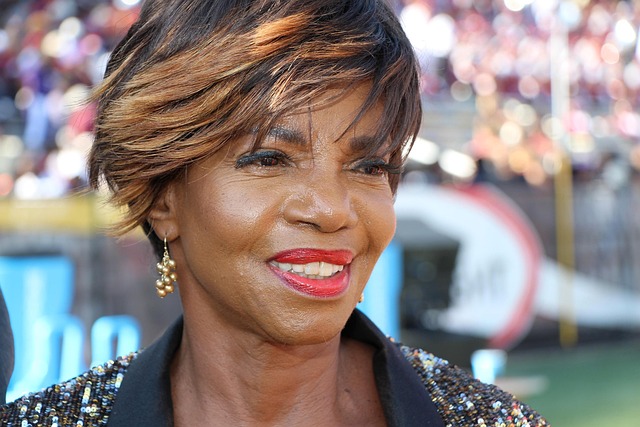
Julianne Moore received the Kering Women in Motion award at a gala ceremony Sunday evening at the Place de la Castre in Cannes, using her acceptance speech to challenge what she described as a cultural assumption that stories centered on women are inherently less interesting or commercially viable than those centered on men.
The Kering Women in Motion award was launched in 2015 by the luxury group Kering in association with the Cannes Film Festival. Its stated purpose is to celebrate how cinema can advance the role of women in society. Moore, who has accumulated an Oscar, an Emmy, and awards from Berlin, Venice, and Cannes across a 40-year career, addressed a crowd that included Demi Moore, Ruth Negga, Vicky Krieps, and past honorees Salma Hayek Pinault and Isabelle Huppert.
"I fucking love actresses," Moore declared during her speech, according to Variety. She went on to describe a systemic problem she sees in how female stories are received and funded. "There is a cultural assumption, particularly in the United States, that women's stories are less interesting or smaller, or that if we're at the center of a narrative, we need to be strong or accomplishing something great, or doing something that is particularly male, if we want someone to watch us — if we want men to watch us. And I think that's untrue," she said.
Moore argued that this assumption overlooks the female audience entirely, and said her own choices in cinema and daily life reflect a deliberate centering of women. "I see the women in my elevator, on the subway, and in the airport. If I need information, I approach a woman," she told the audience. "When my kids were little, I told them, if you're ever lost or in trouble, to look for a lady, she will help you. I read books about women. My yoga group is all female, and all of my representatives, my agents, and my managers are female."
She was careful to frame the remarks not as exclusionary but as a defense of specificity in storytelling. "I'm not saying this to be particularly binary," Moore continued. "Or to say the relationships I have with men or male-identifying people are not important to me, but to celebrate the fact that female point of view matters, matters to me, and that's paramount in storytelling. What is the point of view, and how is it specific? I feel it as an actor when the story and direction are specific, and the audience feels it too."
Moore also pointed to concrete data to support her argument. Recent statistics cited in her remarks show that just 37.1% of film roles in 2025 were played by women, and only 9 women out of 111 directors helmed top-grossing films in the United States that year. She connected this gap in representation on screen to a broader cultural narrative about female invisibility, one she said she finds both troubling and worth examining. "I'm always curious about that narrative. I want to know where they feel invisible, why they feel invisible, and have we been cultured to only be seen by a particular audience, or to only value that gaze," she said.