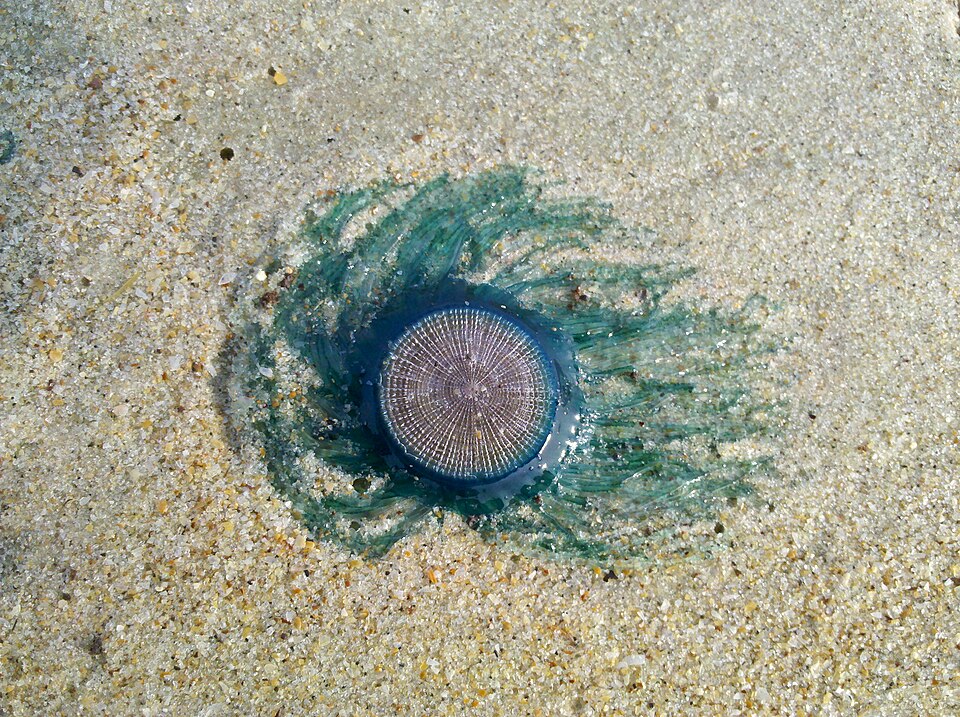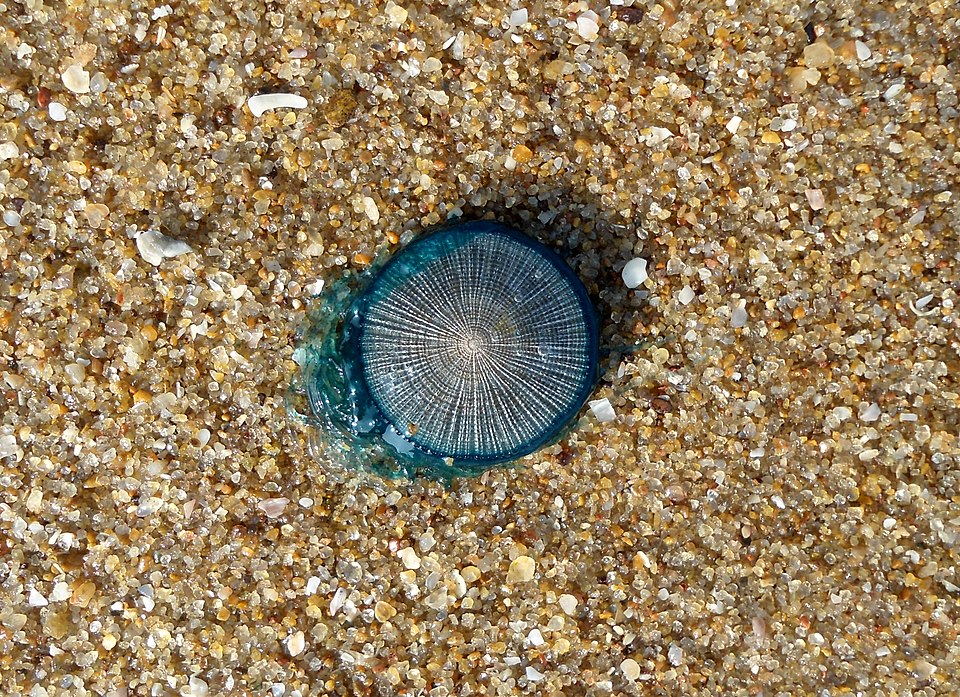
A small ocean drifter called the blue button, or Porpita porpita, may spend several years floating on the sea surface, far longer than scientists had previously estimated, according to a new study published in the journal Scientific Reports.
Researchers from the University of Tokyo's Misaki Marine Biological Station on the Miura Peninsula in Kanagawa Prefecture, south of Tokyo, managed to keep ten blue button colonies alive in captivity for up to 21 days. Based on observations made during that time, they concluded that the creatures likely live much longer than the previous estimate of under a year.
"We were able to keep 10 blue button colonies alive for up to 21 days," said Associate Professor Kohei Oguchi from the University of Tokyo. "From our observations of these colonies, we can now estimate that blue buttons may actually live for several years drifting on the ocean surface. This is much longer than previously thought, which was less than a year."
The blue button is not a jellyfish, though it looks like one. It is a colony of tiny soft marine invertebrates called zooids, or polyps, all attached to a circular disk made of chitin, the same hard material found in crab and shrimp shells. The disk contains air chambers that keep the colony afloat. Individual zooids within the colony divide into specialized groups, with some dedicated to catching prey and others to reproduction, in a structure that resembles a raft and its crew.
Blue buttons only grow to about four to five centimeters across. They drift wherever currents take them and are rarely seen unless they wash ashore. Despite surviving open-ocean conditions including wind, waves, and sun, they have proven extremely difficult to keep alive in laboratory settings, which has made studying them a long-standing challenge for marine biologists.
Oguchi collected specimens during daily walks around the rock pools near the research station. The team then ran a series of experiments testing different container sizes ranging from 30 centimeters to one meter in diameter, water temperatures between 18 and 25 degrees Celsius, flowing versus still water, varying levels of sunlight, and different food sources. After all that testing, the method that worked was the most straightforward one: a 30-centimeter plastic container filled with filtered seawater, changed every day, placed near a sunny spot, with a diet of small shrimp.
The study also found that the float structure keeping the blue button adrift grows by adding new rings from its outermost layer, a detail that helped researchers estimate the creature's age and lifespan. That structural detail, combined with the captive survival data, forms the basis for the new multi-year lifespan estimate.
Specialists from two Japanese aquariums collaborated with the University of Tokyo team on the research. The team described the achievement as a step toward eventually understanding the full life cycle of the blue button, which remains largely unknown.