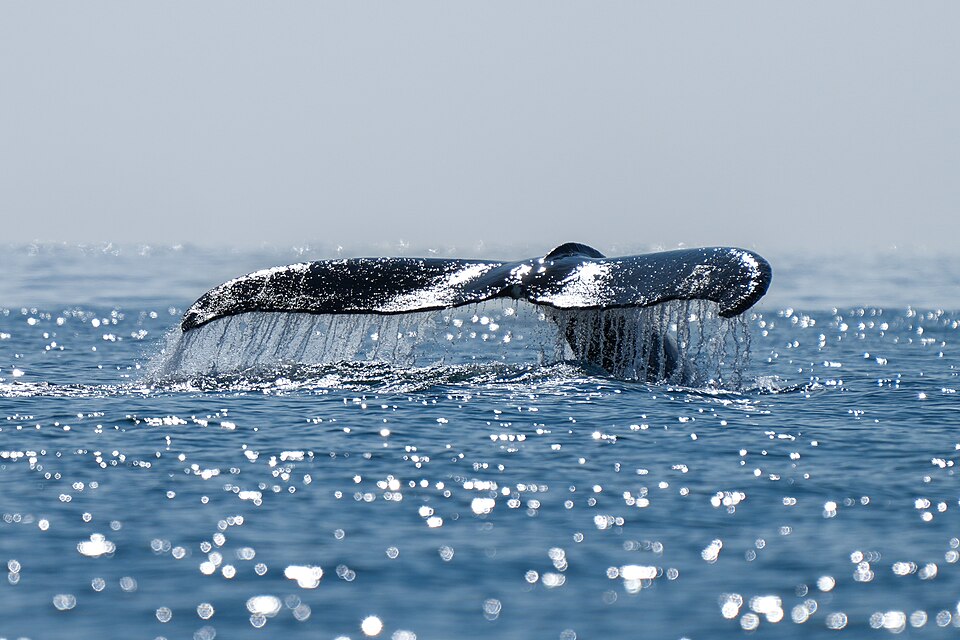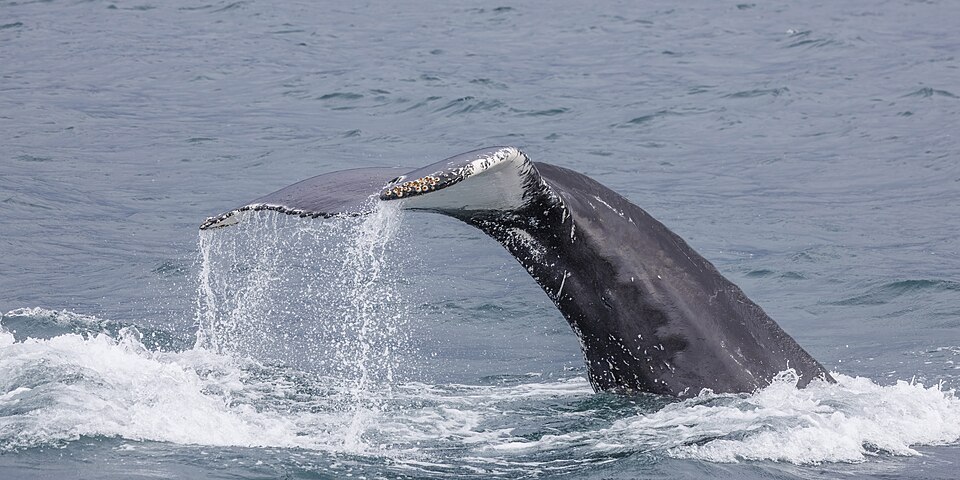
Two humpback whales have been confirmed traveling between breeding grounds in eastern Australia and Brazil, crossing more than 14,000 kilometers of open ocean, according to a study published in Royal Society Open Science. The findings set new records for the greatest distances ever confirmed between sightings of individual humpback whales anywhere in the world.
The research team identified the two whales by comparing tens of thousands of photographs of whale tails, known as flukes. One whale was first photographed in Hervey Bay, Queensland in 2007, seen again in the same area in 2013, and then photographed off the coast of São Paulo, Brazil in 2019. The straight-line ocean distance between the eastern Australia and Brazil breeding grounds is approximately 14,200 kilometers, roughly the distance from Sydney to London. Because only the starting and ending points of the journey were documented, the actual route and true distance swum remain unknown.
The second whale was first photographed in 2003 at the Abrolhos Bank, Brazil's main humpback whale nursery off the coast of Bahia, as part of a large group of nine adults. Twenty-two years later, in September 2025, the same whale was spotted alone in Hervey Bay, Australia. That separation of 15,100 kilometers makes it the longest distance ever documented between sightings of the same individual humpback whale on record.
The study drew on 19,283 high-quality fluke photographs collected between 1984 and 2025 from eastern Australia and Latin America. Photographs came from both professional scientists and citizen scientists through the global platform Happywhale. Researchers ran the images through an automated image-recognition algorithm and then independently verified every potential match by eye.
Lead researcher Dr. Cristina Castro from Pacific Whale Foundation described the role that contributed photographs played in the findings. "Every photo contributes to our understanding of whale biology and, in this case, helped uncover one of the most extreme movements ever recorded," she said.
The study's title is "First evidence of bidirectional exchange between distant humpback whale breeding populations in eastern Australia and Brazil," indicating the crossings were documented in both directions between the two regions. The confirmation of movement in both directions between such distant populations is a first in the scientific record.
Griffith University Ph.D. candidate and co-author Stephanie Stack pointed to the years of collaboration required to make the connections possible. "These whales were photographed decades apart, by different people, in opposite parts of the world, separated by two different oceans, and yet we can connect their journey," she said.
The research involved an international team and relied on records stretching back to 1984. Because the actual paths the whales took between the two regions were not recorded, researchers note the true distances traveled could be considerably greater than the straight-line figures cited.