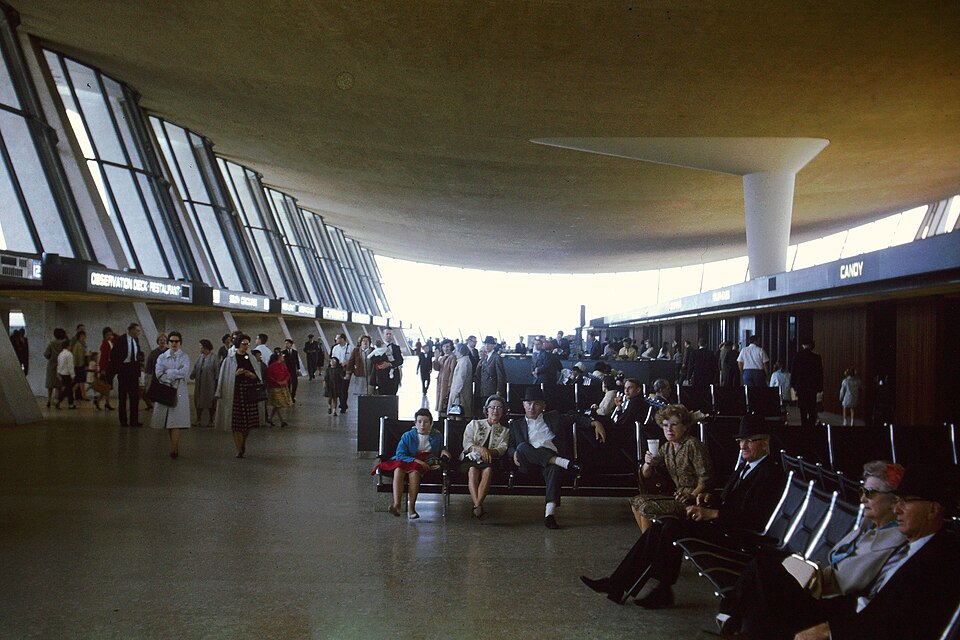
Michal Ruprecht arrived at Uganda's Entebbe International Airport at 2 a.m. on Thursday, expecting to fly home to Michigan. The airline agent looked twice at his destination and then showed him a memo from U.S. Customs and Border Protection. Ruprecht was going to Washington Dulles International Airport instead.
"The first thing that was going through my head was denial," Ruprecht said. "I wasn't sure if this was real."
Ruprecht, a medical student and freelance reporter who had spent a month in Uganda on a reporting trip for NPR, was among the first travelers to fly under a policy announced just hours earlier. All Americans who have passed through Uganda, South Sudan, or the Democratic Republic of Congo in the past 21 days must now enter the United States through Dulles, located in a Virginia suburb of Washington, D.C. On Friday evening, two additional airports, Hartsfield-Jackson Atlanta International Airport and George Bush Intercontinental Airport in Houston, were announced as additional screening sites set to begin operations within days.
The policy is part of a broader U.S. response to a growing Ebola outbreak in the DRC and Uganda. The World Health Organization declared it a public health emergency of international concern on May 17. There are already 800 suspected cases and more than 180 suspected deaths, according to the WHO.
After 20 hours of travel, Ruprecht arrived at Dulles and was flagged for extra screening. CDC officials guided him into a temporary clinic set up at the airport. "They put these tarps up that created pseudo-doctor office rooms," he said. "It looked like a makeshift campsite."
A CDC official checked his temperature with a handheld thermometer. The first reading came back slightly elevated. "He asked me, was I nervous? I said 'Yes!' " Ruprecht said. His second and third readings were normal. Officials then asked whether he had treated patients or attended funerals in Uganda and took down his contact information. "It took 5 to 10 minutes, it was pretty quick," he said. "I'll be honest, it was pretty anticlimactic."
The U.S. response also includes reserving the right to deny entry to permanent residents and barring most non-citizens who have recently traveled through affected countries.