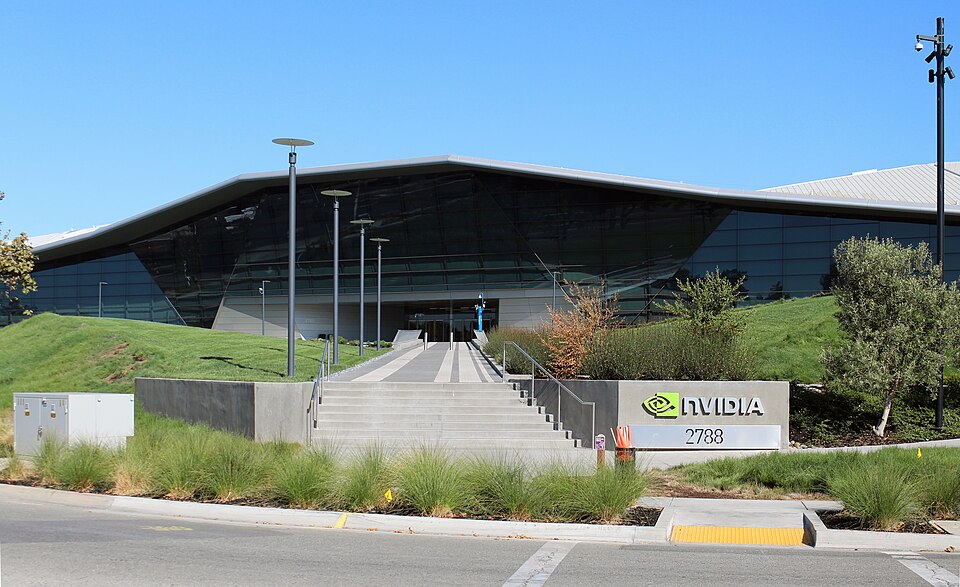
Nvidia became the first company in the world to reach a $5 trillion market capitalization in October 2025. Now, according to a report by Yahoo Finance, analysts are predicting it could become the world's first $15 trillion company by 2029.
The semiconductor giant reported an 85 percent year-over-year increase in revenue in its first quarter of fiscal 2027, which ended April 26, reaching $81.6 billion. That result improved on the 69 percent revenue growth the company posted in the same quarter a year earlier. Non-GAAP earnings jumped 140 percent year over year to $1.87 per share, compared to 33 percent growth in the prior year period.
Nvidia's guidance for the current quarter calls for $91 billion in revenue, which would represent a 95 percent increase over the year-ago period. The company has continued to grow at an accelerating rate despite already having a massive revenue base.
Much of the debate around Nvidia's future has centered on whether its graphics processing units, or GPUs, would remain relevant as the AI industry shifts from training large language models to running them. Training requires enormous amounts of computing power, which is where GPUs excel. Inference, the process of running an AI model to generate answers, has been seen as less demanding, raising questions about whether cheaper, custom chips could cut into Nvidia's dominance.
The company's latest results suggest those concerns have not materialized. According to Deloitte, AI inference will account for two-thirds of compute power in data centers this year. But Deloitte also notes that the majority of that computing will still be performed by powerful chips such as GPUs rather than inference-focused alternatives. Nvidia has responded to the inference era by designing server racks specifically to deliver higher inference performance at lower cost. Nvidia management noted on the latest earnings call that its next-generation Vera Rubin server racks can "deliver up to 35x higher inference throughput and up to 10x greater AI factory reven" compared to previous generations.
Hyperscalers, sovereign customers, and cloud computing providers have continued to line up for Nvidia's chips. The company has also pursued new opportunities beyond its core GPU business to sustain growth as competition in the AI chip market intensifies. Rivals have pushed forward with custom silicon designed to handle specific AI workloads at lower cost, but Nvidia's revenue trajectory shows no sign of being disrupted so far.
The stock has already made significant gains for investors who bought in early. Whether it reaches a $15 trillion valuation by 2029 depends on continued dominance in both the AI training and inference markets, as well as Nvidia's ability to expand into new segments of the computing industry. The next quarterly earnings report will be closely watched to see whether the company meets or beats its $91 billion revenue target.