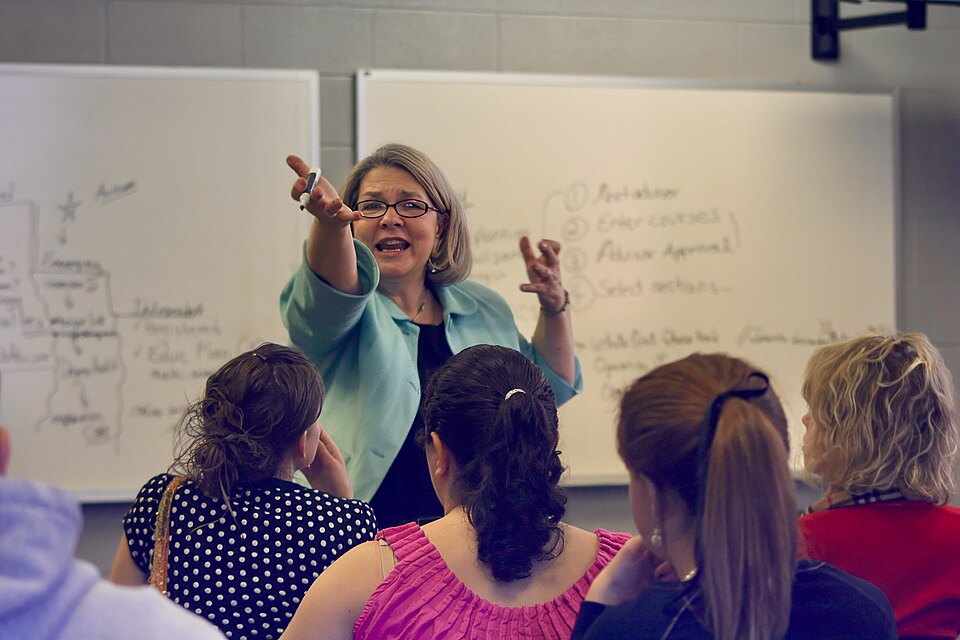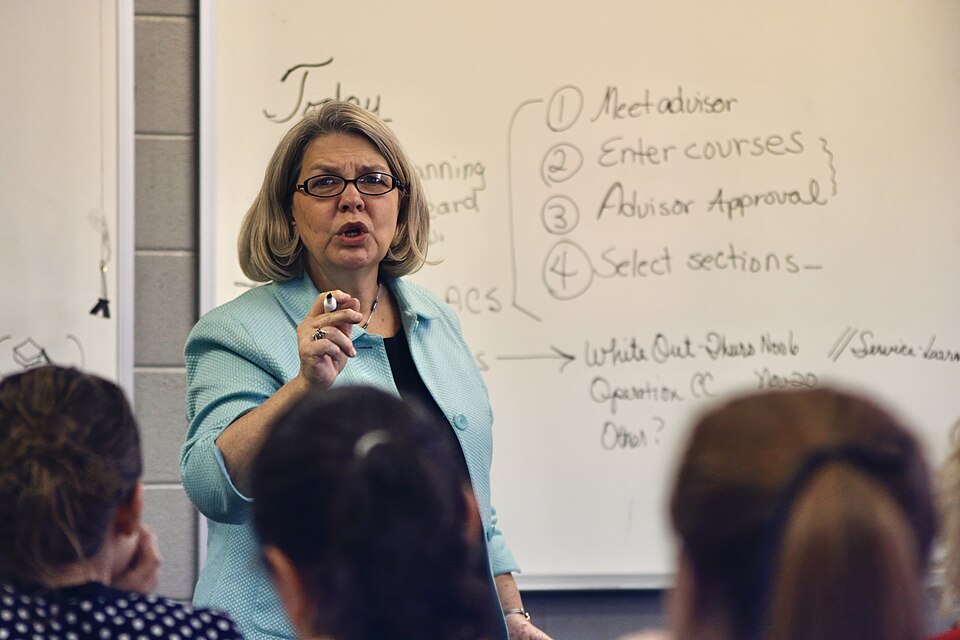
A team at the University of Glasgow has spent four years building an artificial intelligence platform designed to help teachers notice and respond to important moments in their classrooms as they happen, rather than reflecting on them days or weeks later.
The platform, described in the journal Educational Review and reported by Phys.org, is called Deliberative Instructional Agents, or DIAs. It uses AI to automatically capture and analyze evidence of what is happening in a classroom, then supports teachers in interpreting that evidence and rehearsing different instructional responses through simulation.
Dr. Thomas Cowhitt, a teacher-educator and researcher at the University of Glasgow, developed DIAs over a four-year research and development partnership with Dr. Matt Gibson at The Glasgow Academy. The goal was to address a persistent gap between the professional development teachers are expected to pursue and the conditions that make that development practically possible.
"The use of evidence to guide teaching is central to improving schools and strengthening professional practice, with teachers increasingly expected to draw on multiple sources of information to inform instructional decisions," Cowhitt said. "Yet we know that accessibility, relevance and lack of time all make it difficult for teachers to engage with these sources when deciding what should happen next in their classrooms."
The result, he said, is that teaching decisions get made largely on experience and intuition. "As a result, instruction is largely shaped by experience and intuition, with limited opportunity to be responsive to student needs or to explore alternative approaches," Cowhitt said. "Crucially, this means that teachers often miss what we call 'critical moments' — where a student says or does something that could have been pivotal to the learning process."
The DIAs platform is built to address exactly that problem. By placing teachers at the center of three overlapping sources of knowledge — evidence from their own practice, educational research, and their accumulated experience — the system shifts professional learning from something that happens separately from teaching into something that happens continuously inside it.
Research on professional development in schools consistently shows that ongoing learning improves teacher satisfaction, teacher retention, and student outcomes. The challenge has always been workload. Most teachers face mounting responsibilities that leave little room for structured reflection, even when they want to engage with it.
Dr. Matt Gibson, Rector of The Glasgow Academy, framed the project as unusual in the education technology landscape. "The drivers for technology in education are key: this research and development work is a rare case in which educators are solving existing problems using technology," he said. "This is very different from what" many technology providers offer, which tends to start with a product and look for a problem it can solve.
The platform is described as the first of its kind in education technology. Researchers say it is designed to be embedded in the daily flow of teaching rather than added on top of it, with the intention of making continuous professional development a practical reality rather than an aspiration.