A new implant made of drug-loaded nanofibers doubled survival time in mice with glioblastoma, the most aggressive form of brain cancer in adults. Researchers from the University of Cincinnati and Johns Hopkins Medicine developed the system, which delivers three federally approved chemotherapy drugs directly to a tumor site after surgery.
According to Phys.org, the three drugs, temozolomide, acriflavine and PT2385, work better in combination than they do alone. That kind of interaction is called synergism in pharmacology, meaning the combined effect is greater than the sum of the parts.
Andrew Steckl, a Distinguished Research Professor at UC, described the concept this way. "When you add them together, three things can happen," Steckl said. "The combination is negative; the effect is additive, like one plus one equals two; or it's synergistic, which is like one plus one equals three."
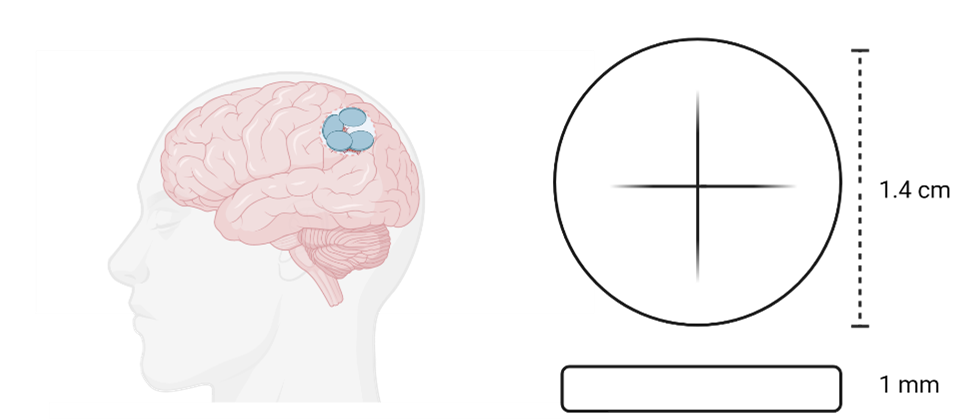
The delivery system uses a process called electrospinning, which applies an electric field to create a multilayered mesh of tiny fibers. The drugs are embedded in those fibers, which can then be implanted directly at the site where a tumor was removed. This allows for both immediate and sustained drug release over time, targeting cancer cells that remain after surgery.
Daewoo Han, an assistant professor in UC's College of Engineering and Applied Science and lead author of the study, said the system was built to address some of glioblastoma's most stubborn characteristics. "Our NanoMesh system was designed to solve these issues by enabling localized long-term delivery of multiple synergistic drugs directly at the tumor site after surgery," Han said.
Glioblastoma is particularly difficult to treat for several reasons. Its cells are highly varied, which allows the cancer to mutate and evade treatments over time. The blood-brain barrier also blocks many traditional chemotherapy drugs from reaching the tumor at effective concentrations. Recurrence is common even after aggressive treatment.
Steckl put it plainly. "It's tough to control," Steckl said. "It comes in through the window and when you close the window, it comes through the door. And when you close that, it comes through the chimney."
The Johns Hopkins team included Betty Tyler, a professor of neurosurgery, and postdoctoral researcher Hasan Slika. Tyler said researchers are increasingly focused on hitting the disease from multiple directions at once. "Unfortunately, cancers know how to pivot to evade therapeutic treatment," she said. "So we're approaching treatment multidimensionally."
Han said the results in animal studies were significant. "In our study, a three-drug combination showed strong synergistic effects across multiple glioblastoma models and significantly improved survival in animal studies," Han said. The paper was published in ACS Biomaterials Science and Engineering.
The study represents one of several emerging approaches to glioblastoma that try to work around the limitations of systemic chemotherapy by delivering drugs locally, at the source of the cancer, rather than through the bloodstream.