Forty deals worth $28 billion have come to the public market in 2026 so far, and analysts say the quality of those companies sets this moment apart from the late 1990s dot-com era.
According to a report by Yahoo Finance, Goldman Sachs strategist Ben Snider analyzed the current IPO landscape ahead of expected public offerings from SpaceX and OpenAI. Snider wrote, "While elevated IPO activity has characterized some previous equity market peaks, the number of IPOs year to date is only on pace to reach the historical annual average of 100. In contrast, more than 250 IPOs launched in 2021 and nearly 400 launched in 1999."
Snider lifted his 2026 IPO volume forecast to $225 billion from $160 billion. "We expect total corporate equity supply to register $675 billion including follow-ons and other issuance," Snider added. "However, this issuance scales to just 1.0% of US equity market cap, compared to an average of 1.5% since 1995."
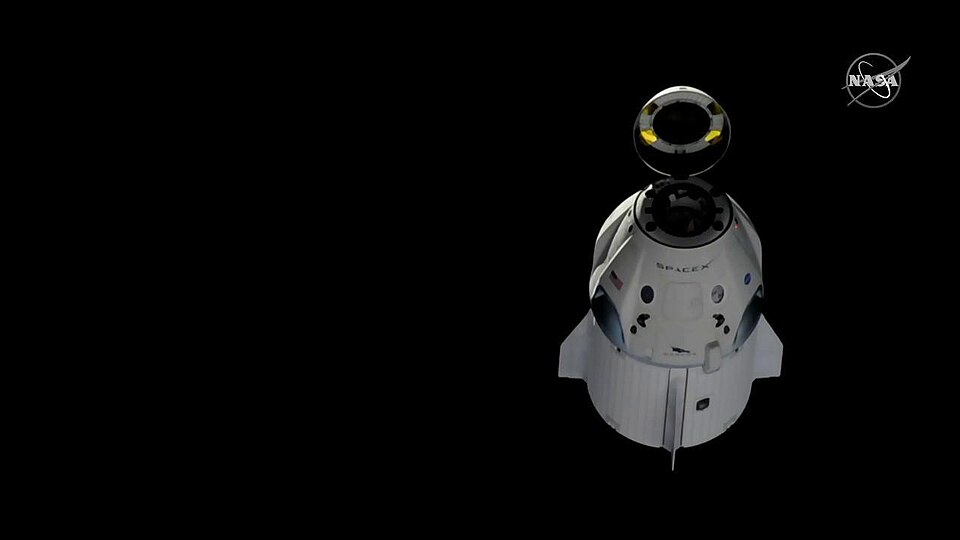
SpaceX stands as a central example of the difference in company quality between now and the dot-com period. The company was founded in 2002 and has more than 13,000 employees. SpaceX's revenue surged to $18.7 billion in 2025, up 33% from a year earlier, according to Yahoo Finance AlphaSpace intel. That is a far different profile from companies like Pets.com and eToys, which went public during the dot-com boom without sustainable business models.
SpaceX's expected public debut has drawn new attention to the broader space sector. According to McKinsey, the global space economy could reach $1.8 trillion by 2035, and the U.S. government has been investing heavily in satellites, autonomous systems, spacecraft, and sensors.
One company in that sector drawing attention is Redwire, which trades on the New York Stock Exchange under the ticker RDW. Redwire operates two segments: space infrastructure and defense technology. Its space segment builds hardware including solar panels and robotic arms for spacecraft, along with components that support large satellite constellations. When NASA's Artemis II mission launched earlier this year, Redwire's optical imaging and sun sensor technologies were used on the Orion spacecraft.
In its defense technology segment, the company builds military drones capable of flying autonomously in GPS-denied environments. Redwire has delivered hundreds of its Penguin drones to the Ukrainian military for use in combat operations. Its customers include NASA, the U.S. Army, the Marine Corps, and the Department of Homeland Security, as well as major aerospace contractors including Lockheed Martin, Boeing, Airbus, and Blue Origin.
In April, the U.S. Space Force's Space Systems Command selected Redwire as one of 14 companies to compete under a $1.8 billion contract program to design and build advanced space surveillance and reconnaissance satellites. The company was also awarded a multi-award contract for the Missile Defense Agency's Scalable Homeland Innovative Enterprise Layered Defense program.
Recent sharp moves in shares of Micron, Sandisk, Snowflake, and Dell have prompted comparisons to previous bubble periods. But the Goldman Sachs analysis suggests the underlying composition of today's IPO market does not match the conditions that preceded the dot-com crash.