

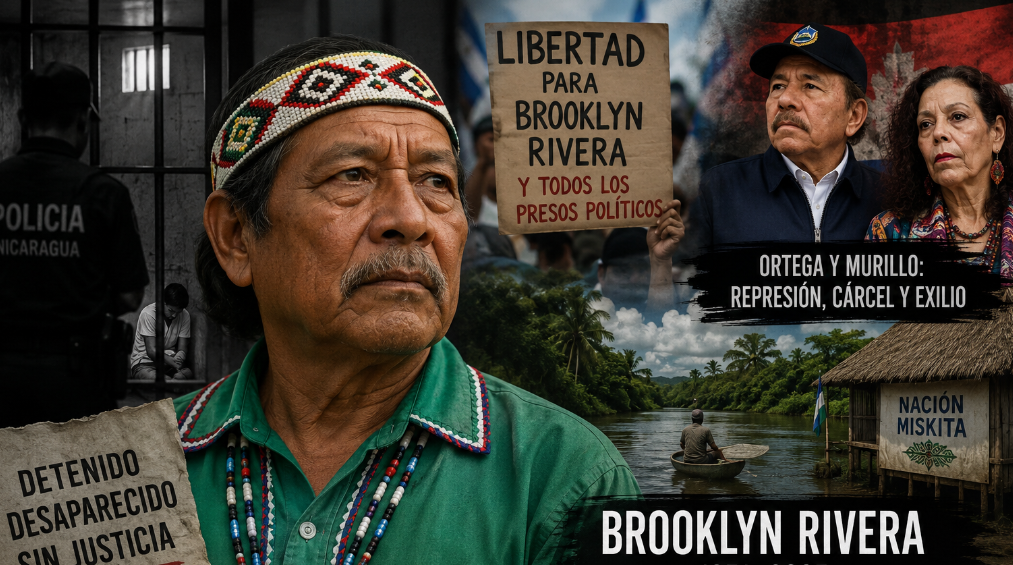
Brooklyn Rivera, a 73-year-old Indigenous leader, politician, and activist, died in Nicaraguan state custody on Sunday after nearly three years of detention. Nicaragua's government attributed his death to a bacterial infection that developed after a bout of COVID-19, according to Al Jazeera.
Rights advocates immediately pushed back on that explanation. Reed Brody, a member of the United Nations Group of Human Rights Experts on Nicaragua, said in a statement before Rivera's death was confirmed: "The cause would be that he was in government custody in conditions of enforced disappearance for over two years, denied independent medical oversight. There is no other way to read this."
Brody went further after the death was announced: "If he is dead, it cannot be said that the cause was illness."
Rivera had been held since September 2023 with no contact with the outside world. His family was barred from seeing him, and there had been no official confirmation of his imprisonment until Wednesday, when Nicaragua's Ministry of the Interior confirmed his detention and published photographs showing Rivera intubated in a hospital. The ministry described his condition at the time as "delicate," reporting multiple organ failure, a cirrhotic liver, and an active lung infection.
The photographs triggered a wave of international condemnation. The United States State Department demanded his unconditional release and blamed Nicaragua's leaders for what it called their "singular role in his cruel treatment." The State Department wrote: "This repression, violence, and inhumanity is abhorrent; we reiterate our call for his and all political prisoners' unconditional release NOW."
Rivera was a member of the Miskito Indigenous group and had spent decades advocating for the protection of his people's ancestral lands along Nicaragua's northeast coast. He was also among the voices who spoke out against President Daniel Ortega's left-wing Sandinista government.
Nicaragua is led by Ortega and his wife Rosario Murillo, who serve as co-presidents. Under their rule, dissidents have faced arrest, imprisonment, torture, exile, and the revocation of citizenship.