Nvidia unveiled a new chip Monday designed to run advanced artificial intelligence functions directly on laptops and desktop computers, a move the company says will transform the personal computer industry the same way smartphones changed mobile phones.
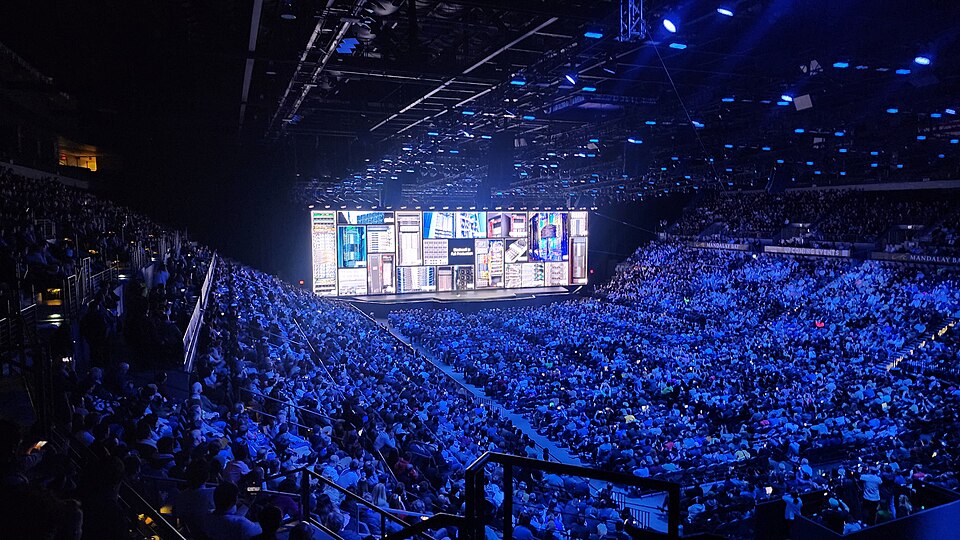
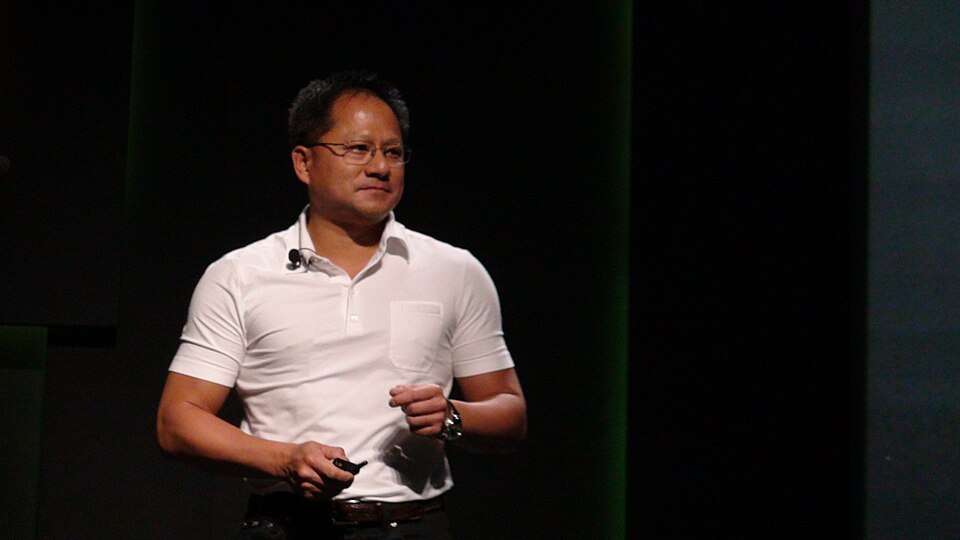
Jensen Huang, the Taiwanese-American founder and CEO of Nvidia, made the announcement at the company's annual GTC event in Taipei, Taiwan. He introduced the RTX Spark superchip, which combines central processing unit and graphics processing unit capabilities into a single chip. New Windows laptop and desktop models built around the chip are expected to debut in the fall.
"This is going to be the new PC," Huang said during his keynote speech. He said Microsoft and Nvidia "are going to reinvent the PC."
Nvidia described the new machines as AI personal computers. The company said the devices would be able to run AI agents locally, meaning the processing happens on the user's own machine rather than on remote servers. Huang described what such an agent could do: "When it has an autonomous agent, an agent that's helping you, that understands you, you could talk to it. It could look at you. You could ask it to read files, go help you do some research. It could do a lot more."
He also listed a broader range of applications: "If you want to run digital biology, no problem. If you want to do seismic processing, no problem. You want astrophysics, no problem." He called the development "as big of a deal as the reinvention of the phone into what we now know as the smartphone," according to French news agency AFP.
Microsoft said in a separate statement that computers running on Nvidia's RTX superchips would support highly capable AI models and complex workloads.
Nvidia is already the world's most valuable company, ranking ahead of Apple, Google's parent Alphabet, and Microsoft. The company has built much of that value supplying high-end chips to data centers fueling global AI demand. Monday's announcement extends that strategy into the consumer market.
Analysts said the move is significant. Neil Shah, co-founder of Counterpoint Research, described it as revolutionizing how PCs would look over the next 10 years. He said the new machines will drive agentic AI applications in every home, with the goal of putting an AI supercomputer in each household. Lian Jye Su, chief analyst at technology research group Omdia, said the announcement means more choices for consumers.
Huang also announced during his speech that Nvidia's new Vera CPUs for data centers are in full production and are expected to become a major growth driver as demand for AI agents increases. Early customers are expected to include Anthropic, OpenAI, and SpaceXAI.