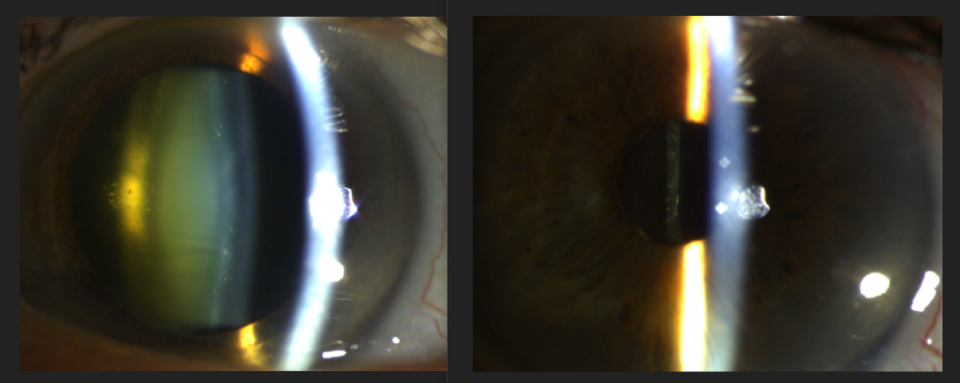
Anne Hathaway was legally blind in one eye for a decade before getting surgery to fix an early onset cataract. The Academy Award-winning actor went public with the condition in a recent interview, describing years of significant vision loss that she said she did not fully recognize until it was corrected.
"I was half blind for 10 years — age 30 to 40," Hathaway told the New York Times' Popcast. "I had an early onset cataract, and it affected my vision so much that I was basically legally blind out of my left eye."
After undergoing surgery, Hathaway described the change as dramatic. "I didn't realize how bad it had gotten until I could finally see the full spectrum," she told the Popcast.
According to Healthline, cataracts are typically associated with middle age and beyond. The Centers for Disease Control and Prevention reports that 17.2% of Americans ages 40 and older have a cataract in one or both eyes. But doctors say younger people are not immune.
Ashley Brissette, MD, an ophthalmologist and eye surgeon specializing in cataract surgery in New York City, told Healthline that earlier cases do occur and have identifiable causes. "These earlier cases may be influenced by factors such as genetics, certain medical conditions, medications, or environmental exposures," Brissette said. "So while early onset cataracts are less typical, they are not uncommon, and they are a reminder to pay attention to changes in your vision at any age."
Brissette said the condition can worsen gradually, making it easy to miss. Early symptoms include blurry or cloudy vision, increased sensitivity to light or glare, difficulty seeing at night, colors appearing faded, and needing brighter light for everyday tasks. Over time, cataracts can affect independence and quality of life, contributing to reduced mobility and an increased risk of falls.
The approach to treatment has shifted in recent years. "The old thinking was to wait until cataracts became advanced before removing them surgically, but a more modern approach is to remove them as soon as they affect your vision and quality of life," Brissette said. She added that lens implants placed inside the eye during surgery can provide a range of vision that may reduce the need for glasses afterward.
"The important thing to know is that this kind of vision loss is treatable with modern cataract surgery," Brissette said.
Hathaway's case drew attention in part because of her age at diagnosis. Most people do not associate cataracts with someone in their 30s, but Brissette noted that everyone will develop them at some point. She said cataracts typically begin forming between ages 40 and 50, but that earlier cases are seen regularly enough that people should not dismiss changes in their vision as minor or temporary.
The condition affects a large share of the older population. Cataracts remain one of the leading causes of vision impairment in the United States, and surgery to correct them is among the most commonly performed procedures in the country.