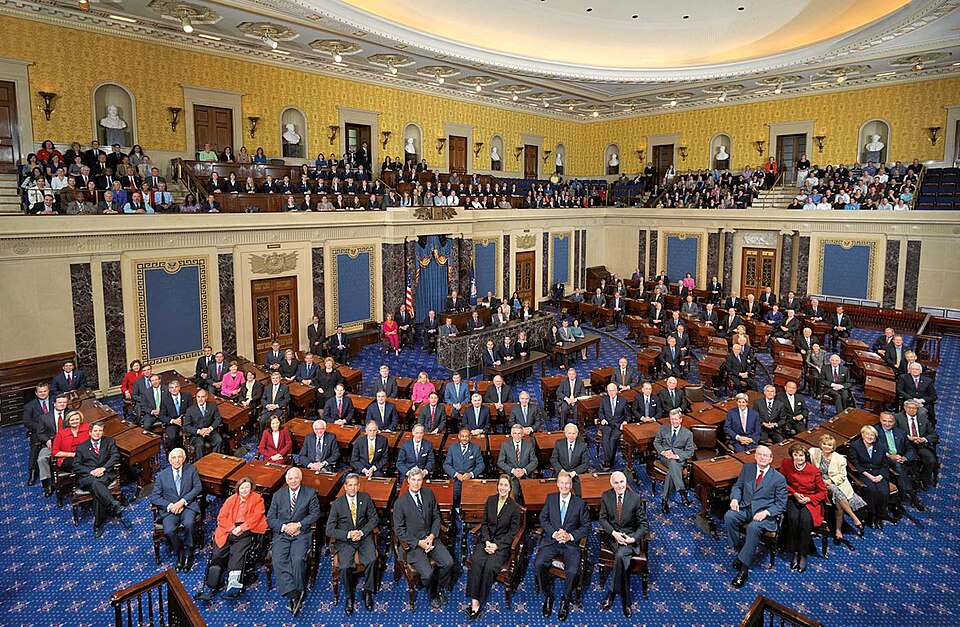
Senate Republicans on Thursday defeated two separate amendments that would have permanently blocked President Donald Trump's proposed $1.776 billion settlement fund, as Democrats used a procedural process to force uncomfortable votes on a series of controversial issues.
The votes came as Republicans pushed to pass a $70 billion immigration-enforcement funding bill, a top legislative priority for Trump. Democrats responded by triggering a rapid-fire series of amendment votes known as a "vote-a-rama," designed to put Republicans on record on politically sensitive topics ahead of November's midterm elections.
"Amendment after amendment, vote after vote, Republicans are going to have to answer to the American people," Senate Minority Leader Chuck Schumer said, according to Al Jazeera.
The settlement fund became an early flashpoint. It was created as part of a lawsuit Trump filed against the Internal Revenue Service, a part of his own government, and was designed to pay out alleged victims of politically motivated prosecution. Critics on both sides of the aisle called it a slush fund for Trump's allies. Several Republicans had signaled that the fund posed serious political risks heading into the midterms, and the Department of Justice had since backed away from the proposal. Trump himself had not confirmed whether the fund was dead or simply on hold.
Senate Democrats introduced a measure to permanently ban the fund. Republicans rejected it. Senator Tom Tillis then introduced a second amendment that would also have banned the fund but redirected the money to a separate anti-fraud account within the Justice Department. That measure was also rejected.
The vote-a-rama was not limited to the settlement fund. Schumer signaled that additional amendments would address the permanent immunity from tax audits that Trump had secured for himself and his family as part of the IRS settlement. Trump's immigration enforcement campaign and other issues were also scheduled to come up during the day's voting.
The procedural maneuver put Republican senators in the position of repeatedly voting against measures that polled poorly with the general public, even as the party worked to advance its immigration bill. Senate Majority Leader John Thune and other Republican leaders had been working to keep their caucus unified throughout the process.