

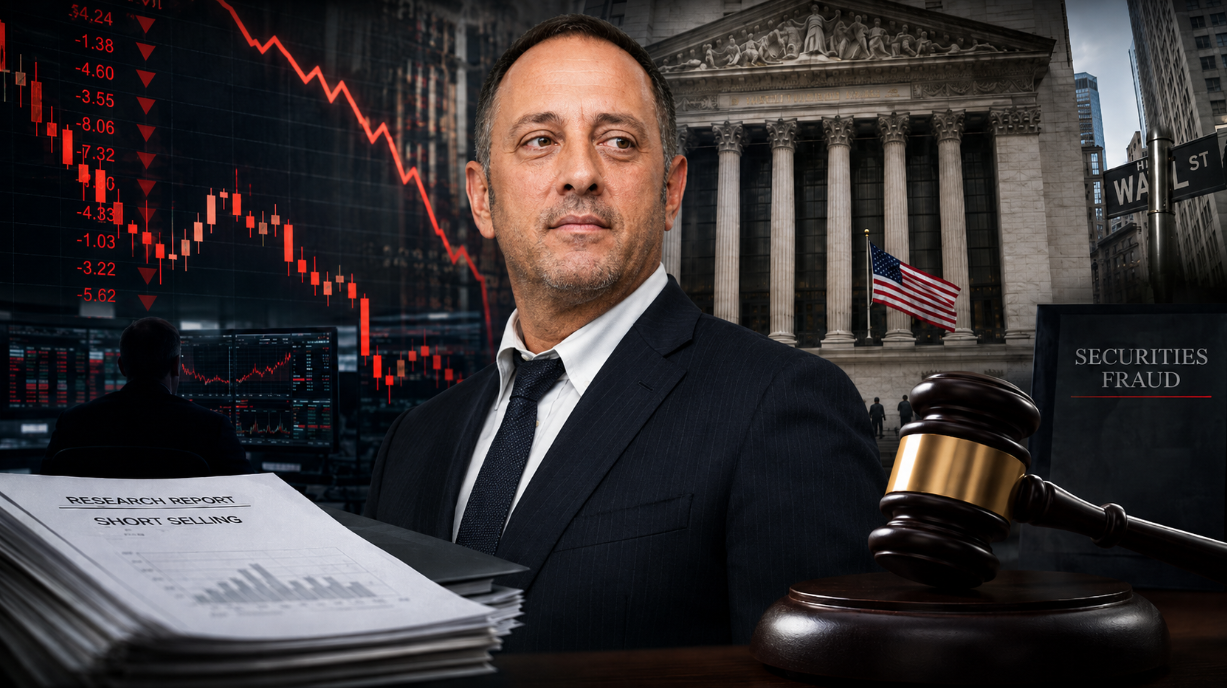
Andrew Left, the founder of Citron Research and one of the most prominent short sellers in the United States, has been found guilty of securities fraud, a verdict that has drawn fresh attention to the short-selling industry and how it operates.
The conviction came down recently and was discussed on the Motley Fool Hidden Gems Investing podcast, recorded on June 2, 2026, by contributors Tyler Crowe, Lou Whiteman, and Matt Frankel. The three discussed the verdict and what it means for short-selling research firms more broadly.
Short sellers profit when a stock they have bet against falls in value. Research firms like Citron make their work public, often publishing reports that argue a company is overvalued or fraudulent. Critics have long raised concerns about whether these firms have a financial interest in seeing stocks drop after they release negative reports.
The podcast contributors addressed what Whiteman called the general sense of discomfort that surrounds the short-seller business model, and they discussed what value, if any, short-selling research provides to ordinary investors. Short sellers have, on occasion, exposed genuine corporate fraud before regulators did, a fact that defenders of the practice often cite.
The Left verdict adds legal weight to concerns about conflicts of interest in the space. The case does not eliminate short selling as a practice, but it does raise questions about where the line falls between publishing legitimate research and manipulating markets for financial gain.
The same podcast episode also examined Dollar General, which the contributors used as a case study in turnaround investing. Dollar General was one of the best-performing stocks of the 2010s, the contributors noted, beating out companies that are now considered part of the so-called Magnificent 7, including Microsoft and Alphabet. The stock later fell sharply from those highs, making it a multi-year turnaround story. The contributors discussed what investors should look for when evaluating companies that are trying to recover from prolonged underperformance.
The podcast also addressed a listener question about crowdfunded real estate funds, a category of investment that has grown in popularity but that carries risks different from publicly traded real estate investment trusts.