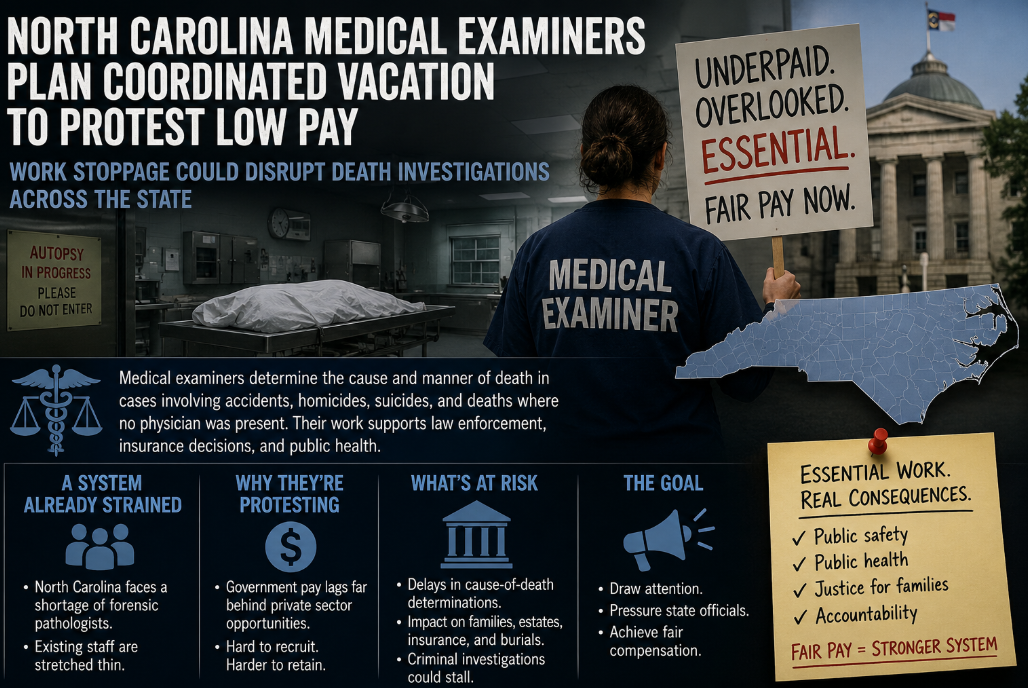
North Carolina's medical examiners are planning a coordinated vacation as a form of protest over what they describe as inadequate pay, according to a report by North Carolina Health News. The planned work stoppage threatens to slow or halt death investigations across the state.
Medical examiners are responsible for determining the cause and manner of death in cases involving accidents, homicides, suicides, and deaths where no physician was present. Their work feeds directly into criminal investigations, insurance determinations, and public health surveillance. A significant disruption to that system would have consequences far beyond any single office.
North Carolina already faces a shortage of forensic pathologists, the physicians who perform autopsies and sign off on official cause-of-death findings. That shortage has stretched existing staff thin for years. The planned coordinated vacation would compound an existing problem rather than create a new one.
The examiners framing the action as a protest points to a broader issue in how states compensate physicians who work in government rather than private practice. Forensic pathologists often earn substantially less in public roles than they could in other medical specialties or in private consulting work. Recruiting and retaining qualified professionals has become increasingly difficult as that pay gap persists.
North Carolina Health News reported that the examiners are organizing the vacation to draw attention to the compensation issue and pressure state officials to act. The timing and scope of the walkout were not fully detailed in available reports, but the coordinated nature of the action suggests it involves multiple offices across the state.
Death investigations that are delayed or left incomplete can have serious downstream effects. Families waiting for official cause-of-death determinations may face delays in estate proceedings, insurance claims, and burial decisions. Law enforcement agencies that rely on autopsy findings in criminal cases could also see investigations stall.
The protest reflects frustration that has built over time. Medical examiners occupy an essential role in the public health and legal systems, but that role is often invisible until something goes wrong. Pay that does not reflect the specialized training and legal responsibility involved in the work has made it harder to keep positions filled.
State officials have not yet responded publicly to the planned action, according to available reports. Whether the coordinated vacation proceeds as planned may depend in part on whether the protest prompts any movement on the compensation issue before the scheduled dates.