

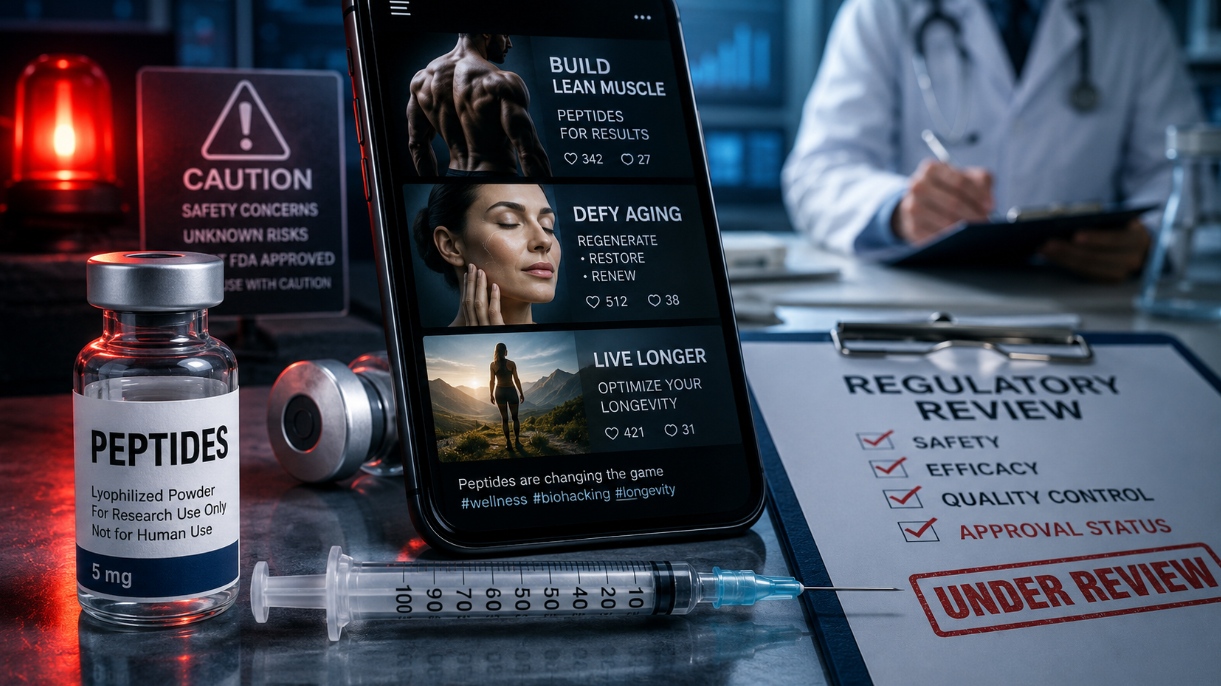
Injectable wellness peptides have gone from niche biohacker territory to mainstream popularity, and medical experts are raising alarms. Social media influencers promote the injections as tools for muscle gain, longevity, and anti-aging. No studies to date have verified their safety for use in humans.
According to Healthline, a recent position paper by the Institute for Safe Medication Practices described an alarming safety concern about the widespread use of these products. Unlike well-studied commercial peptide drugs such as insulin and GLP-1 medications, compounded peptide products marketed for wellness are not regulated by the Food and Drug Administration.
Experts and observers have drawn comparisons to the rise of anabolic steroids in the 1980s. Steroids emerged out of elite athletic circles and spread into gyms and fitness communities before researchers and athletic organizations raised concerns about cardiovascular disease and other health risks. By 1991, the substances were banned for non-medical use under the Anabolic Steroids Control Act.
The parallel is not lost on physicians who work in sports medicine. Bert Mandelbaum, MD, a sports medicine specialist, orthopedic surgeon, and co-director of the Regenerative Orthobiologic Center at Cedars-Sinai Orthopedics in Los Angeles, described the trend in blunt terms.
"This has nothing to do with wellness," Mandelbaum told Healthline. "I would call it more of an uninformed fad. It's worse than that — it's criminal. The influencers, including RFK Jr., are abusing the system and not following the science."
Health and Human Services Secretary Robert F. Kennedy Jr. has publicly supported peptides. Kennedy oversees the FDA, and experts have expressed concern that he could ease regulatory restrictions on these products. No states have outright banned non-FDA-approved peptides, though some have moved to increase public health messaging and crack down on online sales. Alabama's medical regulator recently issued a warning against the use of non-FDA-approved research-grade peptides due to health and safety risks.
The FDA is expected to make a decision in July on whether certain compounded wellness peptides should be officially restricted or regulated. That decision will come as sales of the products continue online with little federal oversight.