A dollar invested in the Columbia EM Core ex-China ETF, ticker XCEM, on the last trading day of 2025 was worth about $1.38 by the close on June 3, 2026. The same dollar placed in the SPDR S&P 500 ETF was worth about $1.11 over the same stretch, according to a report by Yahoo Finance.
XCEM started 2026 at a split-adjusted $38.36 and closed June 3 at $53.06. SPY moved from $681.92 to $754.24. A $50,000 allocation to XCEM at the start of the year is now worth roughly $19,000 more than the same allocation placed in the S&P 500.
The one-year picture is wider still. XCEM is up roughly 71% over the trailing twelve months. SPY is up about 27% over the same period. Pull back to five years and the gap largely disappears: XCEM is up roughly 76%, SPY about 78%. Most of XCEM's outperformance relative to the S&P 500 has arrived in the last twelve months.
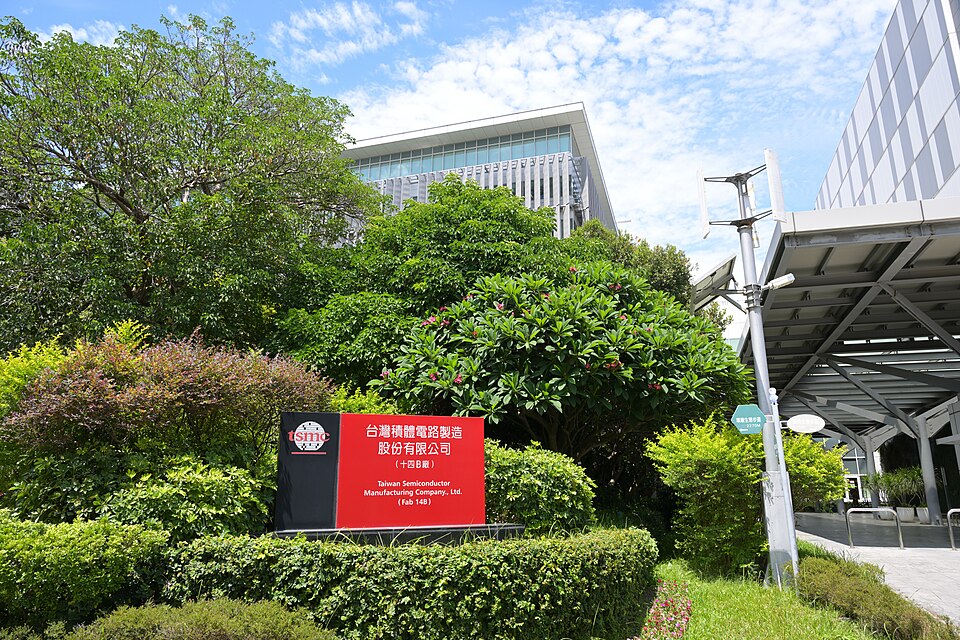
The fund tracks the Beta Thematic Emerging Markets ex-China index, which means it holds exposure to Taiwan, South Korea, and India while excluding mainland China and Hong Kong equities. Taiwan Semiconductor Manufacturing is among its top single-name positions. As of February 2026 reporting, the fund's largest country weights sit in India, South Korea, and Taiwan.
Three factors converged in the first five months of 2026. The AI capital spending cycle that has pushed NVIDIA to a 7.58% weight in the S&P 500 also lifted the companies that manufacture the underlying chips. TSMC and the Korean memory complex, including Samsung Electronics and SK Hynix, are the manufacturing tier beneath the U.S. hyperscaler order book, and XCEM sits directly on top of that exposure. The fund's outperformance has been attributed to its heavy exposure to South Korean semiconductor companies benefiting from the AI boom and its investments in India's financial sector.
The fund's run carries clear risks. The gains reverse quickly if the dollar strengthens significantly, if hyperscaler capital spending slows, or if China stimulus measures begin working and redirect investor attention back toward Chinese equities. Analysts have pointed to the DXY dollar index and TSMC's monthly revenue figures as the two data points most worth watching for early signs of a turn.
The broader point the numbers make is about the structure of the trade itself. XCEM is not a story of slow, durable compounding across a market cycle. It is a regime trade that caught a specific regime, one driven by AI manufacturing demand concentrated in a handful of companies in two countries. Whether that regime continues into the second half of 2026 depends heavily on whether the AI spending cycle sustains its current pace.