A major new analysis is challenging long-standing assumptions about how much alcohol is safe to drink. The findings suggest that health risks linked to alcohol begin at much lower levels of consumption than current U.S. federal guidelines recommend.
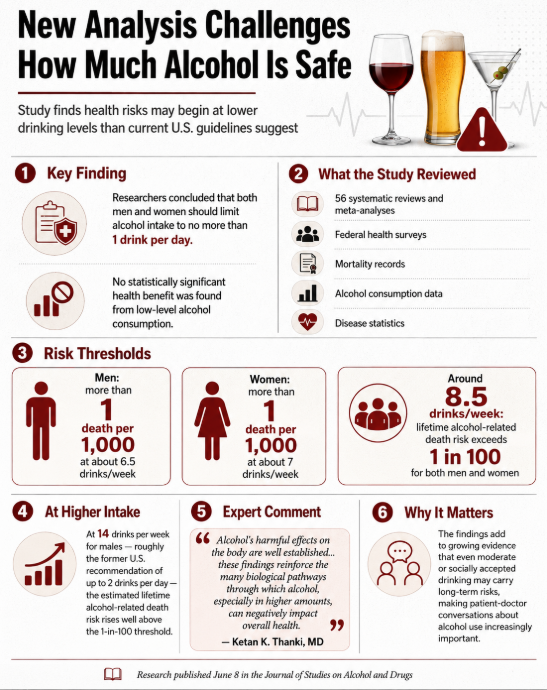
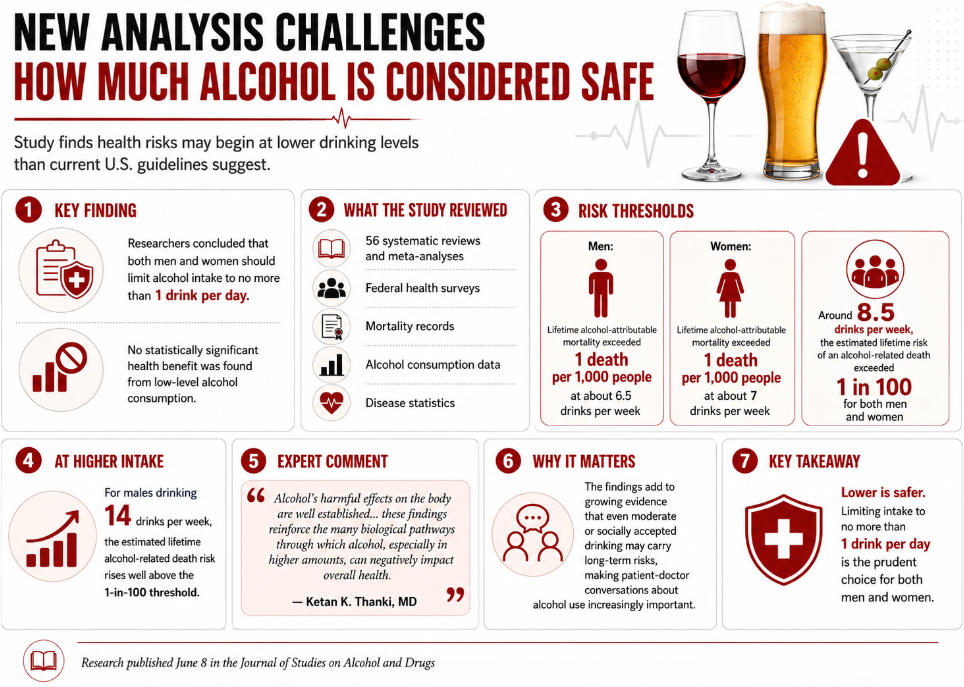
The research, published on June 8 in the Journal of Studies on Alcohol and Drugs, concluded that both men and women should limit alcohol intake to no more than one drink per day. Researchers found no statistically significant health benefit from low-level alcohol consumption. According to Healthline, the study concluded that the risk of alcohol-related death begins at lower levels of consumption than previously suggested by federal guidelines.
The analysis combined multiple national datasets rather than following a single group of people over time. Researchers included federal health surveys, mortality records, alcohol consumption data, and disease statistics. They ultimately reviewed 56 systematic reviews and meta-analyses.
The numbers the researchers produced are specific. The model estimated that lifetime alcohol-attributable mortality exceeded one death per 1,000 people at approximately 6.5 drinks per week for men and 7 drinks per week for women. Risk climbed quickly beyond that point. The estimated lifetime risk of an alcohol-related death exceeded one in 100 people at roughly 8.5 drinks per week for both men and women.
The figures become more stark at higher consumption levels. For males consuming 14 drinks per week, which is the equivalent of the former U.S. recommendation of up to two drinks per day, the estimated lifetime risk of an alcohol-related death rose significantly above that one-in-100 threshold.
Ketan K. Thanki, MD, a board-certified colorectal surgeon with the MemorialCare Todd Cancer Institute at Long Beach Medical Center, was not involved in the study but commented on the findings. "Alcohol's harmful effects on the body are well established, so these findings are not surprising. They reinforce the many biological pathways through which alcohol, especially in higher amounts, can negatively impact overall health," he said.
The report was previously commissioned under the Biden administration to help inform updated dietary guidelines. According to an editorial published alongside the study, the findings were not incorporated into the final guidelines released under the Trump administration.
The study adds to a growing body of evidence suggesting that even moderate or socially accepted levels of drinking may carry long-term risks, making conversations between patients and doctors about alcohol use increasingly relevant.