

SpaceX is pursuing a valuation of roughly $1.8 trillion in its initial public offering, a number that would turn years of quiet, private bets into some of the largest paper gains in venture capital history. For nearly two decades, investors built up stakes in the rocket company while it remained off-limits to public markets. Now those positions are about to be tested in full view.
According to a report by CNBC, among the biggest beneficiaries are Ron Baron's Baron Capital, Cathie Wood's Ark Invest, and mutual fund giant Fidelity Investments. Venture firms including Founders Fund, Sequoia Capital, and Andreessen Horowitz are also positioned to gain, along with hedge funds D1 Capital Partners and Coatue Management. Select pension funds and endowments are expected to share in the windfall as well.
Baron first invested in SpaceX in 2017 through employee tender offers, when the company was valued at less than $22 billion. He has since participated in 27 funding rounds. By the end of March, SpaceX accounted for 33% of assets in the $10.4 billion Baron Partners Fund and 25.5% of the Baron Asset Fund. His firm has invested about $2 billion in the company over the years, a stake that has grown to roughly $12 billion. "We think that SpaceX will become the largest, most profitable company on the planet," Baron said during an investor webcast this week.
Fidelity Investments got into SpaceX through former portfolio manager Gavin Baker, who began buying shares in 2015 when the company was valued at just about $10 billion. As of March 31, SpaceX accounted for 4.7% of the $177 billion Fidelity Contrafund, one of the largest actively managed mutual funds in the world.
Ark Invest's position tells a similar story. The rocket maker accounted for 11.4% of Ark's Venture Fund net assets as of March 31, making it the largest holding in that portfolio. Wood views the company as something well beyond a launch provider. "Through Starship, Starlink and the acquisition of xAI, we believe SpaceX is building vertically integrated AI infrastructure for a much larger space economy," she told CNBC.
Wood connects SpaceX to Ark's broader investment thesis around technological convergence, placing the company at the intersection of artificial intelligence, robotics, and energy storage. She points to the Falcon 9 launch business, the Starlink satellite network, and the next-generation Starship rocket system as separate drivers of long-term growth, each capable of opening new commercial opportunities.
"For long-term shareholders, an IPO would provide broader access to a company that we believe remains early in its value creation," Wood said.
The scale of the potential gains reflects how unusual SpaceX's trajectory has been. Most companies of this size are already publicly traded long before reaching a $1.8 trillion valuation. SpaceX stayed private through years of development, repeated launch milestones, and the global buildout of its Starlink broadband network, allowing early investors to accumulate positions without the pressure of quarterly public market scrutiny. Whether the IPO proceeds at that valuation, and on what timeline, has not been formally announced.
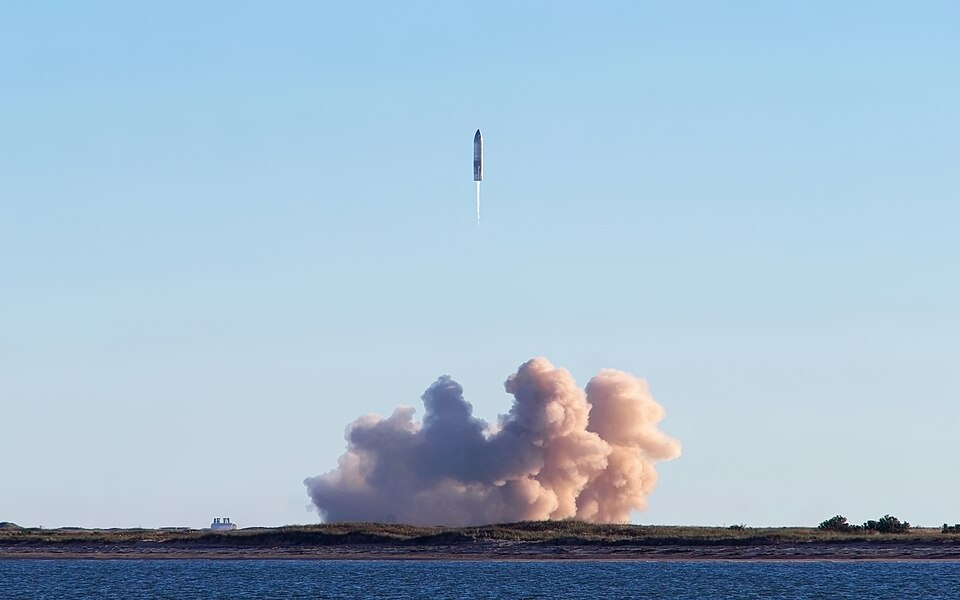
![[RAW] SpaceX Starship IFT-1 NASA WB-57 Cam 0
TLP Network via a NASA FOIA has acquired 2 of 5 videos recorded by NASA WB-57 during the Starship IFT-1 flight. The other 3 cameras from NASA WB-57 have been classified.
Thank you to NASA HQ for their support in releasing this footage to TLP Network.](https://freenewspress.com/media/2026/05/21/spacex-starship-6191d1.jpg)