

SpaceX made its long-awaited stock market debut on Friday, opening at $150 per share on the Nasdaq before climbing as high as $176 during the session. The company closed the day with a market cap of $2.1 trillion. The powerful first-day rally quickly reignited concerns that the stock's valuation had outrun its current financial performance.
CNBC's Jim Cramer addressed those concerns directly on Mad Money. According to CNBC, Cramer said investors should not judge SpaceX by the standards applied to traditional companies. "Is it too late to get into SpaceX?" he said. "If you're willing to look at this as a different kind of stock, not a short or even medium term investment ... then you've got my blessing."
Cramer argued that buyers are not focused on what SpaceX earns right now. They are buying into the long-term vision of founder Elon Musk and a pipeline of projects that may take years to develop. "This is a long-term call on space exploration," Cramer said.
He acknowledged the financial risks are real and could persist for years. "I think they've considered the risk and recognized that there could be losses as far as the eye can see," he said. Despite that, Cramer said the potential upside justifies the risk for investors who share that longer view. He told viewers that any dip in the stock price should be treated as a chance to add shares. "If it comes down, then you should buy more because the upside is conceivably unfathomable," he said.
Cramer also commented on how the IPO itself was handled. Goldman Sachs and Morgan Stanley led the deal, and Cramer praised the two banks for striking a balance between institutional and retail demand. He said the offering avoided the kind of chaotic opening-day spike that can create trouble down the road. "The stock opened at a reasonable price versus the IPO price, not so high that it would encourage flipping but not that low as to foment panic," he said. "That's amazing." Cramer's Charitable Trust, the portfolio used by the CNBC Investing Club, holds shares of Goldman Sachs.
The debut drew wide attention given SpaceX's scale and the profile of its founder. The company's valuation of $2.1 trillion at close puts it among the largest publicly traded companies in the United States. Critics have questioned whether that figure can be justified by current revenues and cash flow, but Cramer's position is that those metrics are beside the point for a company operating in an industry still in its early stages.
SpaceX's business includes commercial rocket launches, the Starlink satellite internet service, and long-term development work on vehicles designed for missions to the Moon and Mars. Many of those programs remain years away from generating the kind of revenue that would support a multi-trillion dollar valuation under conventional analysis. Cramer's argument is that the market is not pricing SpaceX on conventional analysis.
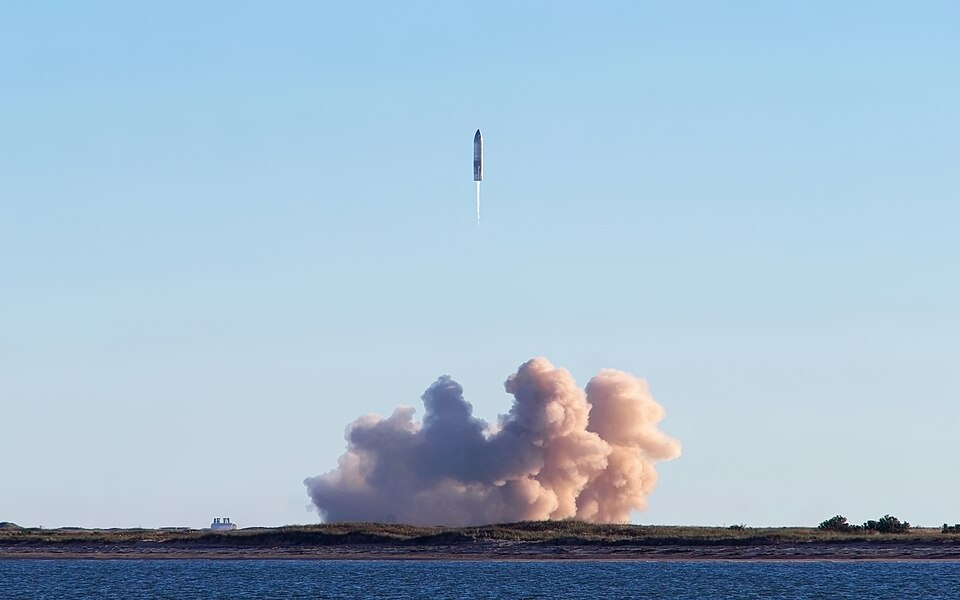
![[RAW] SpaceX Starship IFT-1 NASA WB-57 Cam 0
TLP Network via a NASA FOIA has acquired 2 of 5 videos recorded by NASA WB-57 during the Starship IFT-1 flight. The other 3 cameras from NASA WB-57 have been classified.
Thank you to NASA HQ for their support in releasing this footage to TLP Network.](https://freenewspress.com/media/2026/05/21/spacex-starship-6191d1.jpg)