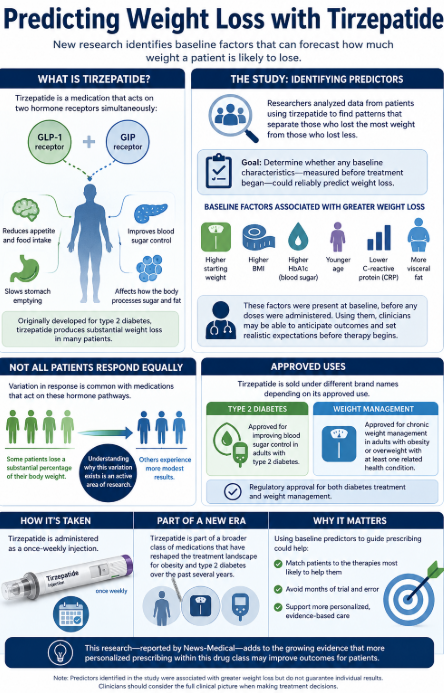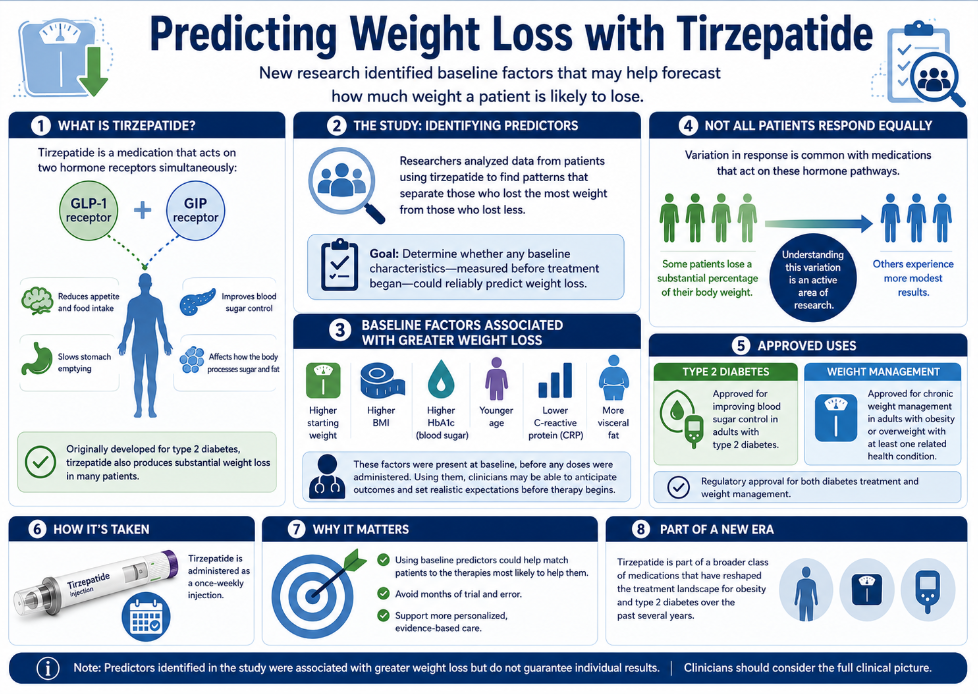
Scientists have identified a set of factors that can predict how much weight a patient is likely to lose when treated with tirzepatide, a finding that could help doctors better match patients to treatments and set realistic expectations before therapy begins. The research points to specific characteristics measurable at the start of treatment.
According to a report by News-Medical, the study examined data from patients using tirzepatide and looked for patterns that separated those who lost the most weight from those who lost less. The goal was to determine whether any baseline characteristics, meaning traits or measurements taken before treatment started, could reliably forecast outcomes.
Tirzepatide is a medication that acts on two hormone receptors simultaneously, the GLP-1 receptor and the GIP receptor. This dual action affects appetite, food intake, and the way the body processes blood sugar and fat. The drug was originally developed for type 2 diabetes management but has drawn wide attention for the substantial weight loss it produces in many patients.
The drug is sold under different brand names depending on its approved use. It has received regulatory approval both as a diabetes treatment and as a medication specifically indicated for chronic weight management in adults with obesity or overweight with at least one related health condition.
Not all patients respond equally to tirzepatide, which is a consistent pattern seen across the class of drugs that work on these hormone pathways. Some individuals lose a substantial percentage of their body weight, while others see more modest results. Understanding why that variation exists has become an active area of research as these drugs move into wider clinical use.
The predictors identified in the study were present at baseline, before any doses were administered. Identifying such markers matters because it could allow clinicians to use available patient data to anticipate outcomes, rather than waiting months into treatment to assess whether a given therapy is working for a specific individual.
Tirzepatide is administered as a weekly injection. It is part of a broader category of medications that have reshaped the treatment landscape for obesity and type 2 diabetes over the past several years. The research published and reported by News-Medical adds to the evidence base that may eventually guide more personalized prescribing decisions within this drug class.