Plants have a hidden buffer that helps them keep photosynthesizing even when temperatures rise and the air turns dry, according to new research from The Australian National University. The finding challenges a long-standing assumption about how plants respond to climate stress and could change how scientists model the effects of global warming on crops and food production.
The study, published in the Proceedings of the National Academy of Sciences, was led by Dr. Xingyu Hu from ANU's Research School of Biology. The research focused on three common crop species: cotton, sunflower, and dwarf bean. It is the first study to successfully separate the effects of heat and air dryness on photosynthesis across different carbon dioxide levels.
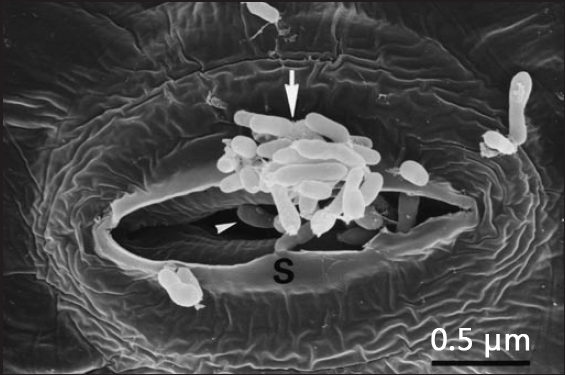
For decades, scientists believed that dry air reduced photosynthesis mainly because plants close tiny pores on their leaves called stomata in response to stress. Closing the stomata limits how much CO2 can enter the leaf, which slows the photosynthetic process. The new research shows that a second, largely overlooked mechanism inside the leaf is also at work.
"Scientists have traditionally believed that dry air suppresses photosynthesis mainly because plants close their stomata, which limits the amount of CO2 entering the leaf," Hu said. "Our research shows the important but long-overlooked role of another process inside the leaf in buffering the effects of heat and air dryness on the CO2 environment at the site of photosynthesis."
That second process involves what researchers call mesophyll conductance, which describes how CO2 moves through the interior tissue of a leaf on its way to the chloroplasts, the structures where photosynthesis actually takes place. The study found that mesophyll conductance responds to heat and dry air in the opposite direction from stomatal conductance. The two processes together help stabilize CO2 levels at the chloroplasts even when conditions outside the plant are changing rapidly.
"Mesophyll conductance responds to heat and air dryness in a different direction from stomatal conductance, and this coordination helps maintain a relatively conservative CO2 environment inside the chloroplasts," Hu said.
Co-author Suan Chin Wong said the discovery has direct implications for climate and agricultural modeling. Current models may be underestimating plants' ability to maintain productivity under stress because they do not account for this coordinating mechanism.
"As climate change increases the frequency of hotter and drier conditions, understanding the separate effects of heat and air dryness on photosynthesis under different CO2 levels becomes increasingly important for improving predictions of photosynthesis and water use under future climate conditions," Wong said.
The researchers also found that plants appear to balance two major biochemical processes involved in photosynthesis around current atmospheric CO2 levels. Distinguished Professor Graham Farquhar, a co-author on the study, noted that examining both CO2 diffusional and biomechanical processes is essential for understanding photosynthesis under changing conditions.
The findings could be used to improve crop management strategies and strengthen food security planning as climate change pushes temperatures and drought conditions higher across major agricultural regions.