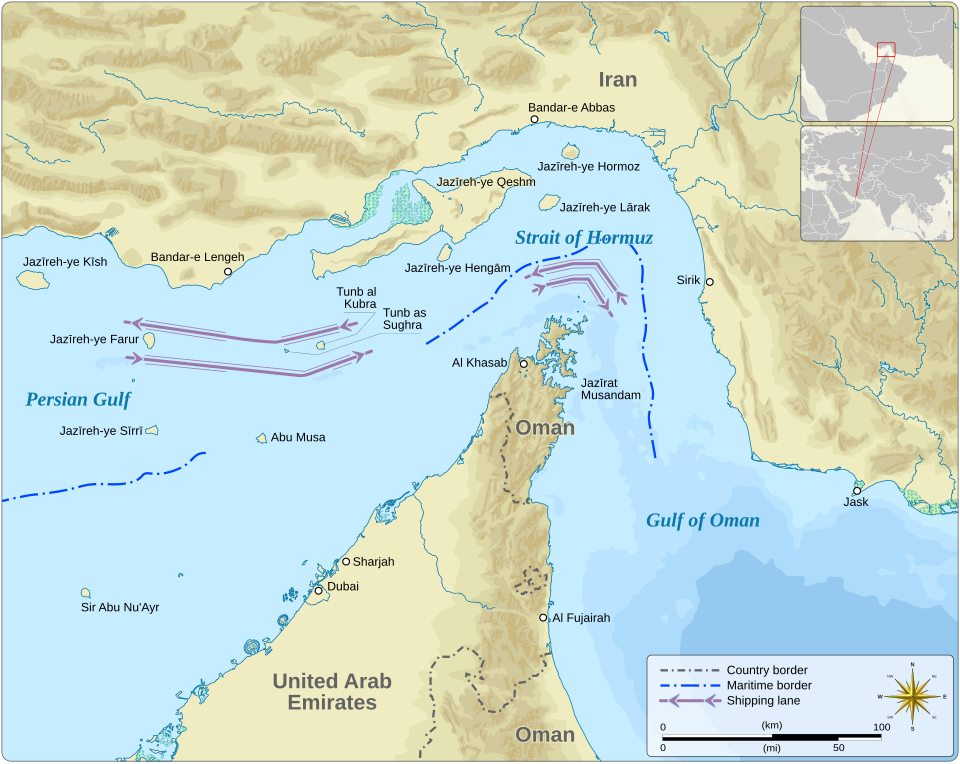
At least 10 commercial vessels were transiting the Strait of Hormuz Thursday morning, hours after President Trump and Iranian President Masoud Pezeshkian signed a memorandum of understanding that calls for the immediate reopening of the waterway and opens the door to broader negotiations between the two countries.
According to CBS News, the agreement was originally scheduled to be signed in Switzerland on Friday, but Trump signed it at Versailles on Wednesday. Oil prices fell following the announcement. Trump took to social media Thursday to attack critics of the deal.
"These fools, who think I haven't been tough enough on Iran, when the Stock Market Just Hit A RECORD HIGH, and Oil prices are 'tumbling' down, are either jealous, bad people, or stupid," Trump posted.
Defense Secretary Pete Hegseth, speaking to reporters during a visit to NATO headquarters in Brussels, Belgium, warned that the deal has firm consequences attached to it.
"If Iran doesn't comply, then we're more than able to reimpose an ironclad blockade," Hegseth said. He added: "If underneath the timeline of these talks Iran does not do what it says it's going to do, just give up nuclear weapons, give up nuclear ambitions, give away their nuclear material, close nuclear facilities, then the War Department is here and prepared to restart if we need to."
The memorandum covers 14 points but leaves a large number of questions unanswered, according to Al Jazeera. The United States provided the text during a call with reporters Wednesday, but a physical copy has not been released by either side. Iranian officials have yet to confirm the U.S. version of the text.
On Lebanon, the first clause of the agreement states that both sides agreed to the immediate and permanent termination of military operations on all fronts, including in Lebanon. The memorandum also commits both sides to ensuring the territorial integrity and sovereignty of Lebanon. However, the agreement makes no mention of Israel, which currently occupies one-fifth of Lebanon and has carried out near-daily strikes there since early March, killing at least 3,000 people and displacing more than one million from their homes.
Israel is not a signatory to the deal. It has stated repeatedly that it will not withdraw from Lebanon. On Monday, Israeli Defense Minister Israel Katz said in a statement: "Prime Minister Benjamin Netanyahu and I are pursuing a clear policy under which the [military] will remain in the security zones in Lebanon, Syria and Gaza for an unlimited period of time in order to protect the border and Israeli communities from there against jihadist elements."
According to Al Jazeera, Reuters reported that Israel is now negotiating with the U.S. as it seeks to keep forces in southern Lebanon, even as the agreement states that Israeli forces remaining in Lebanon would be considered a violation by Iran.
Iran's support for proxy groups in the region is not addressed anywhere in the 14-point document, a significant gap given that Lebanon has been one of the central sticking points throughout negotiations. Tehran has repeatedly stated that an end to Israeli military operations in Lebanon is a prerequisite for any broader peace deal. Iran first made that position public ahead of direct talks held in Pakistan in April, the first such talks between the two countries since the 1979 Islamic revolution.
Iran's foreign minister Esmail Baqaei acknowledged Thursday that the harder work lies ahead. "Our work is now more difficult than before, because implementing international agreements is always far more difficult than drafting them," he said in a statement.
The current memorandum leaves negotiations on Tehran's nuclear program and the lifting of Western sanctions for a 60-day follow-on phase of talks.