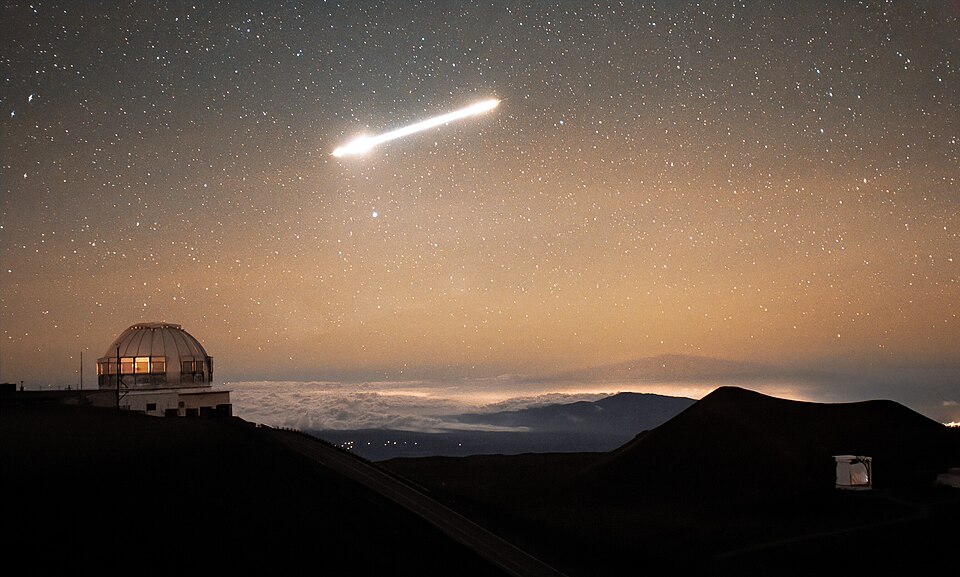
Residents along the Massachusetts and New Hampshire border heard a loud sonic boom on the afternoon of May 30, 2026. People up and down the East Coast reported witnessing the event. The cause, according to Phys.org, was a small meteor that turned into one of the more dramatic cosmic intrusions in recent memory.
NASA analyzed imagery from weather satellites after the event and identified the object as a meteor measuring roughly 3 to 5 feet, or 1 to 2 meters, across. It was traveling at approximately 42,000 mph, or 68,000 kph, when it plunged into Earth's upper atmosphere.
At that speed, friction between the rock and the increasingly dense air converted its kinetic energy into extreme heat. At an altitude of roughly 40 miles, or 64 kilometers, the heat and pressure became too much for the meteor's structure. It fragmented in a brilliant flash.
The breakup released energy equivalent to 300 tons of TNT. The explosion generated a shock wave, which produced the thunderous sonic boom that startled residents across the region. Most of the rock vaporized. The remaining fragments fell harmlessly into the waters of Cape Cod Bay.
The event was one of the most well-documented meteor entries in recent years, and that is largely because of technology most people carry or install without thinking about planetary defense. Dashboard cameras, home security systems, and digital doorbells captured the fireball from multiple angles almost instantly. In the past, a daytime meteor entry lasting only a few seconds could pass as an unverified sighting. Today, those spontaneous cosmic events are recorded and shared within minutes.
The Cape Cod fireball was not an isolated incident this spring. From March 8 through 11, observers across Northern Europe watched large, slow-moving fireballs cross their skies. Enthusiasts and scientists successfully recovered several fragments from those events.
Meteors of this size enter Earth's atmosphere more often than most people realize. The planet moves constantly through space that is littered with ancient debris left over from the formation of the solar system. Earth's atmosphere acts as a shield, burning up the vast majority of incoming objects before they reach the ground. Objects large enough to generate a visible fireball and an audible sonic boom do get through occasionally, but most of them break apart and vaporize before any significant fragments can reach a populated area.
The May 30 event drew renewed attention to the informal network of sensors that now covers much of the planet's surface. What once would have been a fleeting and largely unverifiable experience for a handful of witnesses is now a documented, shareable event almost everywhere it happens.