

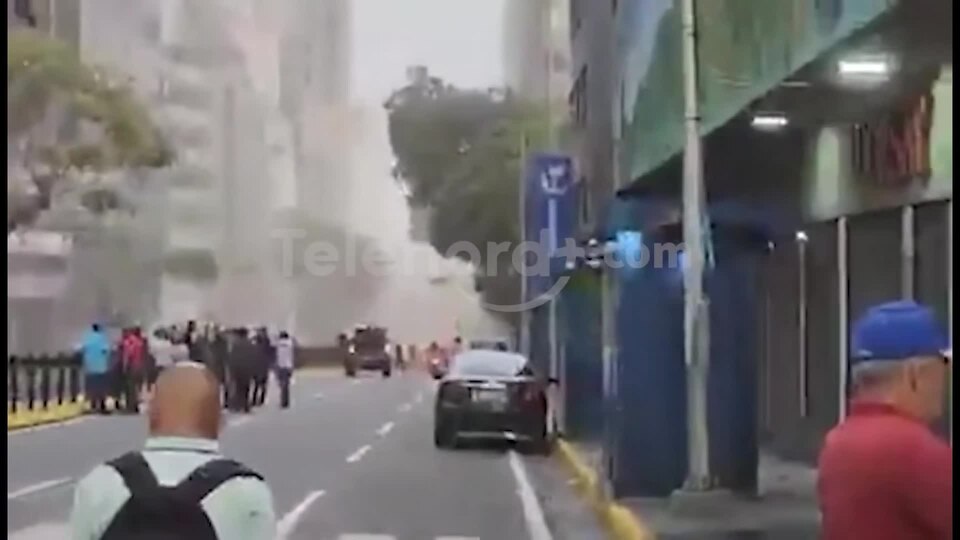
Three days after two powerful earthquakes struck Venezuela's northern coast, at least 920 people are dead, more than 3,300 are injured, and tens of thousands remain missing. Rescue operations have continued since the 7.2 and 7.5-magnitude earthquakes hit on Wednesday. Authorities say 243 people have been saved so far.
American search and rescue teams from Virginia, California, and Florida arrived in Venezuela on Friday. Anthony Marrone, the Los Angeles County fire chief, told The New York Times that local fire units from Los Angeles County and Fairfax County, Virginia, are the only ones in the United States trained to work abroad.
The Los Angeles County team is 73 people strong. They brought concrete-busting machines, listening devices to hear people trapped under rubble, and other equipment to support the ongoing effort. The State Department is leading the federal response, according to U.S. Southern Command.
"Day or night, the [Department of War] is moving critical life-saving equipment to Venezuela," U.S. Southern Command said in a Friday night post.
The United States has pledged $150 million in emergency aid and deployed Navy warships. Despite that assistance, Venezuelans have reported that their own government has not responded robustly. Locals told The Associated Press they have seen few state rescue teams in the hardest-hit areas.
According to aid agencies, the first 48 to 72 hours is the most crucial window to retrieve people alive. That window has now closed or is closing for many areas.
On Friday night, Venezuelan authorities announced they would begin blocking access to La Guaira, where the worst destruction occurred, so search teams can work without interference from civilians. Officials said anyone wanting to enter would need a permit, though they did not explain who would be eligible.
The access restrictions came after locals began searching for missing family members on their own. Nazareth Jimenez, who lives in the state of La Guaira just north of Caracas, described watching neighbors use hammers and power tools to cut through the concrete of an apartment building, waiting to see if her siblings, nephews, nieces, and friends would emerge alive.
"We're making a call for help to the government and countries across the world," Jimenez told the AP. "There are still people alive in there."