The United States military carried out strikes on Iranian military sites for a second straight day over the weekend, hitting targets after the US accused Tehran of striking a ship passing through the Strait of Hormuz. Iran responded by targeting US military sites in Bahrain and Kuwait, trading blows with Washington for the second time in a weekend that threatened to collapse a fragile Iran-US memorandum of understanding signed June 17.
According to Al Jazeera, Congress had passed a war powers resolution on Tuesday requiring the president to halt military operations against Iran or seek congressional approval before continuing. The Senate passed the measure 50 to 48, with four Republicans crossing party lines to vote in favor. The House had already passed a similar measure on June 3, by a vote of 215 to 208.
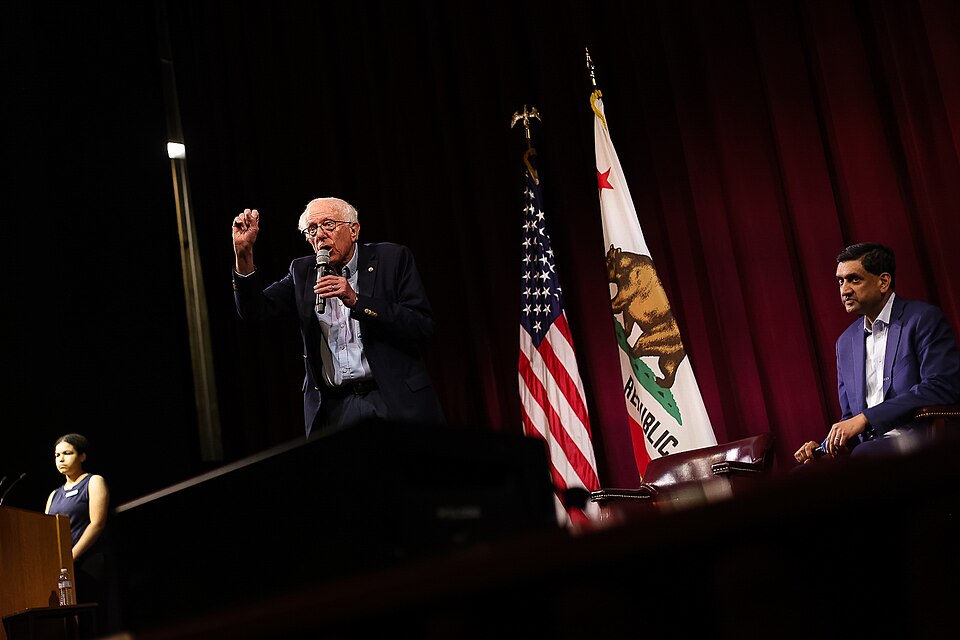
The resolution is nonbinding. The strikes continued anyway. Representative Ro Khanna, a Democrat from California, called the latest attacks "a blatant violation" of the congressional resolution and threatened to take President Trump to court.
Senate Minority Leader Chuck Schumer addressed the chamber before the vote. "For years, Trump promised to put maximum pressure on Iran, but he ended up delivering maximum confusion, maximum chaos, maximum cost to the American people with his disastrous war," Schumer said. "The American people have paid the price for Trump's historic blunder in Iran."
The military campaign against Iran began February 28, and the Senate had voted ten times by Tuesday in attempts to rein it in. The War Powers Resolution of 1973 requires the president to notify Congress within 48 hours of committing armed forces to hostilities and bars sustained military action beyond 60 days without congressional approval.
One Republican who had voted for the resolution changed course after a classified briefing. Senator Bill Cassidy of Louisiana, in an interview that aired on CBS News Face the Nation on June 28, said he received a briefing from Vice President and Special Envoy Steve Witkoff in the Situation Room late Wednesday. That briefing prompted him to reconsider his vote.
Cassidy said his original reason for supporting the war powers measure was not opposition to the campaign itself, but frustration at being kept in the dark. He said his concerns had been that the administration was not achieving its stated goals of destroying Iran's nuclear capability, degrading its ballistic missile program, and weakening its conventional military forces. He also noted that early signals had suggested regime change was among the objectives.
In the CBS News transcript, Cassidy described how the shift happened. He said he passed a note to Witkoff after an exchange with the president. "Steve, I would consider changing my vote, but I've been voting yes because I've not been briefed," Cassidy recalled telling him. Witkoff replied, "Call me back in the hour and let's have a briefing."
After the briefing, Cassidy said regime change appeared to be off the table, but that the other three objectives remained in play. "Now we have to trust but verify, but as they laid it out, they have a plausible plan by which to achieve those," Cassidy said.
Cassidy compared his approach to that of a physician. He said he was trained to gather as much information as possible before making a diagnosis, and that being denied that information made him unwilling to approve a course of action.
The exchange between Cassidy and Trump on Wednesday, according to the interview, involved raised voices in a closed-door Senate meeting. Trump reportedly berated Cassidy over his earlier vote. Cassidy said he told the president he would not be bullied.
Israel also continued to conduct strikes on Lebanon over the weekend despite a framework deal signed Friday and the memorandum of understanding calling for an end to military action on all fronts, including Lebanon.
The Iran-US memorandum of understanding was signed June 17. Whether it survives the latest round of exchanges between Washington and Tehran remained unclear as of Sunday.