

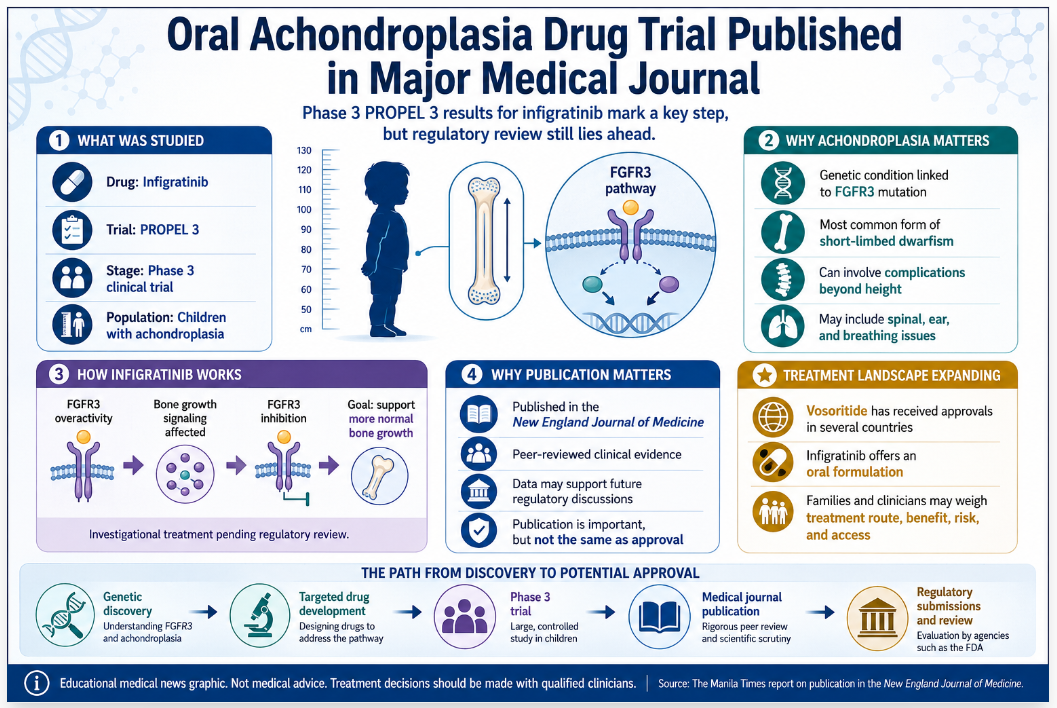
Results from a major clinical trial of an oral drug for children with achondroplasia have been published in the New England Journal of Medicine, one of the most influential medical journals in the world. The drug, infigratinib, was developed by BridgeBio Pharma and tested in a Phase 3 trial called PROPEL 3, according to a report by The Manila Times.
Achondroplasia is a genetic disorder caused by a mutation in the FGFR3 gene. It is the most common form of short-limbed dwarfism and affects bone growth throughout the body. Children with the condition often experience a range of complications beyond stature, including spinal stenosis, ear infections, and breathing difficulties.
The PROPEL 3 trial was designed to evaluate whether infigratinib, taken orally, could improve growth outcomes in children living with achondroplasia. The Phase 3 designation means the trial was a large, controlled study intended to provide the level of evidence regulators require before considering a drug for approval.
Publication in the New England Journal of Medicine carries significant weight. The journal applies a rigorous peer review process, and studies published there are frequently cited in regulatory submissions and treatment guidelines. BridgeBio's announcement of the publication signals that the company considers the data strong enough to withstand that level of scrutiny.
Infigratinib works by inhibiting FGFR3, the protein that the mutated gene overproduces in people with achondroplasia. By targeting that specific pathway, the drug aims to allow bones to grow more normally than they would without treatment.
The publication comes as the treatment landscape for achondroplasia has been expanding. A different drug, vosoritide, received approval in several countries in recent years, giving families and clinicians more options than existed a decade ago. BridgeBio's oral formulation of infigratinib could offer a different administration route, which may matter to families managing daily treatment for a young child.
BridgeBio has not yet announced regulatory submissions based on the PROPEL 3 data, and the path from published trial results to approved treatment involves additional steps with agencies such as the U.S. Food and Drug Administration. The New England Journal of Medicine publication is a significant step in that process, but not the final one.