

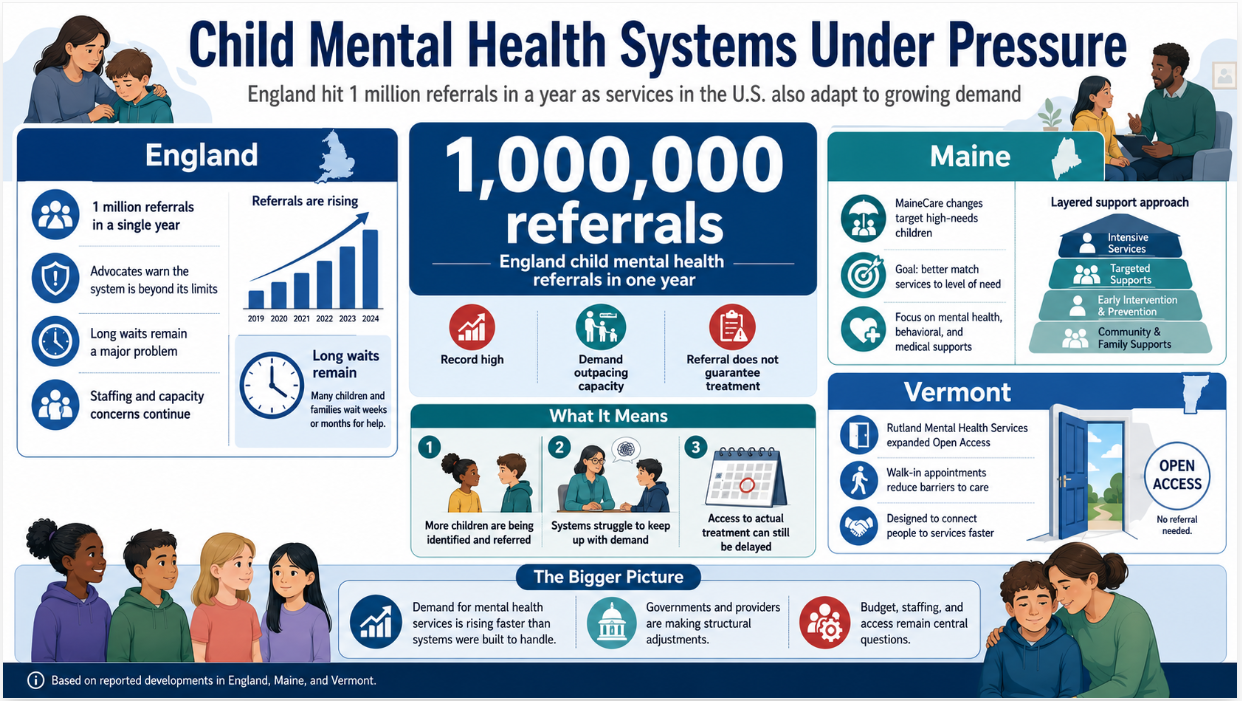
England's child mental health system received one million referrals in a single year, according to a report by The Guardian, a figure that advocates say reflects a system pushed beyond its limits. The volume marks a new high and has prompted warnings from health professionals and campaigners that services cannot keep pace with demand.
The Guardian described the situation as a children's mental health crisis. The surge in referrals has raised urgent questions about staffing, wait times, and whether children in need are actually receiving treatment once they enter the system. A referral does not guarantee care, and long waits between referral and first appointment have been a persistent problem in England's National Health Service.
The pressure on children's mental health services is not limited to England. In Maine, state officials have been moving to adjust how care is delivered to children with complex needs. According to newscentermaine.com, MaineCare changes are aimed at providing more support for high-needs children. MaineCare is Maine's Medicaid program, and the adjustments are designed to better match services to the level of need each child presents.
High-needs children often require a combination of mental health, behavioral, and medical supports that standard coverage does not always address. The Maine changes represent an attempt to close that gap through the state's insurance structure rather than waiting for federal action.
In Vermont, a different kind of expansion is underway. Rutland Mental Health Services has expanded its Open Access program, according to Vermont Business Magazine. Open Access models allow people to walk in for mental health appointments without a scheduled visit, removing a barrier that often prevents people from getting care at all. The model has been adopted in various forms across the country as a way to reduce no-show rates and connect more people to services faster.
Taken together, the developments in England, Maine, and Vermont reflect a broader pattern. Demand for mental health services has grown faster than systems were built to handle, and providers and governments are responding with a range of structural adjustments. Whether those adjustments will prove sufficient given the scale of need remains an open question that health officials in multiple countries are actively working through.
The one million referral figure in England is expected to factor into upcoming budget and staffing discussions within the National Health Service as officials weigh how to respond to a caseload that shows no sign of declining.