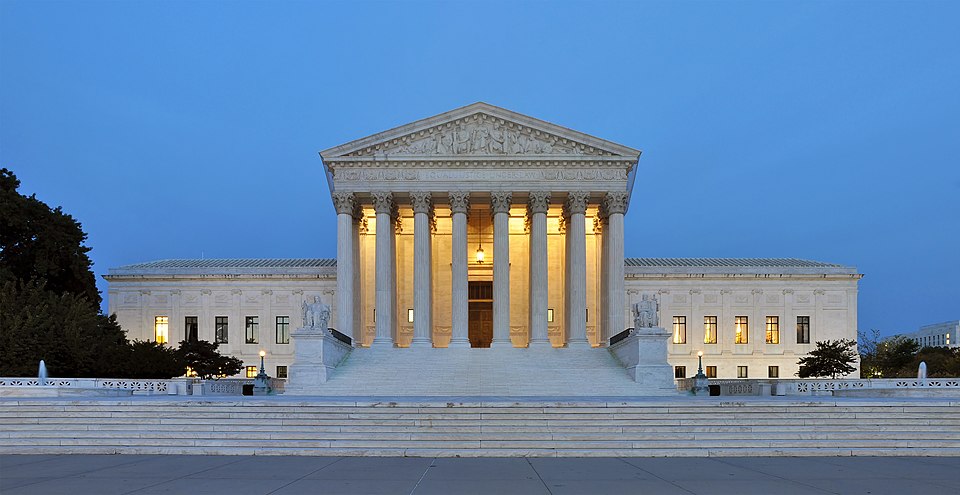
The United States Supreme Court ruled Monday that law enforcement agencies must obtain a valid warrant before conducting geofence searches. The decision requires probable cause before police can subpoena cellphone location data from technology companies.
According to CNET, the ruling came in the case Chatrie v. United States. Justice Elena Kagan wrote the 6-3 majority opinion. The Court found that "an individual has a reasonable expectation of privacy in records about his cellphone's location" and that geofencing warrants "intrude on that constitutionally protected interest."
Geofencing is a tool police use when a case has no clear suspects. Officers draw a boundary on a map around a crime scene, set a time window, and send a warrant to a technology company requesting data on any connected devices present in that area during that period. After cross-referencing the results, police can then subpoena additional account details tied to specific devices.
Critics of the practice have long pointed out that geofencing sweeps up data from everyone in an area, not just suspects. In some cases, a single geofence warrant can pull location data from millions of people at once.
The Court found that users are not voluntarily sharing their private information simply by carrying a phone. That finding undercut the third-party doctrine, a legal principle holding that people have no expectation of privacy for data they willingly share with others. Because users are not considered to be willingly sharing their location with companies like Google, the doctrine does not apply, and the Fourth Amendment's protections against unreasonable searches and seizures take effect.
The ruling did not ban geofencing outright. Police can still use the tool, but only after establishing probable cause about a specific suspect and obtaining a proper search warrant. The decision narrows how broadly geofencing data can be sought.
Privacy advocates responded with approval. Alan Butler, executive director of the Electronic Privacy Information Center, said in a statement after the ruling: "EPIC applauds the Supreme Court's recognition that warrantless geofence searches are fundamentally incompatible with the Fourth Amendment's protections against unreasonable searches and seizures."
Google has been one of the most frequently subpoenaed companies for geofencing data. The ruling changes what law enforcement must demonstrate before that data can be obtained. Geofencing has been described as a form of reverse searching, since authorities use location data to connect a crime to a suspect rather than using existing evidence to establish that a suspect was present.