

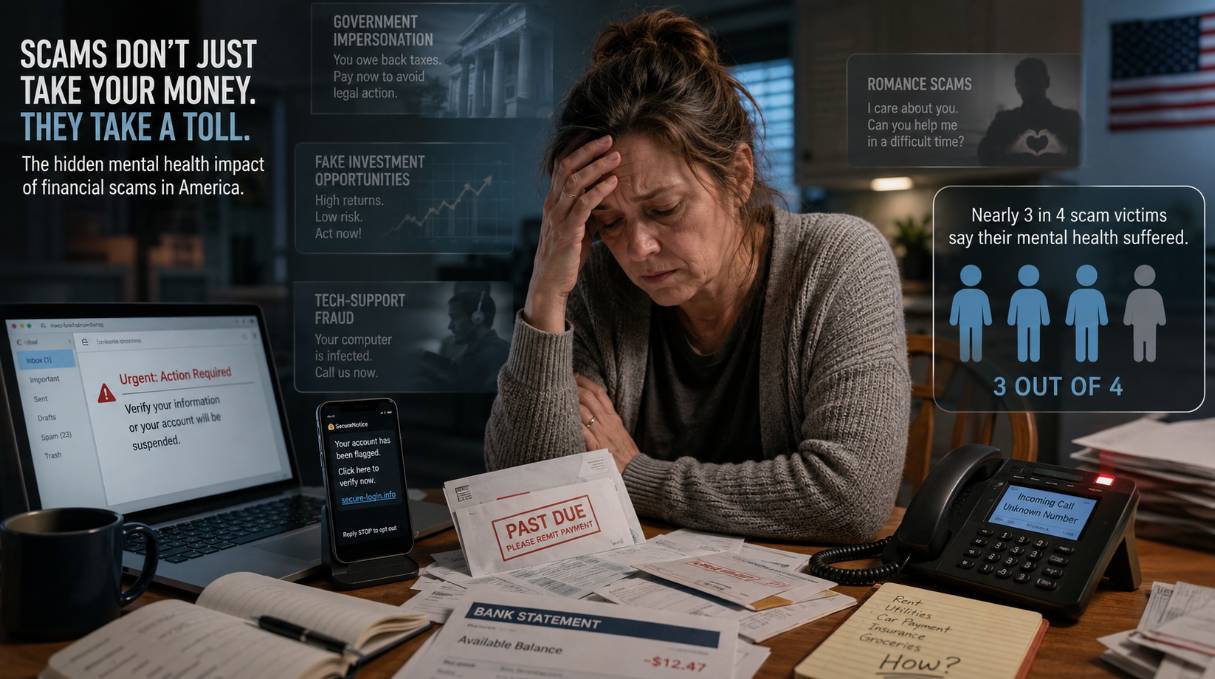
Nearly three in four Americans who have been victims of scams say the experience damaged their mental health, according to a poll reported by Al Jazeera. The findings point to a largely overlooked consequence of financial fraud, one that extends well beyond the monetary losses victims suffer.
The poll captures the emotional toll that scams take on people who are targeted. Victims reported experiencing anxiety, depression, shame, and a loss of trust in others following a scam. These reactions can persist long after the immediate financial harm has been resolved, and in some cases the psychological damage outlasts any economic recovery.
Scams have become increasingly widespread in the United States. Fraudsters contact potential victims through phone calls, text messages, emails, and social media. Common schemes include impersonation of government agencies, fake investment opportunities, romance scams, and tech support fraud. Older adults are frequently targeted, though people of all ages report being victimized.
The psychological consequences of being scammed are compounded by shame. Many victims feel embarrassed that they were deceived, which can prevent them from reporting the crime or seeking help. That shame can intensify feelings of isolation. Victims may also blame themselves even when sophisticated tactics were used against them.
Financial loss adds a direct material pressure that can worsen mental health outcomes. For people on fixed incomes or with limited savings, losing money to a scam can mean losing the ability to pay rent, cover medical bills, or meet other basic needs. That financial stress feeds directly into anxiety and depression.
The poll results suggest that the mental health dimension of fraud is not receiving adequate attention from policymakers or health providers. Financial recovery programs and law enforcement responses to scams typically focus on recouping losses or prosecuting perpetrators. Mental health support for victims is rarely part of the response.
Consumer protection agencies including the Federal Trade Commission collect data on scam reports each year. The FTC has documented billions of dollars in annual losses to fraud in the United States. But loss totals alone do not capture what happens to people psychologically after they are victimized.
Researchers and advocates have called for more integrated support services that combine financial counseling with mental health resources for scam victims. Some community organizations have begun offering such services, but they remain limited in reach compared to the scale of the problem.