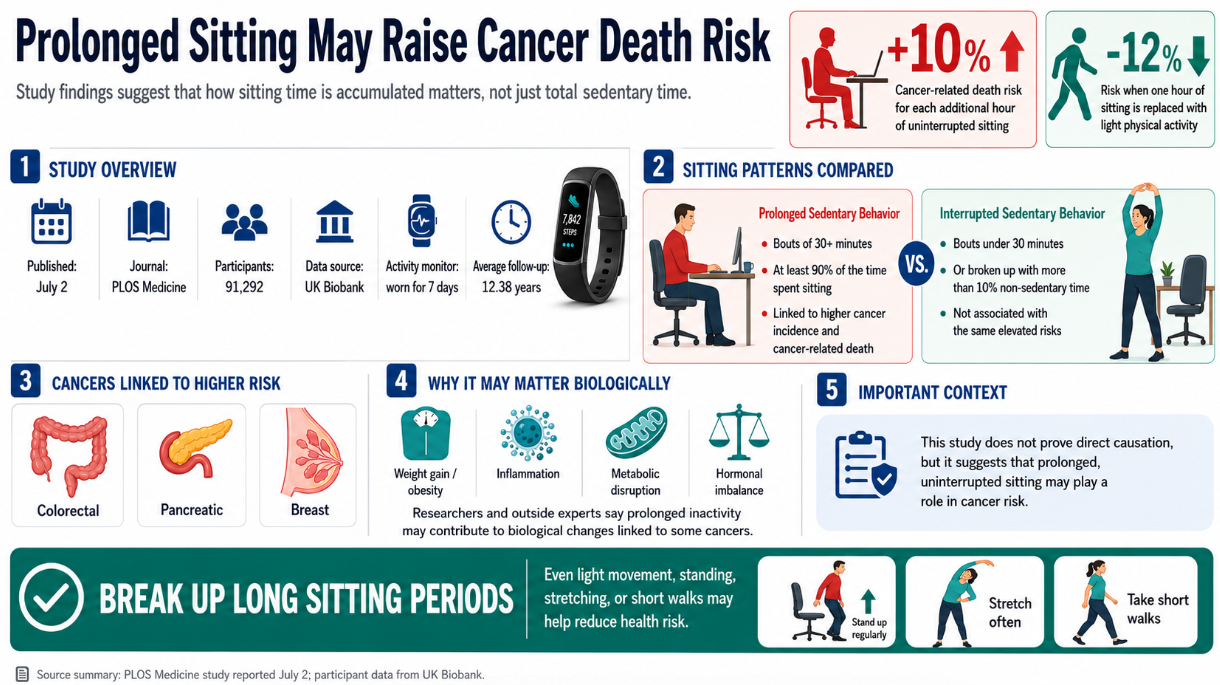
A study published July 2 in PLOS Medicine found that each additional hour of uninterrupted sitting raises the risk of cancer-related death by 10 percent. The research also found that swapping just one of those hours for light physical activity reduces that risk by 12 percent.
The study, reported by Healthline, analyzed data from 91,292 participants in the UK Biobank. Each participant wore an activity monitor for seven days and was then followed for an average of 12.38 years. Researchers tracked whether sitting time was continuous or broken up by movement.
The study separated sedentary behavior into two categories. Prolonged sedentary behavior meant bouts of at least 30 minutes with at least 90 percent of that time spent sitting. Interrupted sedentary behavior lasted less than 30 minutes or was broken up with more than 10 percent non-sedentary time. The distinction turned out to matter.
Prolonged uninterrupted sitting was linked to higher rates of cancer incidence and cancer death, including colorectal, pancreatic, and breast cancer. Interrupted sitting was not associated with the same elevated risks.
David Yashar, MD, a hematologist and medical oncologist at MemorialCare Todd Cancer Institute at Long Beach Medical Center, was not involved in the study but offered context on the biology behind the findings. "A sedentary lifestyle can lead to a person becoming overweight," he said. "We know that an increased amount of fat causes inflammation, which is a known risk factor for cancer. Obesity has also been associated with the development of colorectal cancer," Yashar told Healthline.
He also noted that prolonged inactivity may contribute to hormonal imbalances that affect hormone-sensitive cancers such as breast cancer.
The study authors addressed the biological pathway in a press release. "Our findings suggest that the health effects of sedentary behavior may depend not only on total sedentary time, but also on whether that time is accumulated in prolonged bouts or interrupted by activity," they said. "This pattern is biologically plausible: experimental studies have shown that interrupting prolonged sitting with short bouts of activity can improve metabolic responses compared with uninterrupted sitting."
The researchers noted that the findings do not establish direct causality but suggest that the pattern of sitting, not just the total amount, plays a role in cancer risk. They said the results could help guide more personalized strategies for breaking up sedentary time throughout the day.