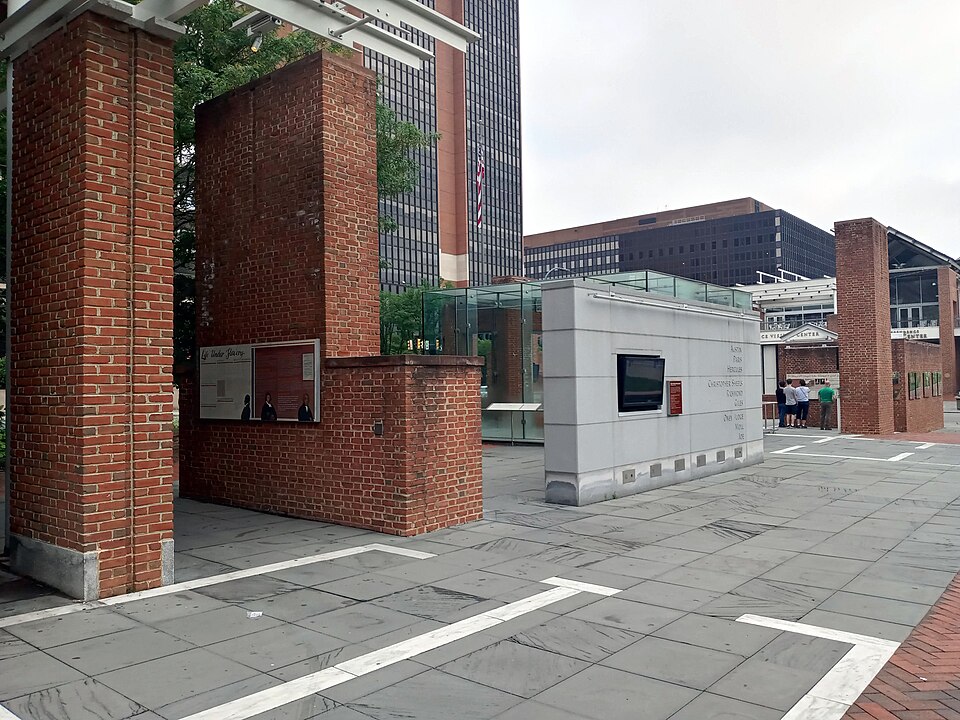
A contested slavery memorial in Philadelphia sits at the center of a national debate about history as the United States marks its 250th anniversary, with the White House seeking to remove and replace the exhibit that took decades to build.
The memorial stands at the site of the President's House, the nation's first executive mansion, located steps from the Liberty Bell Center. It memorializes nine African men and women who were enslaved there by President George Washington: Austin, Christopher Sheels, Giles, Hercules, Joe, Moll, Paris, Richmond and Ona (Oney) Judge, who served as personal maid to Martha Washington.
Philadelphia attorney Michael Coard founded the Avenging the Ancestors Coalition in 2002, the group that launched the movement to build the exhibit. As the city fights the Trump administration's removal effort, Coard finds himself at the center of the debate. According to ABC News, he reflected on how an archaeological discovery and his own search for his ancestry drove him to spend decades working to preserve this history.
"On the eve of the 250th, Americans, far and wide, are going to be talking about how patriotic they are, how much they love this country. Well, you can't love something unless you know something," Coard said.
The exhibit's origins trace to August 2002, when independent historian Edward Lawler Jr. published research in The Pennsylvania Magazine of History and Biography documenting the foundation of Washington's Philadelphia home, which had been demolished in 1832. The research uncovered the layout of the house, including the slave quarters, and named the nine people enslaved there. A major excavation followed at the site in 2007.
Presidential historian Mark Updegrove told ABC News that Washington's role as an enslaver had long been omitted from public exhibits and historical sites. "For so long in the course of our history, we did ignore the stories of slaves. That's not something that we talked about readily in our history," Updegrove said.
Coard said the discovery struck Philadelphia's Black community hard. "We found out that George Washington enslaved Black men, women and children there, and many of us were, like me, we in the African American community in Philadelphia, we felt betrayed," he said. "I went to arguably the best school in the country, Masterman, and never heard about it. I went to America's first HBCU chain university, never heard about it ... born and raised" in Philadelphia.
The fate of the memorial remains uncertain as the Trump administration's plans for the site have not been finalized.