President Trump declared the ceasefire with Iran "over" on Wednesday at the NATO summit in Turkey, calling negotiations with Tehran "a waste of time dealing with them." The announcement sent oil prices surging and knocked stocks lower in early trading.
Brent crude rose 6.3% to $78.80 a barrel. West Texas Intermediate, the U.S. benchmark, climbed 6.4% to $75 a barrel. Before Wednesday's spike, West Texas Intermediate had fallen below $70, roughly returning to levels seen before the start of the Iran war in late February. The Dow Jones Industrial Average fell 479 points, or 0.9%, to 52,446. The S&P 500 declined 0.4%, and the tech-heavy Nasdaq Composite slipped 0.2%.
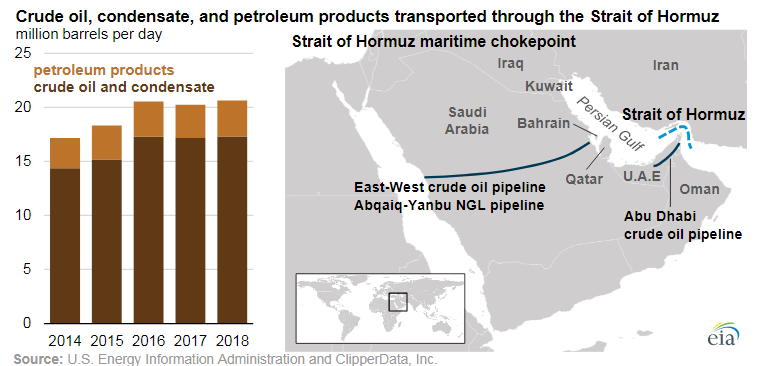
Trump's remarks came after Iran's Islamic Revolutionary Guard Corps attacked three tankers in the Strait of Hormuz. The U.S. military struck Iran early Wednesday after those attacks, according to CBS News. Iran then launched retaliatory strikes on Kuwait and Bahrain.
The Trump administration also revoked a waiver on Tuesday that had permitted Iranian oil sales. The Treasury Department said that "General License X," which was issued two weeks ago as part of an interim peace deal and exempted Iranian oil sales from U.S. sanctions, would be superseded by a narrower waiver.
Ryan Sweet, chief global economist at investment adviser Oxford Economics, described the ceasefire as always fragile. "The ceasefire between the U.S. and Iran was always fragile, and some flare-ups were inevitable, unfortunately," he said in a report. "The question is whether this represents a bump in the road or whether we're emerging from the eye of the storm." He added that if the peace deal collapses fully, the consequences could extend well beyond oil prices. "If the peace deal breaks, and it's too early to tell, it won't just raise oil prices; it would also increase pressure on AI supply chains in Asia, force central banks to be hawkish, tighten financial conditions and could shift the outcome of the U.S. midterms," Sweet said.
Not all analysts expect a full collapse. Vital Knowledge analyst Adam Crisafulli said Wednesday in a research note that while the current situation is under strain, the White House is reluctant to return to full hostilities. "Stocks took a dive around 4 am ET after Trump declared that the Iran ceasefire was 'over,' and while the current détente is certainly under strain, we continue to think the White House is extremely reluctant to escalate militarily and fully return to hostilities and therefore, a deal remains much more likely than not," Crisafulli said.
Higher oil prices could complicate the inflation outlook by raising gasoline and transportation costs, potentially prompting the Federal Reserve to keep interest rates higher for longer.
The war, which began in late February, has already sent gas prices swinging sharply. According to the U.S. Energy Information Administration, the average cost of regular unleaded gas climbed to $4.50 in the week ending May 11, the highest since mid-July 2022. Prices had since fallen to as low as $3.79 before this week's renewed tensions. ABC News launched a gas price calculator this week to help drivers estimate fill-up costs based on their vehicle and location.
Meanwhile, funeral processions for Iran's late Supreme Leader Ayatollah Ali Khamenei began Wednesday in the Iraqi city of Najaf, with thousands of mourners present, according to ABC News. Khamenei was killed in late February during wide-scale U.S. and Israeli strikes on Iran. He was 86. Talks between the United States and Iran appear to be on hold until after the burial. His body is expected to travel from Najaf to the holy city of Karbala before returning to Iran.