

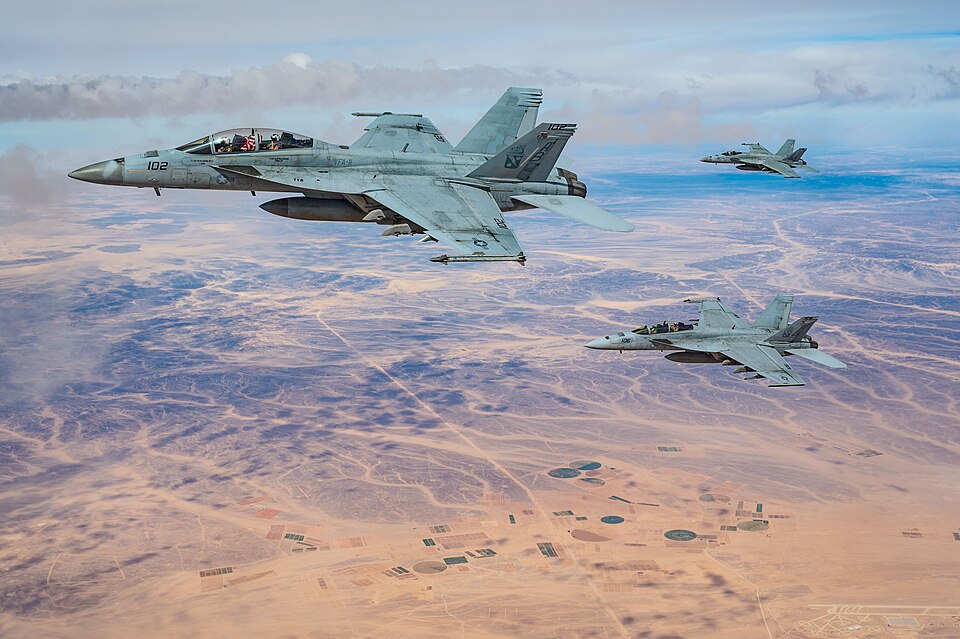
Fighting between the United States and Iran appeared to pause on Friday after two days of intense exchanges that struck targets across the region and raised new doubts about a peace agreement signed less than a month ago.
The US says it hit 170 targets in Iran during the latest round. Iran says it targeted US military bases in Gulf states. The fighting coincided with a weeklong funeral for former Supreme Leader Ayatollah Ali Khamenei and four of his family members killed on the first day of the conflict, according to NPR.
The escalation began Tuesday night after commercial ships in the Strait of Hormuz were attacked by Iran's Islamic Revolutionary Guard Corps, apparently for not following a route through the strait that Iran had approved. The US launched strikes on 85 targets in Iran on Tuesday night and Wednesday morning. Iran retaliated, triggering additional US strikes on 90 Iranian targets Wednesday night, and more attacks Thursday on Iran's southern coastal and eastern provinces.
The fighting eroded a memorandum of understanding signed on June 17, which had started a 60-day negotiation period and required Iran to allow free passage through the Strait of Hormuz. At the NATO summit in Ankara, Turkey, on Wednesday, President Donald Trump told reporters he thought the MoU was "over" and called peace talks a "waste of time." He referred to Iranian leadership as "scum." On Thursday, Trump appeared to pull back from that position, telling journalists aboard Air Force One that returning to full-scale war was not the aim and that Tehran "wants to make a deal."
By Friday morning, a US official told Al Jazeera that Washington remains committed to negotiations and that technical talks for a lasting peace deal will continue, even as early Friday Iranian media reported explosions across southern Iran, including near Bushehr, where one of Iran's nuclear plants is located. The US denied any involvement in those explosions.
The International Energy Agency flagged the economic consequences in its latest monthly oil market report, released Friday. The agency said world oil demand is on track to fall this year for the first time since 2020. Before the conflict began in April with US and Israeli strikes on Iran, the Strait of Hormuz carried roughly a fifth of the world's oil and liquefied natural gas exports. The IEA reported that the effective closure of the strait had cut as much as 14 million barrels per day of crude oil flows.
Following the MoU and a partial reopening of the strait, global oil supply rose by 4.1 million barrels per day in June, according to the IEA. But supply still remained 9.4 million barrels per day below pre-war levels. The agency had forecast a surplus of 4.62 million barrels per day in global supply by 2027, assuming the strait returned to full operation. With fighting resuming, shipping through the strait has once again stopped.
Despite the disruption, oil prices held broadly steady. Brent crude stood at $76.37 a barrel in early Friday trading, little changed from Thursday's close but up more than $4 from a week earlier. Analysts said the relative calm in markets reflected confidence the situation would stabilize, even as tightening inventories pointed to further upward price pressure in coming weeks.
Tensions remain high across the region. Jordan intercepted incoming fire from Iran during the recent exchanges. Iran threatened the United Arab Emirates. Israeli armed forces chief of staff Eyal Zamir said Israel is prepared if fighting resumes, according to NPR's Carrie Kahn, reporting from Tel Aviv.